
Carrito
0 artículos
¿Tienes una cuenta?
Inicia sesión para finalizar tus compras con mayor rapidez.
Repuestos originales de automatización | Envío exprés a todo el mundo | Garantía de 12 meses — [Solicite presupuesto]

The Woodward 5462-948, also cataloged as the 5462-948 T/C Card 8 Channel, operates as a dedicated hardware component for multi-channel thermocouple temperature data acquisition and cold junction compensation within industrial...
Disponibilidad: Bajas existencias: quedan 10
Entrega confiable a nivel mundial
Garantía de devolución de dinero de 30 días
¿Necesitas más información? Consulta nuestra Política de envíos y reembolsos completa.

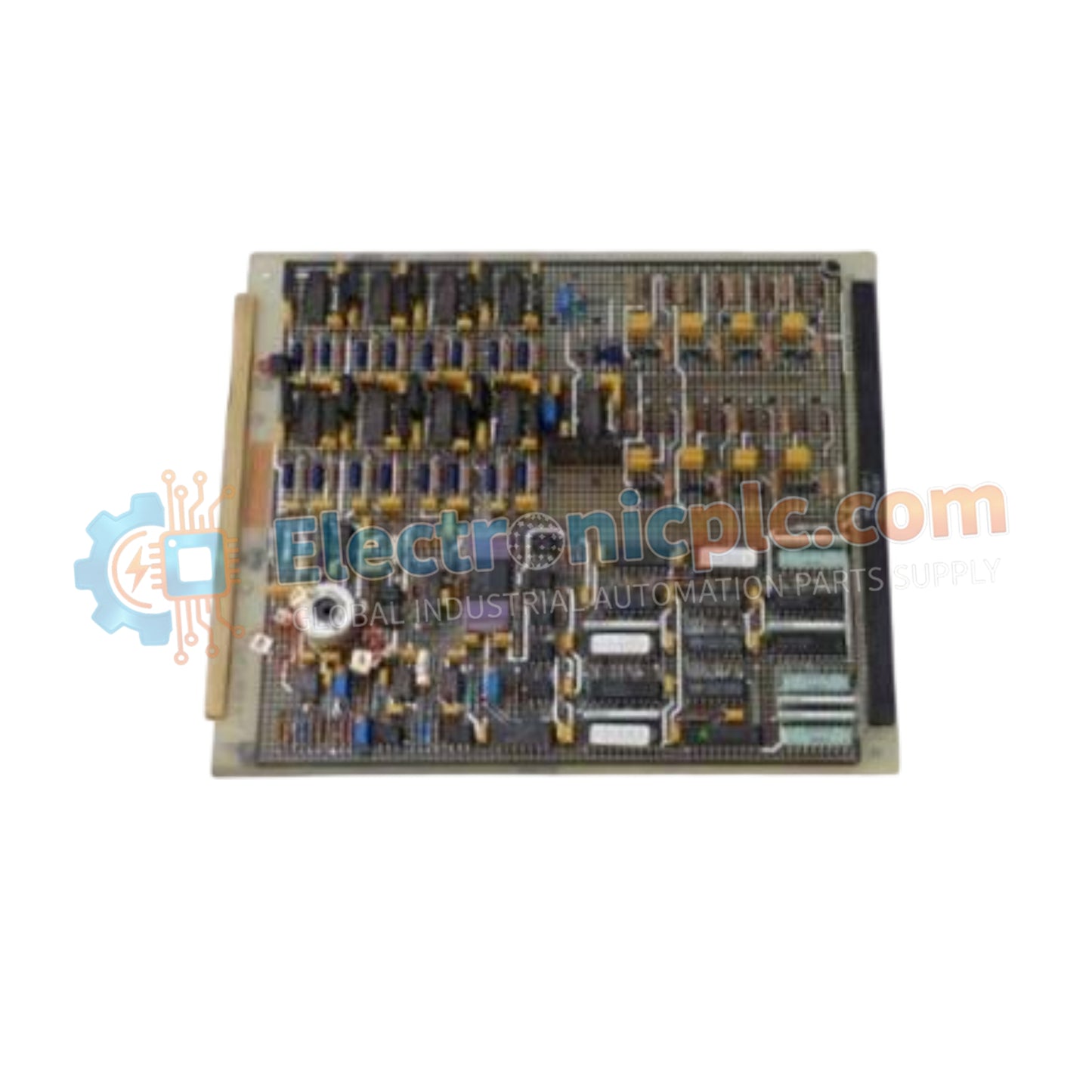
The Woodward 5462-948, also cataloged as the 5462-948 T/C Card 8 Channel, operates as a dedicated hardware component for multi-channel thermocouple temperature data acquisition and cold junction compensation within industrial turbine monitoring networks. It converts millivolt signals from thermal sensors into stable digital values for real-time thermal management and safety interlock loops.
| Parameter | Specification |
|---|---|
| Model | 5462-948 |
| Brand | Woodward |
| Origin | USA |
| Weight | 0.3 kg |
| Dimensions | 19.1 cm x 2.5 cm x 23.5 cm |
| Operating Temp | -20 deg C to +70 deg C |
| Power Consumption | 8 W max at 24 VDC |
| Input Channels | 8 thermocouple input channels |
| Supported Thermocouple Types | Standard industrial types (e.g., J, K, T) |
The hardware incorporates high-precision analog-to-digital conversion stages designed to stabilize thermocouple readings, supporting rapid actuator loop feedback response tracking during thermal transient conditions. Internal thermal heat sink dissipation profiles are structured to maintain uniform reference junction temperatures across all eight channels within enclosed control racks. Advanced harmonic distortion suppression circuitry filters out electromagnetic interference from nearby power distribution cabling, ensuring measurement integrity across long signal runs.
Q: How is cold junction compensation handled across the eight thermocouple channels?
A: Integrated reference sensors on the terminal block measure ambient terminal temperatures, allowing the onboard processor to apply automated cold junction compensation calculations directly to each raw millivolt input.
Q: Can unshielded extension wire be utilized for connecting thermocouples to this card?
A: No, thermocouple extension wire matching the specific sensor calibration type must be used, and shields must be properly grounded at one end to prevent induced electrical noise.

