
Carrito
0 artículos
¿Tienes una cuenta?
Inicia sesión para finalizar tus compras con mayor rapidez.
Repuestos originales de automatización | Envío exprés a todo el mundo | Garantía de 12 meses — [Solicite presupuesto]

Configured for high-speed signal processing and control loop interfacing in industrial automation platforms, the Woodward 5501-376 (5501-376 Analog I/O Module) provides direct physical/electrical execution. The module processes 8 channels of...
Disponibilidad: Bajas existencias: quedan 6
Entrega confiable a nivel mundial
Garantía de devolución de dinero de 30 días
¿Necesitas más información? Consulta nuestra Política de envíos y reembolsos completa.


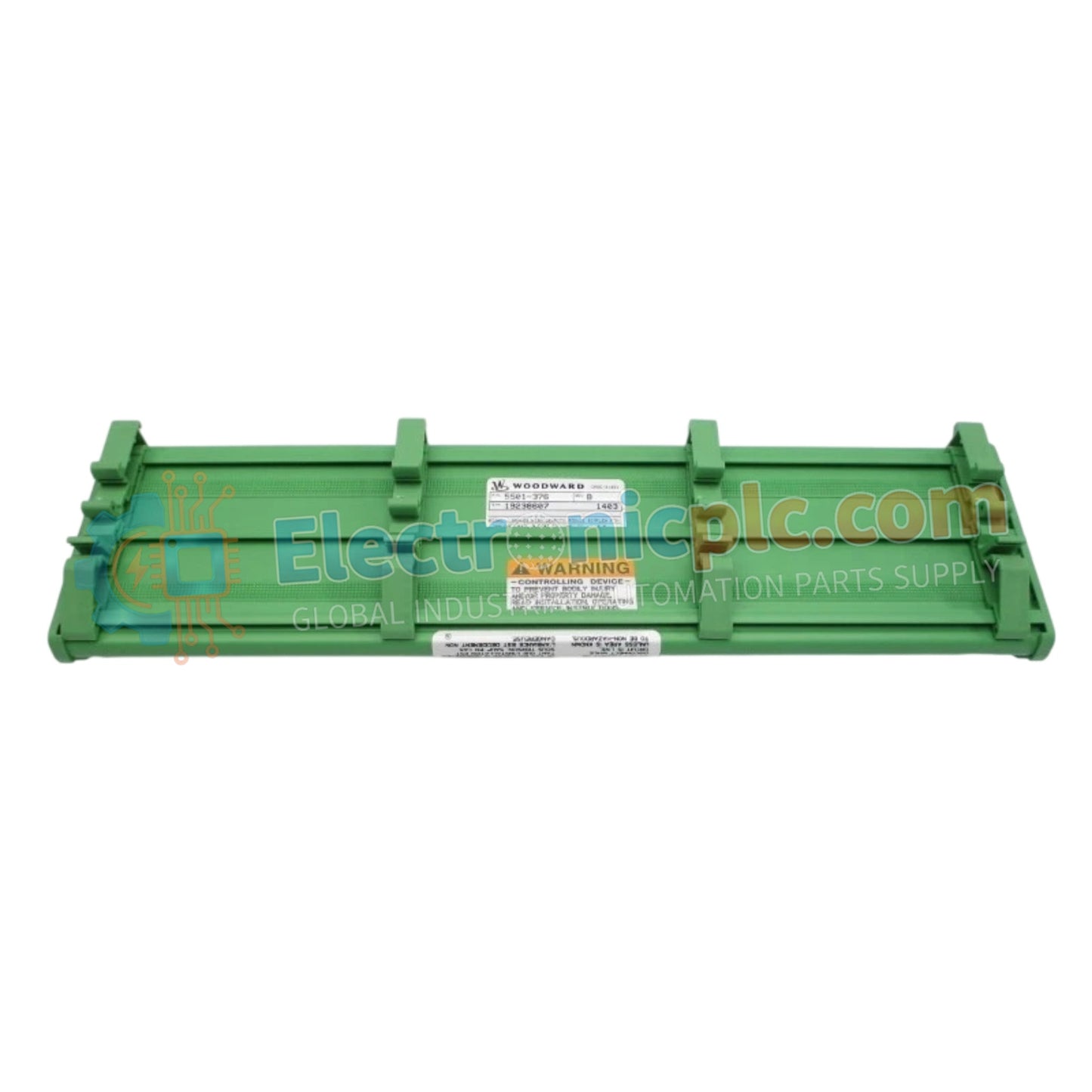
Configured for high-speed signal processing and control loop interfacing in industrial automation platforms, the Woodward 5501-376 (5501-376 Analog I/O Module) provides direct physical/electrical execution. The module processes 8 channels of 4-20 mA inputs and converts frequency inputs spanning 100 - 25,000 Hz into discrete 0-10 V voltage outputs across an RS-485 serial communication bus, maintaining an update cycle of 5 ms and galavanic isolation up to 500 Vrms.
| Parameter | Specification |
|---|---|
| Model | 5501-376 |
| Brand | Woodward |
| Origin | USA |
| Weight | 0.85kg |
| Dimensions | Standard Woodward Rack / Din-Rail Layout |
| Operating Temp | -40 deg C to +85 deg C |
| Power Consumption | <= 15 W |
| Operating Voltage | 24 VDC |
| Number of Channels | 8 |
| Input Range | 4-20 mA |
| Input Frequency | 100 - 25,000 Hz |
| Input Amplitude | 1-25 Vrms |
| Input Impedance | 2000 Ohms |
| Output Type | Voltage (0-10 V) |
| Communication Interface | RS-485 |
| Resolution | 12 bits minimum |
| Accuracy | 0.03% full scale (software calibrated) |
| Isolation Voltage | 500 Vrms |
| Update Time | 5 ms |
The module integrates specialized signal processing routines designed to maintain rapid actuator loop feedback response within governor and drive control architectures. By executing high-speed analog acquisition alongside frequency input decoding (100 - 25,000 Hz) at a 5 ms update rate, the module minimizes phase lag during transient load changes. Digital filtering algorithms process raw sensor waveforms (1-25 Vrms amplitude) into 12-bit resolved numerical data, preventing actuator hunting and maintaining loop stability across fluctuating operating conditions.
Q: How does the module handle ground loops and electrical interference across analog channels?
A: The board features 500 Vrms galvanic isolation between the internal processing logic and field side terminals, preventing common-mode noise and ground potential differences from corrupting input signal accuracy.
Q: What is the required bus termination standard for the onboard RS-485 interface?
A: The RS-485 differential line requires a 120 Ohm termination resistor placed across the physical signal pair at both extreme ends of the network trunk to eliminate line reflections during high-baud data transmission.
Q: Can the input channels accept high-frequency speed sensor signals directly?
A: Yes, the module accepts frequency inputs ranging from 100 to 25,000 Hz with amplitudes between 1 and 25 Vrms, processing these waveforms directly without external signal conditioning circuitry.


