
Carrito
0 artículos
¿Tienes una cuenta?
Inicia sesión para finalizar tus compras con mayor rapidez.
Repuestos originales de automatización | Envío exprés a todo el mundo | Garantía de 12 meses — [Solicite presupuesto]

Configured for industrial automation and process control architectures, the YOKOGAWA CTL4*B (CTL4-B) Interface Module Card provides seamless connectivity and communication handling within Yokogawa distributed control systems.
Disponibilidad: Bajas existencias: quedan 50
Entrega confiable a nivel mundial
Garantía de devolución de dinero de 30 días
¿Necesitas más información? Consulta nuestra Política de envíos y reembolsos completa.


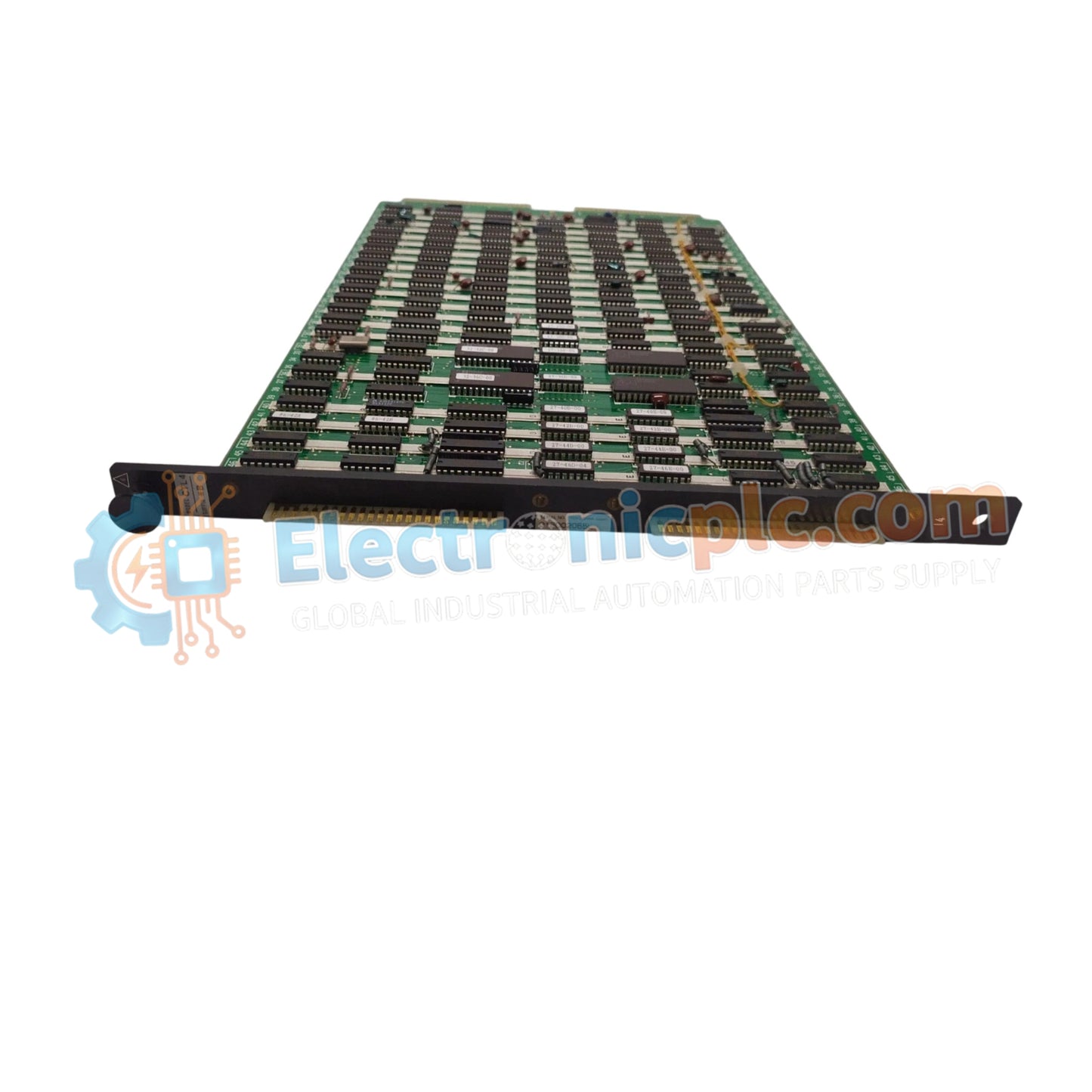
Configured for industrial automation and process control architectures, the YOKOGAWA CTL4*B (CTL4-B) Interface Module Card provides seamless connectivity and communication handling within Yokogawa distributed control systems.
| Parameter | Specification |
|---|---|
| Model | CTL4*B (CTL4-B) |
| Brand | YOKOGAWA |
| Origin | Japan |
| Weight | 0.2 kg |
| Dimensions | 130 x 36 x 120 mm |
| Operating Temp | 0 deg C to 50 deg C |
| Power Supply | 24 VDC nominal |
| Mounting Type | DIN Rail Mountable |
| Communication Interface | Standard serial and field communication protocols |
The module incorporates robust signal-conditioning pathways designed to suppress line transients and electromagnetic interference across extended industrial data links. Internal isolation circuitry protects central processing nodes from common-mode voltage spikes and ground potential variations originating in field instrumentation. State-of-the-art transceiver channels maintain low signal attenuation and precise packet timing across connected Yokogawa CENTUM and controller platforms.
Q: What mounting system is required for the CTL4*B interface card?
A: The module is engineered for standard DIN rail mounting within industrial control cabinets.
Q: What primary role does the CTL4*B module serve in a control network?
A: It functions as a reliable interface bridge, ensuring seamless communication and signal data exchange between field devices and Yokogawa distributed control architectures.
Mount the CTL4*B module securely onto standard DIN rails within a protective control enclosure, ensuring adequate clearance for ambient air convection and natural cooling. Terminate communication and power lines tightly to the designated screw terminals, verifying correct polarity and shield grounding to prevent noise coupling. Confirm that supply voltage levels match operational requirements prior to system energization.


