
Carrito
0 artículos
¿Tienes una cuenta?
Inicia sesión para finalizar tus compras con mayor rapidez.
Repuestos originales de automatización | Envío exprés a todo el mundo | Garantía de 12 meses — [Solicite presupuesto]

El YOKOGAWA NFAF135-S50 (módulo de entrada de pulso NFAF135-S50) sirve como el módulo de entrada de pulso NFAF135-S50 principal utilizado para ejecutar la adquisición de señales de pulso de alta...
Disponibilidad: En existencias
Entrega confiable a nivel mundial
Garantía de devolución de dinero de 30 días
¿Necesitas más información? Consulta nuestra Política de envíos y reembolsos completa.


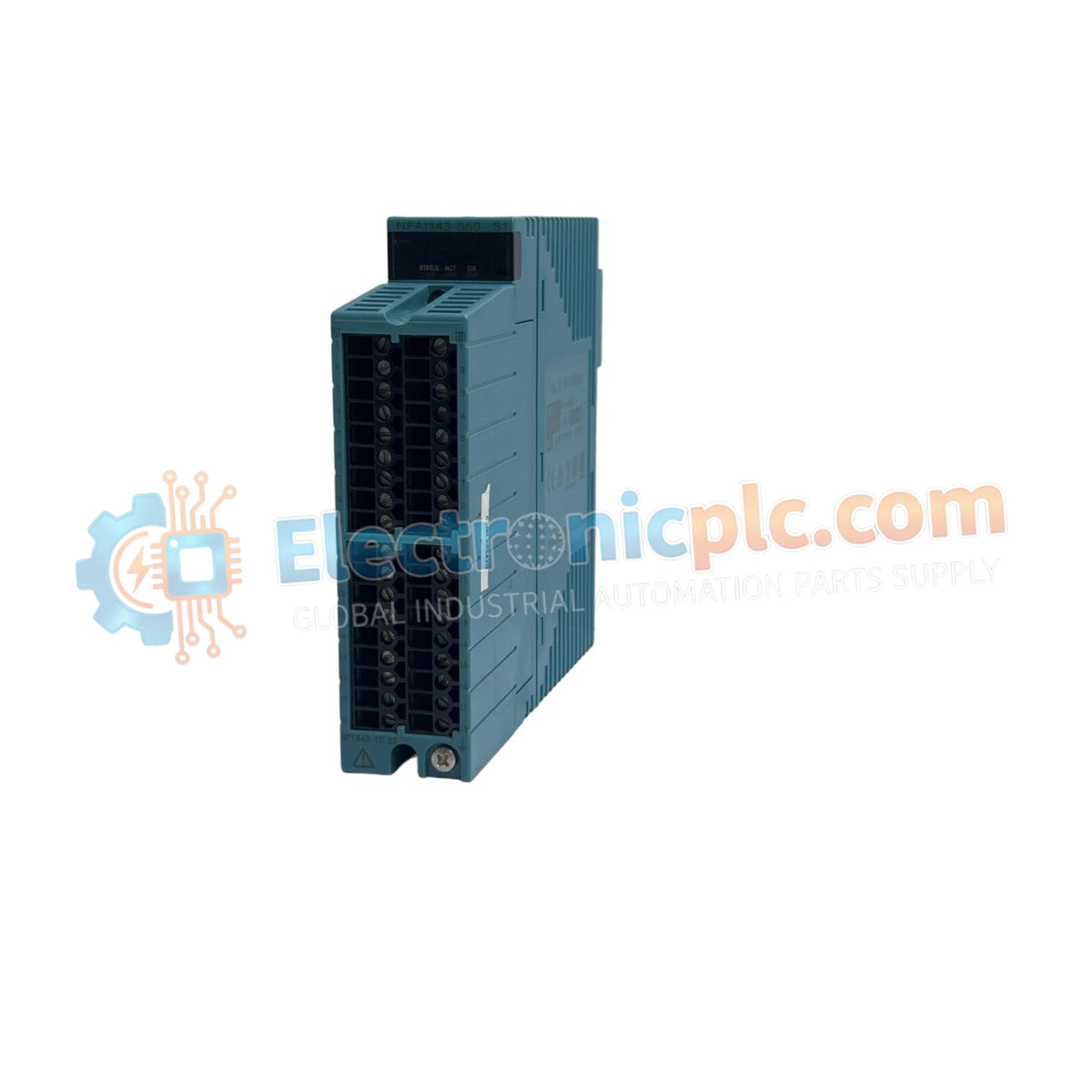
El YOKOGAWA NFAF135-S50 (módulo de entrada de pulso NFAF135-S50) sirve como el módulo de entrada de pulso NFAF135-S50 principal utilizado para ejecutar la adquisición de señales de pulso de alta velocidad en las plataformas CENTUM VP y ProSafe-RS.
| Parámetro | Especificación |
|---|---|
| Modelo | NFAF135-S50 S1 |
| Marca | YOKOGAWA |
| Origen | JAPÓN |
| Peso | 0,3 kg |
| Dimensiones | 32,8 mm x 107,5 mm x 130 mm |
| Temperatura de funcionamiento | -20 a 70 grados C |
| Consumo de energía | 3,0 W (típico) |
| Canales de entrada | Entrada de pulso aislada de 8 canales |
| Compatibilidad de señal | Pulso de 2 hilos / 3 hilos, contacto seco, pulso de voltaje/corriente |
El módulo implementa un procesamiento de señal de alta fidelidad a través de un robusto aislamiento de canal a canal. Al mantener la separación galvánica entre los circuitos de entrada de pulso individuales y el backplane del sistema, el NFAF135-S50 minimiza el ruido de modo común y evita la interferencia de bucle de tierra. Cada canal está diseñado para una medición precisa de la frecuencia y una totalización de pulsos, lo que facilita la interfaz directa con caudalímetros de turbina y sensores de velocidad de rotación en los bucles de control de procesos. La arquitectura interna proporciona capacidades de suministro de voltaje a los transmisores montados en campo, lo que simplifica el cableado del bucle para la instrumentación basada en frecuencia.
P: ¿El módulo admite la detección de frecuencia para transmisores de pulso de 2 y 3 hilos? R: Sí, el NFAF135-S50 es arquitectónicamente compatible con configuraciones de campo de 2 y 3 hilos, proporcionando la potencia de excitación necesaria para los respectivos tipos de transmisores.
P: ¿Cómo maneja el módulo los transitorios de alta frecuencia dentro del entorno DCS? R: El módulo utiliza circuitos de muestreo de alta velocidad diseñados para mitigar la fluctuación de la señal y mantener la precisión del recuento de pulsos, con el aislamiento eléctrico actuando como la barrera principal contra la interferencia de ruido electromagnético.


