
My Cart
0 items
Genuine Automation Parts | Worldwide Express Delivery | 12-Month Warranty — [GET A QUOTE]

The 172109-01 is a high-performance Input/Output (I/O) interface specifically engineered for the Bently Nevada 3500/65 Temperature Monitor. This rear-mount module provides the physical termination and signal conditioning required...
Availability: Low stock: 10 left
Reliable Worldwide Delivery
30-Day Money-Back Guarantee
Need more details? Read our fullShipping PolicyandRefund Policy.


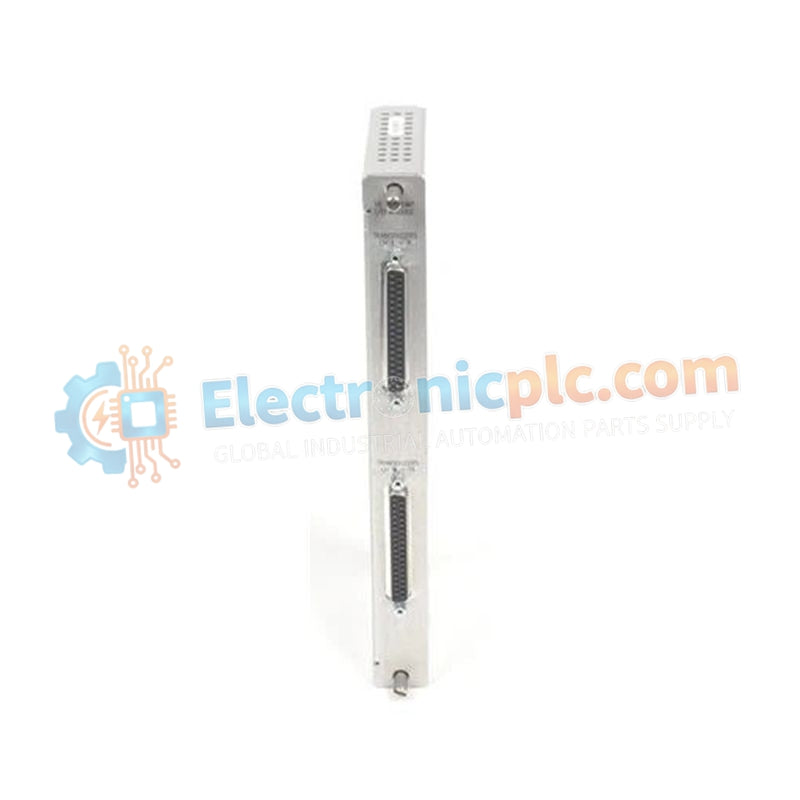
The 172109-01 is a high-performance Input/Output (I/O) interface specifically engineered for the Bently Nevada 3500/65 Temperature Monitor. This rear-mount module provides the physical termination and signal conditioning required to interface field-mounted temperature sensors with the 3500 series machinery protection rack. It is specifically designed to support Resistance Temperature Detectors (RTDs) and Isolated Tip Thermocouples (TCs), ensuring high-integrity data transmission for critical thermal monitoring of bearings, windings, and lube oil systems.
| Specification | Details |
|---|---|
| Channel Configuration | Supports up to 16 independent temperature inputs |
| Compatible Sensor Types | 3-wire RTDs (Pt100, Ni100) and Isolated Tip Thermocouples (Types J, K, E, T, S) |
| Signal Isolation | High-grade galvanic isolation to prevent ground loops and electrical interference |
| Cold Junction Compensation | Onboard precision compensation for thermocouple accuracy |
| Connection Interface | High-density terminal headers for secure field wiring |
| Physical Dimensions | 2.5 cm x 25.8 cm x 12.0 cm |
| Unit Weight | 0.82 kg |
| Operating Temperature | -30°C to +65°C (-22°F to +149°F) |
The 172109-01 installs directly into the rear of the 3500 rack, aligned with the 3500/65 monitor module. This architecture separates the sensitive processing electronics from the field wiring, enhancing system reliability. The "Isolated Tip" design is critical for industrial environments, as it allows the module to accurately read thermocouple signals even when the sensor tip is in contact with grounded machinery components, provided the sensor itself is internally isolated.
Q: Can the 172109-01 be used with non-isolated (grounded) thermocouples?
A: No. Using grounded thermocouples with this specific I/O module will likely result in measurement errors or noise interference. For grounded thermocouple applications, a different I/O variant with higher channel-to-channel isolation is required.


