Skip to product information
1 of 3

AAM21 Yokogawa TC Input Module Datasheet & Technical Manual

AAM21 Yokogawa TC Input Module Datasheet & Technical Manual

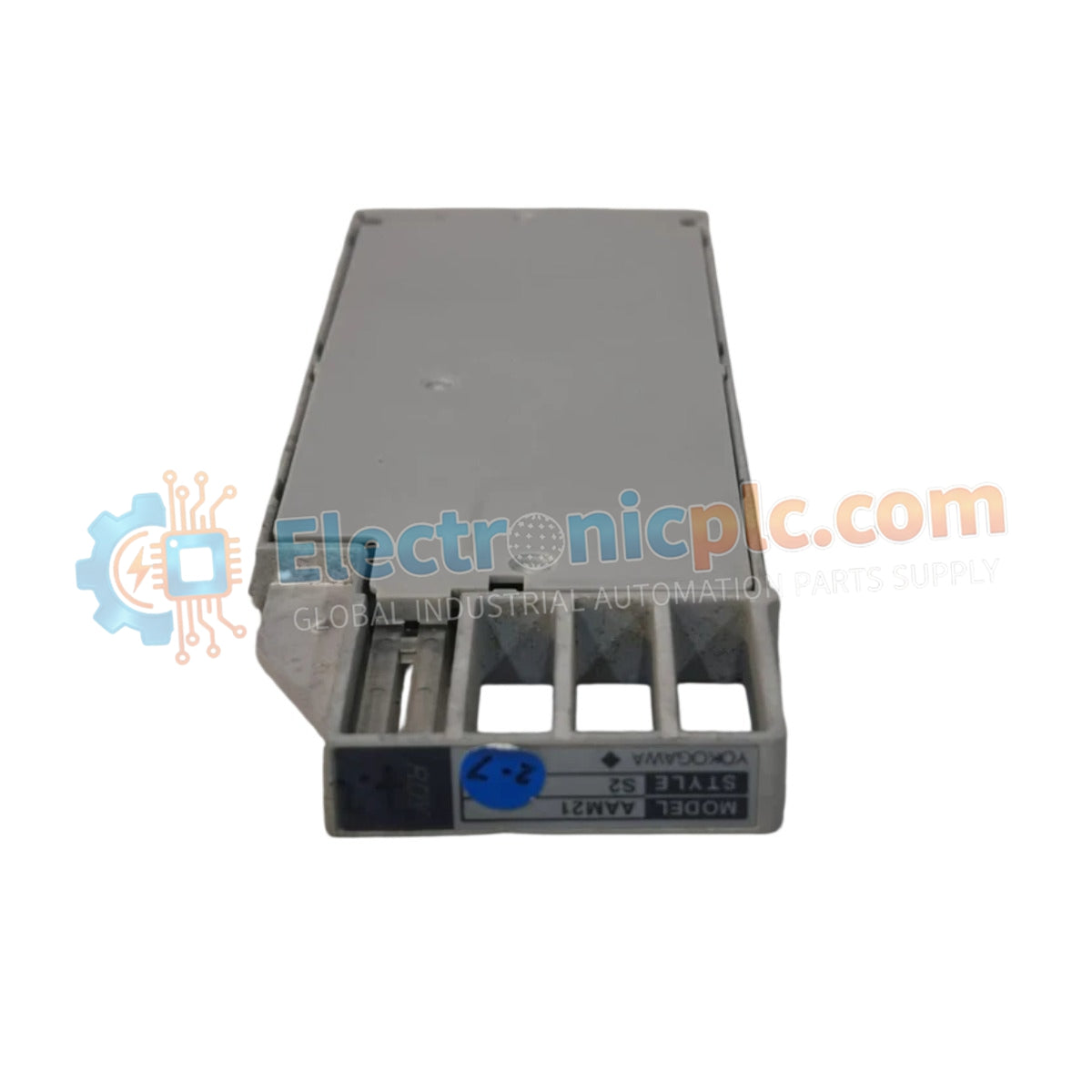
The Yokogawa AAM21, also cataloged as the AAM21 TC Input Module, operates as a dedicated hardware component for thermoelement signal acquisition within CENTUM CS and CENTUM VP control platforms.

Hardware...

25 people are viewing this right now

AvailabilityLow stock: 99 left

SKU: AAM21
Vendor: Yokogawa
Category: TC Input Module
Related Series:

Shipping & Returns

Reliable Worldwide Delivery

  • Carriers: Shipped via DHL, FedEx, UPS, or USPS.
  • Dispatch: Orders processed in 1-2 business days and dispatched within 3-5 business days.
  • Tracking: Full tracking details provided via email upon shipment.

30-Day Money-Back Guarantee

  • Guarantee: 30-day return window for in-stock, factory-sealed products.
  • Condition: Items must be unopened, unused, and in original packaging.
  • Authenticity: We guarantee 100% original and authentic hardware.

Need more details? Read our fullShipping PolicyandRefund Policy.

Authenticity & Warranty

  • Genuine Guarantee: We supply only 100% original, brand-new, and factory-sealed industrial automation parts.
  • Full Coverage: Every component is backed by a 12-month comprehensive warranty from the date of purchase.
  • Traceability: All products come with original factory documentation and accessories for full industrial compliance.

Technical Support & Sourcing

  • Expert Assistance: Our technical team provides free consultation to help you verify compatibility for DCS and PLC systems.
  • Rare Part Sourcing: Specializing in obsolete and hard-to-find components from Allen-Bradley, Siemens, ABB, HIMA, and more.
  • Bulk Inquiries: Contact us at pambo@5gplc.com for volume pricing or customized project quotes.
View full product details

The Yokogawa AAM21, also cataloged as the AAM21 TC Input Module, operates as a dedicated hardware component for thermoelement signal acquisition within CENTUM CS and CENTUM VP control platforms.

Hardware Specifications

Parameter Specification
Model AAM21
Brand Yokogawa
Origin Japan
Weight 0.1 kg
Dimensions 7.6 cm x 0.0 cm x 17.8 cm
Operating Temp 0 to 50 deg C
Power Consumption 200 mA at 5 VDC
Input Channels Multi-channel thermocouple support
Signal Input mV / TC (Type K, T, J, E, R, S, B)

Process Control and Signal Conditioning

The AAM21 module utilizes integrated cold junction compensation (CJC) to maintain precise temperature measurement accuracy across all channels. By employing active filtering and channel-to-channel isolation, the module eliminates measurement errors resulting from common-mode noise inherent in distributed control systems. The signal processing architecture is optimized for 4-20 mA HART loop protocol compatibility when converted, ensuring seamless integration with existing process instrumentation and DCS databases.

Frequently Asked Questions

Q: Does the AAM21 support wire break detection for connected thermocouples?

A: Yes, the module performs diagnostic checks for open-circuit conditions, reporting a fault state through the field control station diagnostic bits.

Q: Is field-side power required for the AAM21 module operation?

A: No, the module draws operating power directly from the internal backplane bus; field instruments connected to the inputs must be passive or self-powered depending on loop configuration requirements.

Field Installation Guidelines

  1. Verify that the module is installed in the designated I/O rack slot and that the backplane connector is free of debris.
  2. Terminate thermocouple leads using matched compensation wire to minimize thermal EMF errors at the terminal junction.
  3. Ensure that the shield for each thermocouple cable is properly grounded at the barrier or terminal rail to suppress EMI and RFI ingress.
  4. Secure the module using the integrated front-panel locking mechanisms to ensure a reliable connection with the backplane bus.
  5. Configure the channel input type and burnout direction (upscale/downscale) within the control system software to ensure expected behavior during a sensor failure.