
My Cart
0 items
Genuine Automation Parts | Worldwide Express Delivery | 12-Month Warranty — [GET A QUOTE]

The CI541V1 (3BSE014666R1) is a high-speed communication interface submodule designed for ABB Advant OCS and AC 400 Series control systems.
This precision-engineered component enables reliable data exchange between the main controller and...
Availability: Low stock: 10 left
Reliable Worldwide Delivery
30-Day Money-Back Guarantee
Need more details? Read our fullShipping PolicyandRefund Policy.


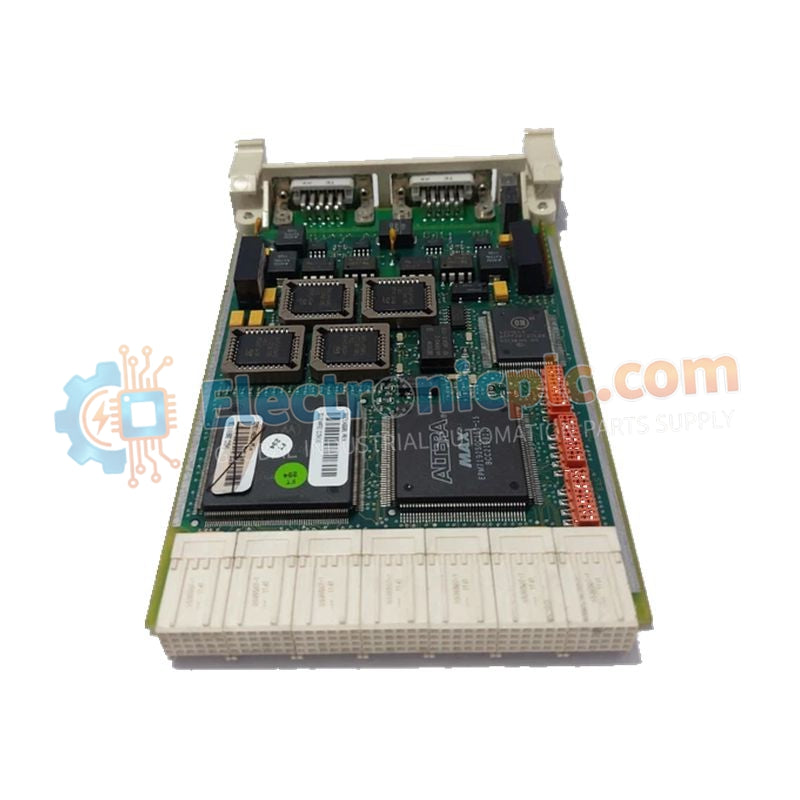
The CI541V1 (3BSE014666R1) is a high-speed communication interface submodule designed for ABB Advant OCS and AC 400 Series control systems.
This precision-engineered component enables reliable data exchange between the main controller and distributed fieldbus networks, acting as a critical communication node within decentralized control architectures.
With its compact, slim-profile design, the CI541V1 is intended for installation onto a dedicated carrier or base unit. It provides physical and logical protocol handling to ensure real-time process data transmission with low latency and strong electromagnetic immunity.
The module is optimized for industrial environments requiring stable long-distance communication between controllers, remote I/O stations, and intelligent field devices.
| Specification | Description |
|---|---|
| Model Designation | CI541V1 |
| Part Number | 3BSE014666R1 |
| Module Type | Communication Interface Submodule |
| Compatible Systems | ABB Advant OCS, AC 400 Series |
| Function | Fieldbus communication interface |
| Data Transmission Rate | Up to 12 Mbit/s (protocol dependent) |
| Isolation | Opto-isolated signal paths |
| Power Supply | Powered via carrier/base unit |
| Dimensions (H × W × D) | 13.0 cm × 1.9 cm × 19.1 cm |
| Weight | 0.2 kg |
The CI541V1 is commonly deployed in:
Power generation and distribution systems
Oil and gas processing facilities
Marine and offshore automation
Large-scale distributed control systems (DCS)
Remote I/O and IED integration networks
It is particularly suitable for installations requiring synchronized, high-speed communication across extended fieldbus networks.
What is the difference between a module and a submodule like the CI541V1?
The CI541V1 is a submodule, meaning it is installed into a larger carrier module. The submodule provides the communication protocol processing, while the carrier supplies physical connectivity and power distribution.
Does this unit require configuration?
Yes. Initial setup typically involves hardware address settings (e.g., DIP switches) and/or configuration within the ABB engineering software environment to define its role and position in the bus topology.


