
My Cart
0 items
Genuine Automation Parts | Worldwide Express Delivery | 12-Month Warranty — [GET A QUOTE]

Configured for high-speed signal conversion and optical network interfacing in CENTUM VP systems, the Yokogawa AIP578 (AIP578 Electrical Transceiver RIO I/O Module) provides direct physical execution of data transmission between...
Availability: Low stock: 99 left
Reliable Worldwide Delivery
30-Day Money-Back Guarantee
Need more details? Read our fullShipping PolicyandRefund Policy.


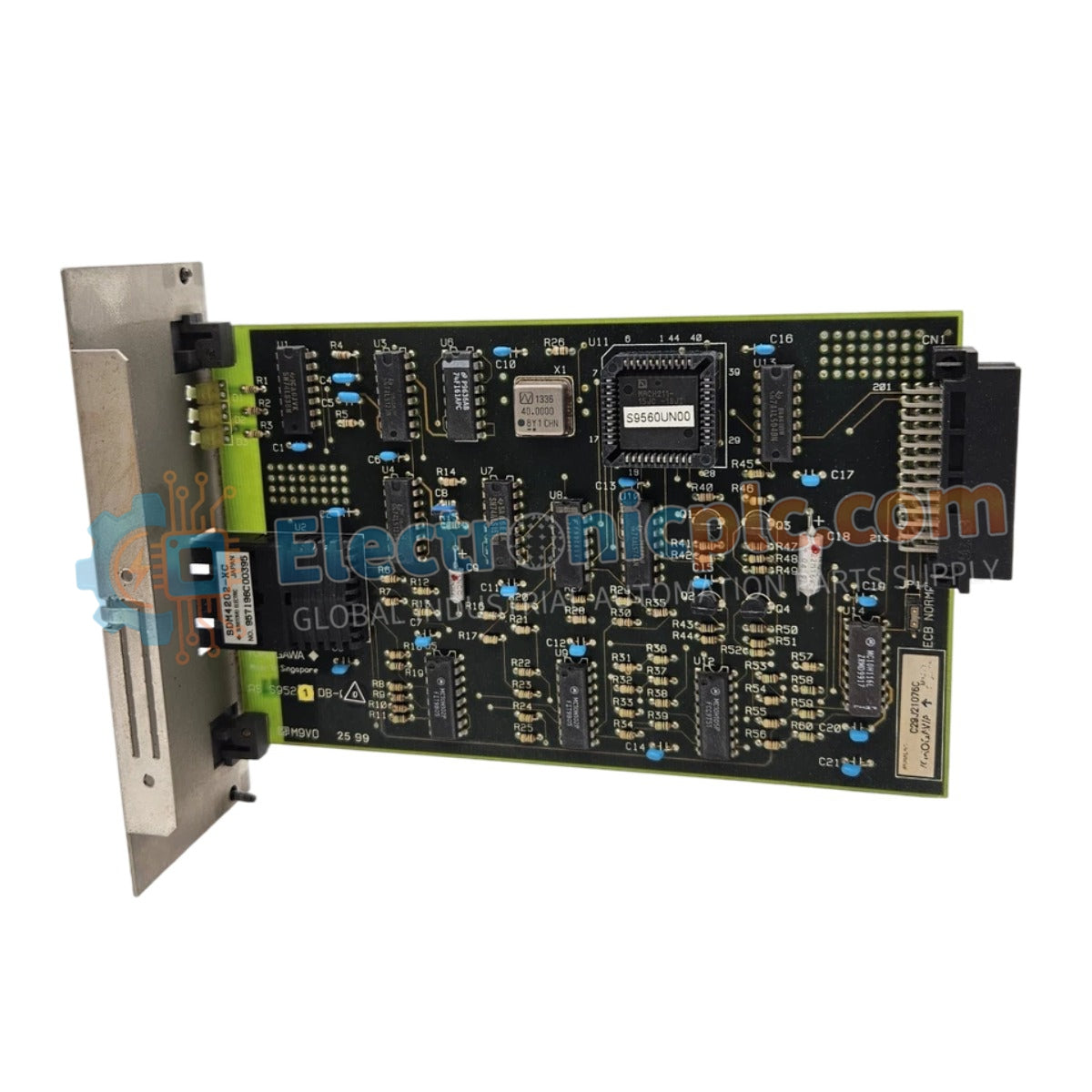
Configured for high-speed signal conversion and optical network interfacing in CENTUM VP systems, the Yokogawa AIP578 (AIP578 Electrical Transceiver RIO I/O Module) provides direct physical execution of data transmission between Remote I/O nodes and the Field Control Unit (FCU) via fiber-optic communication paths.
| Parameter | Specification |
|---|---|
| Model | AIP578 |
| Brand | Yokogawa |
| Origin | Japan |
| Weight | 0.5 kg |
| Dimensions | 160 mm x 60 mm x 30 mm |
| Operating Temp | -20 deg C to 70 deg C |
| Power Consumption | 24 VDC / 20 W |
| Transmission Speed | Up to 100 Mbps |
| Communication Medium | Optical fiber cable |
The AIP578 operates as a high-bandwidth transceiver, ensuring galvanic isolation between the field control network and remote I/O subsystems. By utilizing optical fiber, the module effectively eliminates signal degradation due to electromagnetic interference (EMI) and common-mode noise. The architecture supports redundant communication paths, allowing the DCS to maintain uninterrupted control loop execution during fiber link failures. Internal buffer management ensures that FOUNDATION Fieldbus and HART protocol data packets meet deterministic timing requirements across the distributed network.
Q: Can the AIP578 be utilized in a non-redundant configuration?
A: Yes, the module is backward compatible with single-path configurations; however, redundant path topology is recommended to ensure high availability and continuous communication in mission-critical process loops.
Q: How can I diagnose a fiber-optic communication fault on this module?
A: Status LEDs on the front panel provide real-time indication of optical signal strength and synchronization state. If the link LED is not active, verify the integrity of the optical fiber termination and ensure the transceiver dust covers were removed during installation.


