
My Cart
0 items
Genuine Automation Parts | Worldwide Express Delivery | 12-Month Warranty — [GET A QUOTE]

The 1769-SM2 (Part Number: 1769-SM2) is a specialized communication expansion module designed to bridge Allen-Bradley CompactLogix or MicroLogix 1500 controllers with serial-based motor drives and peripheral devices. This module serves as the primary interface for connecting to...
Availability: Low stock: 99 left
Reliable Worldwide Delivery
30-Day Money-Back Guarantee
Need more details? Read our fullShipping PolicyandRefund Policy.


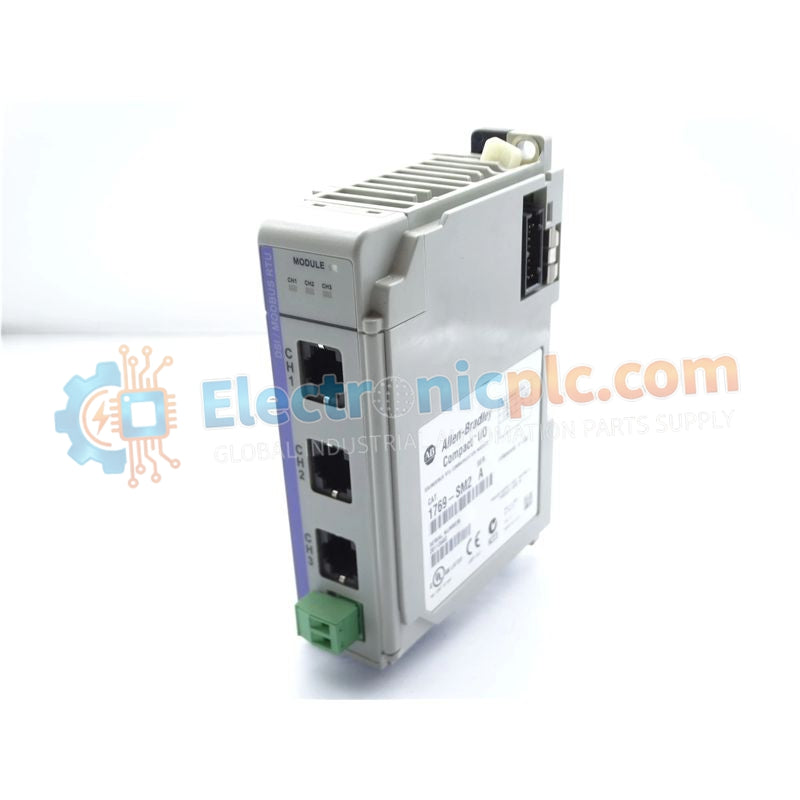
The 1769-SM2 (Part Number: 1769-SM2) is a specialized communication expansion module designed to bridge Allen-Bradley CompactLogix or MicroLogix 1500 controllers with serial-based motor drives and peripheral devices. This module serves as the primary interface for connecting to the PowerFlex 4-class component drives via the Drive Serial Interface (DSI) protocol. Additionally, it functions as a versatile Modbus RTU master, allowing the controller to collect data from a wide array of third-party industrial hardware such as power meters and HVAC sensors.
A key feature of the 1769-SM2 is its dual-mode capability. It can be configured for Single Drive Mode to control one drive with high performance, or Multi-Drive Mode, which enables a single module to manage multiple drives on a daisy-chained network. This flexibility significantly reduces the hardware footprint and cost in multi-axis applications. For PowerFlex 7-class drives, the module can be paired with the 20-HIM-H-RS485-HVAC adapter to provide a robust serial link into the 1769 backplane.
| Specification | Details |
|---|---|
| DSI Baud Rate | Fixed at 19200 bps |
| Backplane Current Draw | 350 mA at 5V DC; 0 mA at 24V DC |
| Power Supply Distance Rating | 4 modules (must be located within 4 slots of the power supply) |
| Installation | Local expansion for MicroLogix 1500 or CompactLogix |
| Indicators | Status LEDs for Module, Network, and Channel activity |
| Weight | 0.17 kg |
The 1769-SM2 is widely used in conveyor systems and fan/pump control applications where multiple PowerFlex drives must be synchronized or monitored via a single PLC. It is also an excellent solution for integrating Modbus-based environmental sensors into a Rockwell Automation environment without the need for expensive Ethernet-to-Serial gateways.
Does this module support Modbus TCP/IP?
No, the 1769-SM2 is strictly for serial communication (Modbus RTU). For Modbus TCP/IP, you would typically use an EtherNet/IP to Modbus TCP gateway or a controller with native Modbus TCP support.
Can I use this module to program the drives?
The module allows the PLC to read and write drive parameters and control the start/stop/speed commands. However, for initial drive commissioning, most engineers still use the drive’s keypad or a dedicated PC interface.


