
My Cart
0 items
Genuine Automation Parts | Worldwide Express Delivery | 12-Month Warranty — [GET A QUOTE]

The YOKOGAWA ALR121-S50S1, also cataloged as the ALR121 Communication Module, operates as a dedicated hardware component for serial data communication within CENTUM VP and CENTUM CS 3000 control system platforms. This module provides...
Availability: In stock
Reliable Worldwide Delivery
30-Day Money-Back Guarantee
Need more details? Read our fullShipping PolicyandRefund Policy.


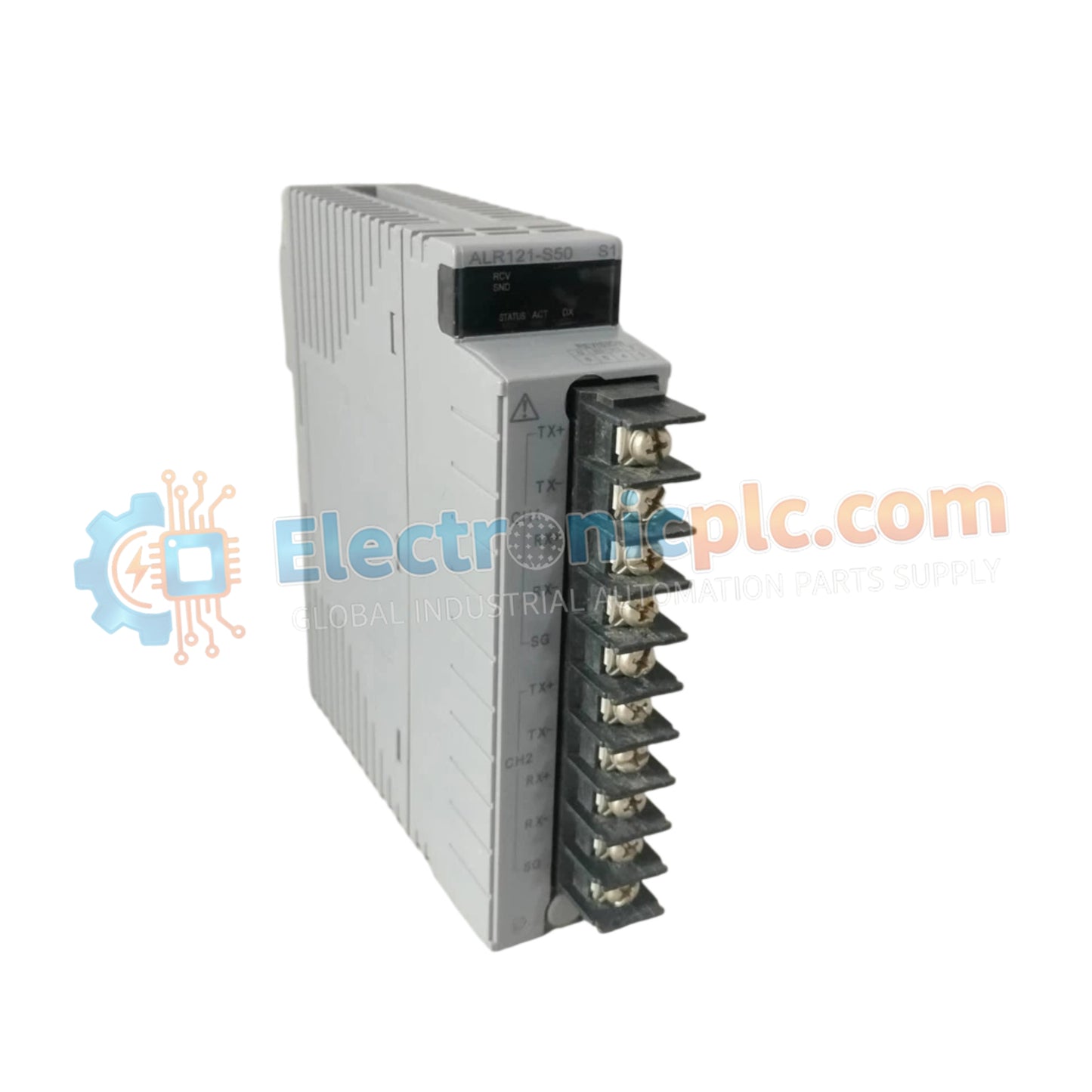
The YOKOGAWA ALR121-S50S1, also cataloged as the ALR121 Communication Module, operates as a dedicated hardware component for serial data communication within CENTUM VP and CENTUM CS 3000 control system platforms. This module provides direct physical/electrical execution for interfacing field devices, such as PLCs, analyzers, or power monitors, via standard serial protocols.
The ALR121-S50S1 is designated by the following configuration attributes:
ALR121: Base model designation for the serial communication module.
S50: Specifies the standard operating configuration for CENTUM series integration.
S1: Indicates the hardware revision and specific terminal interface for the module assembly.
| Parameter | Specification |
| Model | ALR121-S50S1 |
| Brand | YOKOGAWA |
| Origin | Japan |
| Weight | 0.5 kg |
| Dimensions | 2.2 cm x 12.4 cm x 12.6 cm |
| Operating Temp | 0 deg C to 50 deg C |
| Power Consumption | 5 V DC, 0.4 A |
| Interface | RS-422/RS-485 |
| Channels | 2 ports |
The ALR121 module acts as a communications gateway, facilitating the integration of non-proprietary field equipment into the DCS environment. It supports high-speed backplane bus communication velocity to ensure deterministic data exchange between external serial devices and the station controller. The module's internal logic handles frame framing, error checking, and protocol conversion, which effectively minimizes the CPU scan load and ensures consistent data timing across the serial network.
Q: Can the ALR121-S50S1 be used for redundant communication configurations?
A: Yes, the ALR121 is designed for use in dual-redundant configurations. When paired, the modules provide automatic failover capability, ensuring continuous data availability if one communication port or module fails.
Q: Are the serial ports on the ALR121 electrically isolated?
A: The ALR121 module provides galvanic isolation for its serial ports, which is critical for protecting the DCS backplane from ground potential differences and induced transients commonly present in long-distance field serial wiring.
Verify the backplane power supply is stable and within nominal limits before inserting the module into the designated slot.
Utilize high-quality shielded twisted-pair cabling for RS-422/RS-485 connections. Terminate the shield at a single ground reference point to prevent ground loops.
Ensure line termination resistors (typically 120 Ohms) are applied at both physical ends of the serial bus segment to minimize signal reflections and maintain high-speed communication integrity.
After hardware installation, configure the communication parameters (baud rate, parity, stop bits) via the CENTUM system builder software to match the settings of the connected field equipment.
Periodically inspect the terminal connections and communication cabling for physical wear or oxidation, which can lead to increased bit error rates.


