Skip to product information
1 of 3

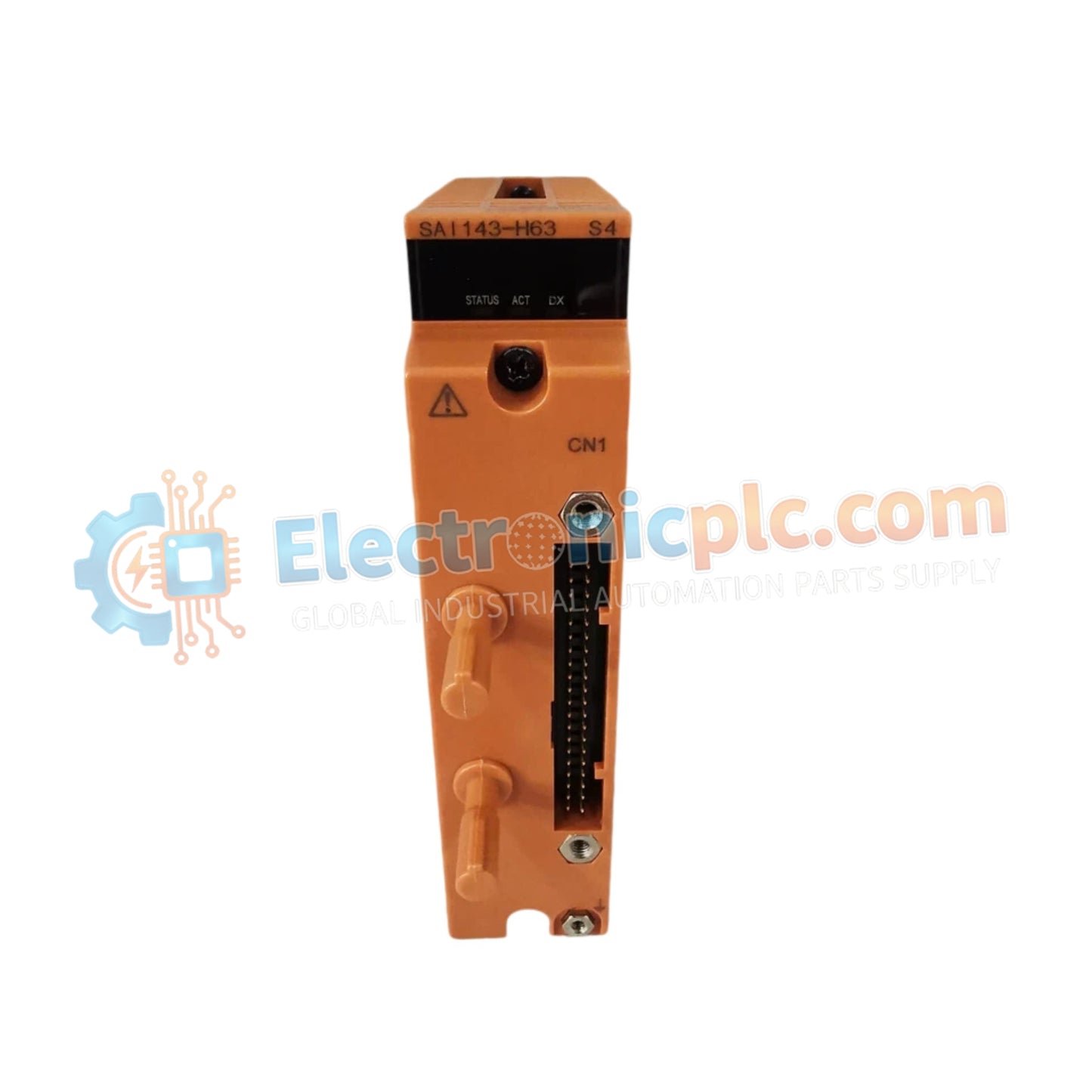
Analog Input Module Yokogawa SAI143-H63

Analog Input Module Yokogawa SAI143-H63

The Yokogawa SAI143-H63, also cataloged as the SAI143 Analog Input Module, operates as a dedicated hardware component for high-density signal acquisition within distributed control system platforms.

Suffix Breakdown & Model...

27 people are viewing this right now

AvailabilityIn stock

SKU: SAl143-H63
Vendor: Yokogawa
Related Series:

Shipping & Returns

Reliable Worldwide Delivery

  • Carriers: Shipped via DHL, FedEx, UPS, or USPS.
  • Dispatch: Orders processed in 1-2 business days and dispatched within 3-5 business days.
  • Tracking: Full tracking details provided via email upon shipment.

30-Day Money-Back Guarantee

  • Guarantee: 30-day return window for in-stock, factory-sealed products.
  • Condition: Items must be unopened, unused, and in original packaging.
  • Authenticity: We guarantee 100% original and authentic hardware.

Need more details? Read our fullShipping PolicyandRefund Policy.

Authenticity & Warranty

  • Genuine Guarantee: We supply only 100% original, brand-new, and factory-sealed industrial automation parts.
  • Full Coverage: Every component is backed by a 12-month comprehensive warranty from the date of purchase.
  • Traceability: All products come with original factory documentation and accessories for full industrial compliance.

Technical Support & Sourcing

  • Expert Assistance: Our technical team provides free consultation to help you verify compatibility for DCS and PLC systems.
  • Rare Part Sourcing: Specializing in obsolete and hard-to-find components from Allen-Bradley, Siemens, ABB, HIMA, and more.
  • Bulk Inquiries: Contact us at pambo@5gplc.com for volume pricing or customized project quotes.
View full product details

The Yokogawa SAI143-H63, also cataloged as the SAI143 Analog Input Module, operates as a dedicated hardware component for high-density signal acquisition within distributed control system platforms.

Suffix Breakdown & Model Matrix

  • SAI143: Base model designation for 16-channel analog input module.
  • H63: Configuration code denoting the specific hazardous area specification and mounting compliance for the module series.

Hardware Specifications

Parameter Specification
Model SAI143-H63
Brand Yokogawa
Origin Japan
Weight 0.3 kg
Dimensions 12.7 cm x 22.9 cm x 17.8 cm
Operating Temp 0 to 50 deg C
Power Consumption 24 V DC (via I/O bus)
Channel Capacity 16 channels
Input Signal 4-20 mA

Process Control and HART Connectivity

The SAI143-H63 module is engineered to support the 4-20 mA HART loop protocol, enabling bidirectional data exchange between field instruments and the host control unit. The module architecture features advanced channel-to-channel isolation, a necessary design feature to prevent ground loops and mitigate common-mode noise propagation in complex instrumentation arrays. By facilitating precise A/D conversion, this unit ensures signal integrity for critical process variables.

Frequently Asked Questions

Q: Does the SAI143-H63 support hot-swapping under power?

A: Yes. The module is designed to support hot-swapping within the I/O rack, allowing for maintenance without interrupting the communication of other modules on the same node.

Q: Is this module compatible with existing HART-enabled field transmitters?

A: Yes. The SAI143-H63 acts as a transparent pass-through for HART communication, allowing for device configuration and diagnostic data retrieval from compatible field transmitters through the DCS.

Field Installation Guidelines

  • Secure the module into the designated I/O base plate and ensure the locking mechanism is fully engaged to maintain backplane connectivity.
  • Use shielded twisted-pair cabling for all input loops; connect the cable shield to the cabinet’s common ground bar to prevent electromagnetic interference.
  • Verify that the total loop resistance is within the specified range of the field transmitter and module input impedance requirements.
  • Maintain the operating temperature range between 0 and 50 deg C; ensure cabinet ventilation paths are unobstructed to prevent thermal drift of the analog signals.