
My Cart
0 items
Genuine Automation Parts | Worldwide Express Delivery | 12-Month Warranty — [GET A QUOTE]

The Yokogawa ARM55D, also cataloged as the ARM55D Relay Board, operates as a dedicated hardware component for mechanical dry contact output signal distribution within distributed control systems.
Availability: Low stock: 99 left
Reliable Worldwide Delivery
30-Day Money-Back Guarantee
Need more details? Read our fullShipping PolicyandRefund Policy.


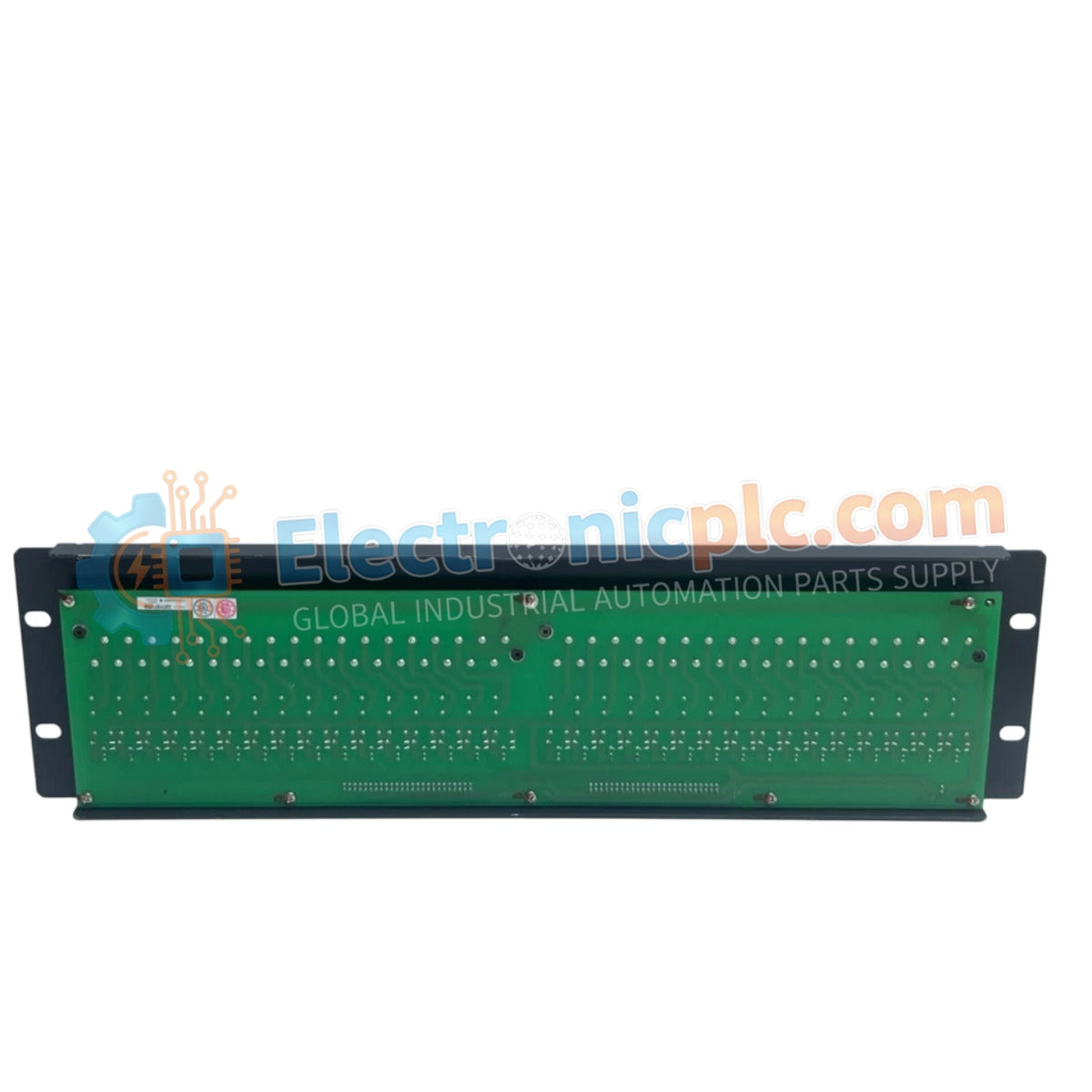
The Yokogawa ARM55D, also cataloged as the ARM55D Relay Board, operates as a dedicated hardware component for mechanical dry contact output signal distribution within distributed control systems.
| Suffix | Description |
|---|---|
| -0 | Standard fixed configuration |
| 0 | 19-inch rack mountable form factor |
| O | Basic functional type |
| Parameter | Specification |
|---|---|
| Model | ARM55D |
| Brand | Yokogawa |
| Origin | Japan |
| Weight | 2.2 kg |
| Dimensions | 48.2 cm x 18.4 cm x 13.2 cm |
| Operating Temp | Standard industrial ambient range |
| Power Consumption | Not applicable (Passive relay drive) |
| Contact Points | 32 |
| Contact Type | Mechanical "a" contact (NO) |
| Insulation Resistance | 10 MOhm at 500 VDC |
| Connection Type | M4 screws |
The ARM55D provides 32 points of mechanical relay output, supporting both single and dual-redundant control configurations. The board utilizes dry contact (NO) outputs to provide complete electrical isolation between the control system logic and the field-level load circuitry. This isolation is critical for preventing high-voltage transients or ground faults from migrating back to the DCS output modules. The robust M4 screw terminal interface ensures low-resistance contact for high-density field wiring, and the insulation resistance specification of 10 MOhm ensures reliable performance in industrial environments.
Q: Can this board be used in a redundant control configuration?
A: Yes, the ARM55D is specifically engineered to support either single or dual-redundant control output architectures, allowing for high availability in critical process loops.
Q: Is the ARM55D suitable for mounting in standard 19-inch cabinets?
A: Yes, the board is designed with a 0-suffix code that specifies compatibility with standard 19-inch rack mounting systems.


