
My Cart
0 items
Genuine Automation Parts | Worldwide Express Delivery | 12-Month Warranty — [GET A QUOTE]

The FM212 is a high-speed communication module engineered for the Bachmann M1 automation system. Acting as the primary FASTBUS master interface, it extends the local backplane to remote I/O stations with zero performance degradation.
...Availability: Low stock: 99 left
Reliable Worldwide Delivery
30-Day Money-Back Guarantee
Need more details? Read our fullShipping PolicyandRefund Policy.


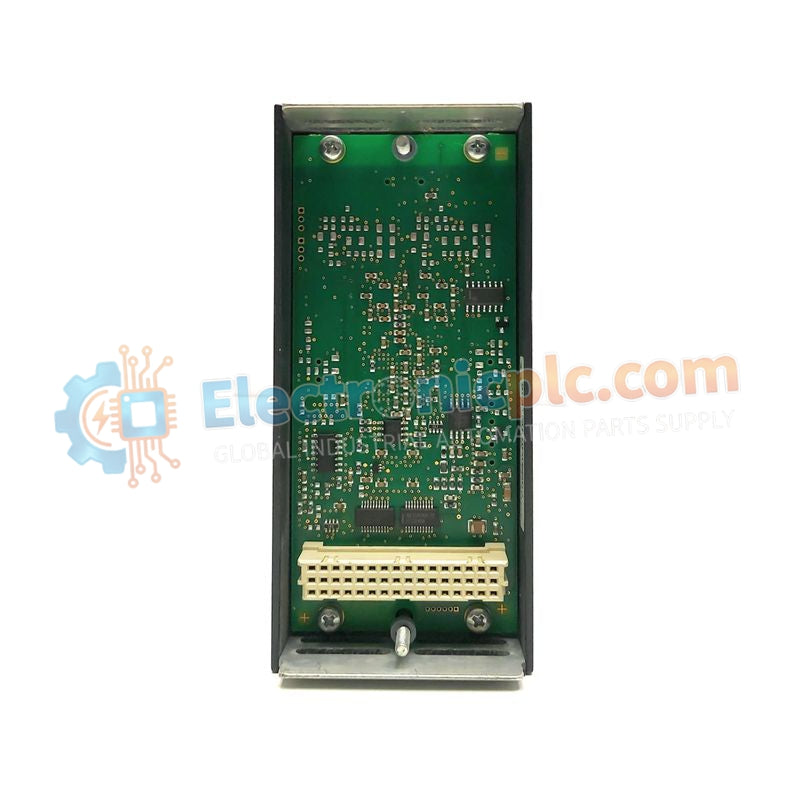
The FM212 is a high-speed communication module engineered for the Bachmann M1 automation system. Acting as the primary FASTBUS master interface, it extends the local backplane to remote I/O stations with zero performance degradation.
Designed for distributed architectures requiring microsecond-level determinism, the FM212 maintains strict synchronization across multiple racks. Its robust mechanical construction ensures stable signal quality in industrial environments with high electromagnetic interference.
| Specification | Details |
|---|---|
| Model Identification | FM212 |
| Manufacturer | Bachmann Electronic GmbH |
| Hardware Function | FASTBUS Master / Extension Module |
| Module Width | 2.2 cm (slim profile) |
| Overall Dimensions (W×H×D) | 2.2 cm × 12.4 cm × 12.6 cm |
| Unit Weight | 1.5 kg |
| Bus Interface | Proprietary FASTBUS high-speed link |
| Synchronization | Hardware-level clock synchronization |
| Chassis Integration | Standard M1 rack, 35 mm mounting |
Large-Scale Distributed Automation: Extends control across multiple cabinets or physical locations.
Wind Turbine Systems: Links nacelle controllers with tower-base I/O while preserving real-time behavior.
Marine Automation: Engine room and auxiliary system integration over extended distances.
Time-Critical Control: Maintains synchronization for motion control and safety-related monitoring.
By using the FM212, engineers preserve the native real-time performance of the M1 system across decentralized installations without relying on Ethernet-based fieldbus timing.
Q: Does the FM212 support fiber optic connections?
A: The standard FM212 uses high-shielded copper cabling for FASTBUS communication. Fiber optic implementations typically require a media converter or a dedicated optical variant from the Bachmann portfolio.
Q: Can multiple FM212 modules be installed in a single rack?
A: Yes. Subject to master CPU capability and available slots, multiple FM212 modules may be used to create independent FASTBUS branches within the same system.


