
My Cart
0 items
Genuine Automation Parts | Worldwide Express Delivery | 12-Month Warranty — [GET A QUOTE]

The TK-3E (177313-01-02) is a specialized, electric-driven calibration instrument used to verify the operational integrity of Bently Nevada proximity transducer systems. This high-precision kit simulates shaft vibration and position, enabling technicians to...
Availability: Low stock: 10 left
Reliable Worldwide Delivery
30-Day Money-Back Guarantee
Need more details? Read our fullShipping PolicyandRefund Policy.

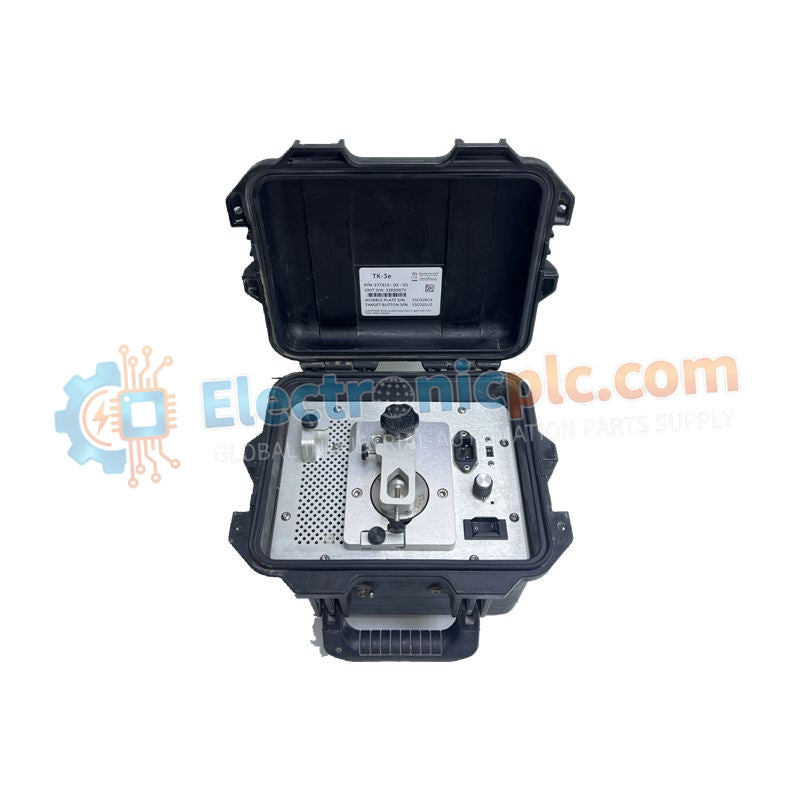
The TK-3E (177313-01-02) is a specialized, electric-driven calibration instrument used to verify the operational integrity of Bently Nevada proximity transducer systems. This high-precision kit simulates shaft vibration and position, enabling technicians to validate the performance of proximity probes, extension cables, and Proximitor modules.
This specific configuration includes an electric motor drive, providing consistent dynamic signals for testing machinery protection system alarms and frequency response—eliminating the need for a rotating machine during calibration.
| Specification | Details |
|---|---|
| Model Identifier | TK-3E |
| Drive Type | Electric motor driven |
| Measurement Scale | 01 – English Units (mils/inches) |
| Power Interface | 02 – European power cord type |
| Spindle Capability | Static displacement and dynamic vibration simulation |
| Target Material | 4140 steel (standard target button) |
| Weight | 7.5 kg |
The TK-3E (177313-01-02) is essential for loop checking and system verification in industrial environments. By utilizing the electric-driven spindle, engineers can simulate precise vibration levels at the probe tip, ensuring monitoring systems are correctly calibrated to trigger alarms at defined setpoints.
Key benefits include:
Dynamic signal simulation for frequency response testing
Direct correlation with legacy Bently Nevada standards (200 mV/mil)
On-site calibration capability, reducing maintenance downtime
Rugged, portable design for field use
Q: What is the advantage of the electric-driven TK-3E over the manual version?
A: The electric motor provides a stable, continuous dynamic signal, which is critical for verifying frequency response and ensuring vibration alarms actuate at the correct amplitudes.
Q: Is the target button replaceable?
A: Yes, while supplied with a 4140 steel target, the TK-3E supports alternative target materials to match specific shaft metallurgy for more accurate voltage-to-gap calibration.

