
My Cart
0 items
Genuine Automation Parts | Worldwide Express Delivery | 12-Month Warranty — [GET A QUOTE]

The 3500/22 (146031-02) is a high-performance Transient Data Interface (TDI) module designed as the primary communication bridge for the Bently Nevada 3500 Machinery Protection System. This variant features 100Base-FX fiber-optic connectivity, ensuring...
Availability: Low stock: 10 left
Reliable Worldwide Delivery
30-Day Money-Back Guarantee
Need more details? Read our fullShipping PolicyandRefund Policy.


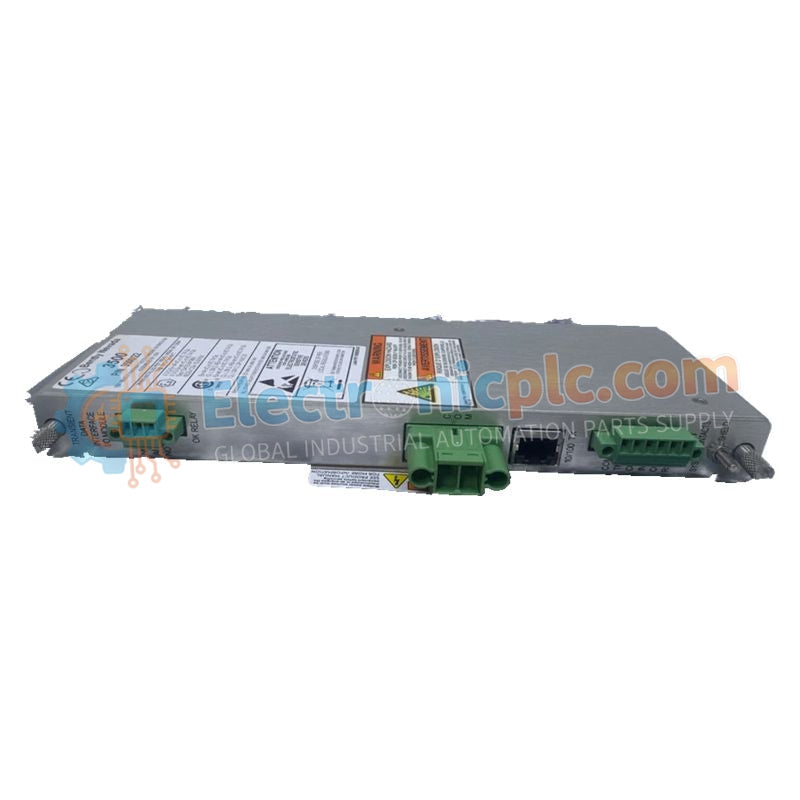
The 3500/22 (146031-02) is a high-performance Transient Data Interface (TDI) module designed as the primary communication bridge for the Bently Nevada 3500 Machinery Protection System. This variant features 100Base-FX fiber-optic connectivity, ensuring high-speed data integrity even in environments with significant electromagnetic interference (EMI).
By integrating the core functionalities of the legacy 3500/20 Rack Interface Module with advanced dynamic data processing, the 3500/22 (146031-02) enables continuous collection of both steady-state parameters and high-resolution transient waveforms. This capability is critical for engineers performing detailed vibration analysis and diagnostic troubleshooting via System 1 software.
| Specification | Description |
|---|---|
| Network Interface | 100Base-FX Fiber-Optic (MT-RJ connectors typically utilized) for long-distance and noise-immune communication |
| Local Configuration Port | Front-facing USB-B port for direct laptop connectivity and rack configuration |
| Input Signal Range | Differential inputs supporting -10 Vdc to +10 Vdc |
| Internal Power Consumption | 10.5 Watts nominal |
| Data Processing | Synchronous and asynchronous waveform sampling for transient events (startups/shutdowns) |
| Operating Temperature Limits | -30°C to +65°C (-22°F to +149°F) |
| Physical Dimensions | 241.3 mm x 24.4 mm x 241.8 mm (Full-height module) |
| Module Weight | 0.82 kg |
While both modules share the 3500/22 designation, the 146031-02 is distinct due to its fiber-optic I/O module. Unlike the 161580-01, which uses standard 10/100Base-T copper Ethernet (RJ45), the fiber-optic version is specifically selected for plants where cable runs exceed 100 meters or where electrical isolation is a safety requirement.
Does the 3500/22 (146031-02) require a separate communication processor?
No. The TDI architecture eliminates the need for external TDXnet or similar processors by handling all data packetization and transmission internally to the host software.
What is the primary function of the front USB port?
The USB-B port is intended for local maintenance, allowing technicians to configure rack parameters or update firmware without accessing the primary plant network.


