
My Cart
0 items
Genuine Automation Parts | Worldwide Express Delivery | 12-Month Warranty — [GET A QUOTE]

The ISI222/8 is an advanced motion control interface for the Bachmann M1 system, engineered for high-frequency signal processing and precision positioning. Featuring two incremental encoder inputs and dual 14-bit analog outputs, the module provides a closed-loop control solution for demanding...
Availability: Low stock: 99 left
Reliable Worldwide Delivery
30-Day Money-Back Guarantee
Need more details? Read our fullShipping PolicyandRefund Policy.


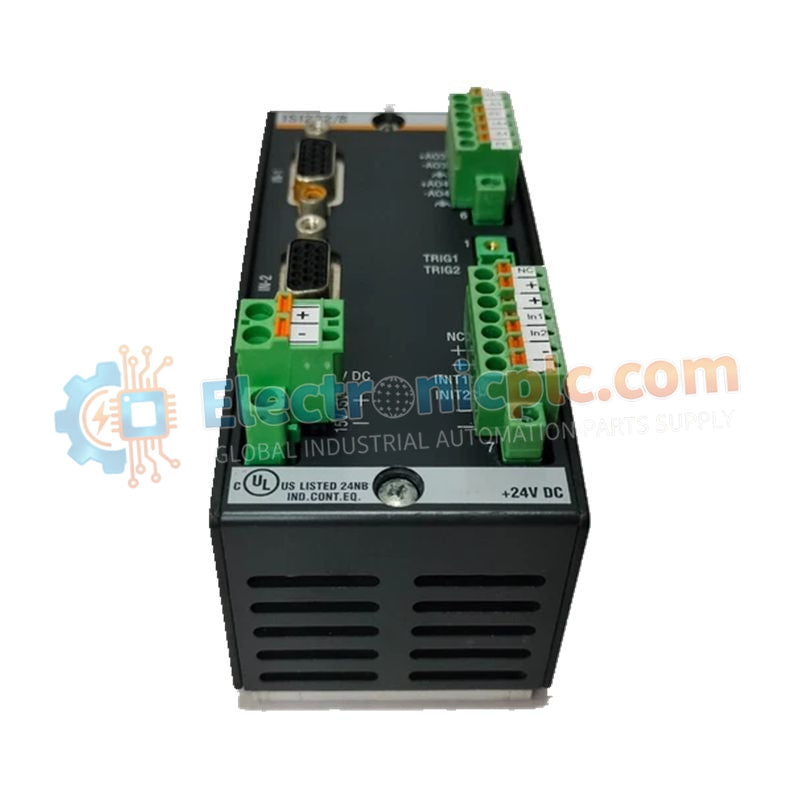
The ISI222/8 is an advanced motion control interface for the Bachmann M1 system, engineered for high-frequency signal processing and precision positioning. Featuring two incremental encoder inputs and dual 14-bit analog outputs, the module provides a closed-loop control solution for demanding servo and drive applications.
With 8 MHz input capability and integrated synchronization signals, the ISI222/8 ensures microsecond-level precision in multi-axis motion environments, making it ideal for high-speed production, CNC machines, and offshore automation.
| Specification | Details |
|---|---|
| Model Identification | ISI222/8 |
| Encoder Interfaces | 2 incremental encoder channels |
| Counting Architecture | 32-bit hardware counters |
| Maximum Input Frequency | Up to 8 MHz |
| Encoder Power Supply | Configurable +5 V, +15 V, +24 V DC |
| Analog Outputs | 2 channels (±10 V) with 14-bit resolution |
| Operating Temperature | –30°C to +60°C (Fanless) |
Applications: Flying shears, high-speed labeling, turbine blade pitch control, offshore automation
Fast Digital Inputs: Trigger position captures with negligible jitter
Analog Outputs: Provide high-fidelity servo setpoints, eliminating the need for separate DA modules
Environmental Reliability: Certified for marine use and resistant to vibration and industrial extremes
ISI222/8 vs Standard CNT Series:
CNT modules handle basic pulse counting, while ISI222/8 supports full positioning loops
ISI222/8 vs ISI222:
/8 variant enables 8 MHz high-frequency input, necessary for precision high-speed encoders
Dual 14-bit analog outputs reduce rack space and bus latency
Q: Can the ISI222/8 be used with absolute encoders?
A: No. It is designed specifically for incremental encoders. For SSI or EnDat absolute encoders, use Bachmann AIO or specialized serial encoder modules.
Q: Are the analog outputs isolated from each other?
A: The module provides 500 V galvanic isolation from the fieldbus, but the two analog outputs share a common reference ground at the connector.


