
My Cart
0 items
Genuine Automation Parts | Worldwide Express Delivery | 12-Month Warranty — [GET A QUOTE]

The Woodward LR20025, also cataloged as the MFR13 Multifunction Relay, operates as a dedicated hardware component for wind turbine electrical sensing and control execution within turbine PLC communication networks.
Availability: Low stock: 10 left
Reliable Worldwide Delivery
30-Day Money-Back Guarantee
Need more details? Read our fullShipping PolicyandRefund Policy.


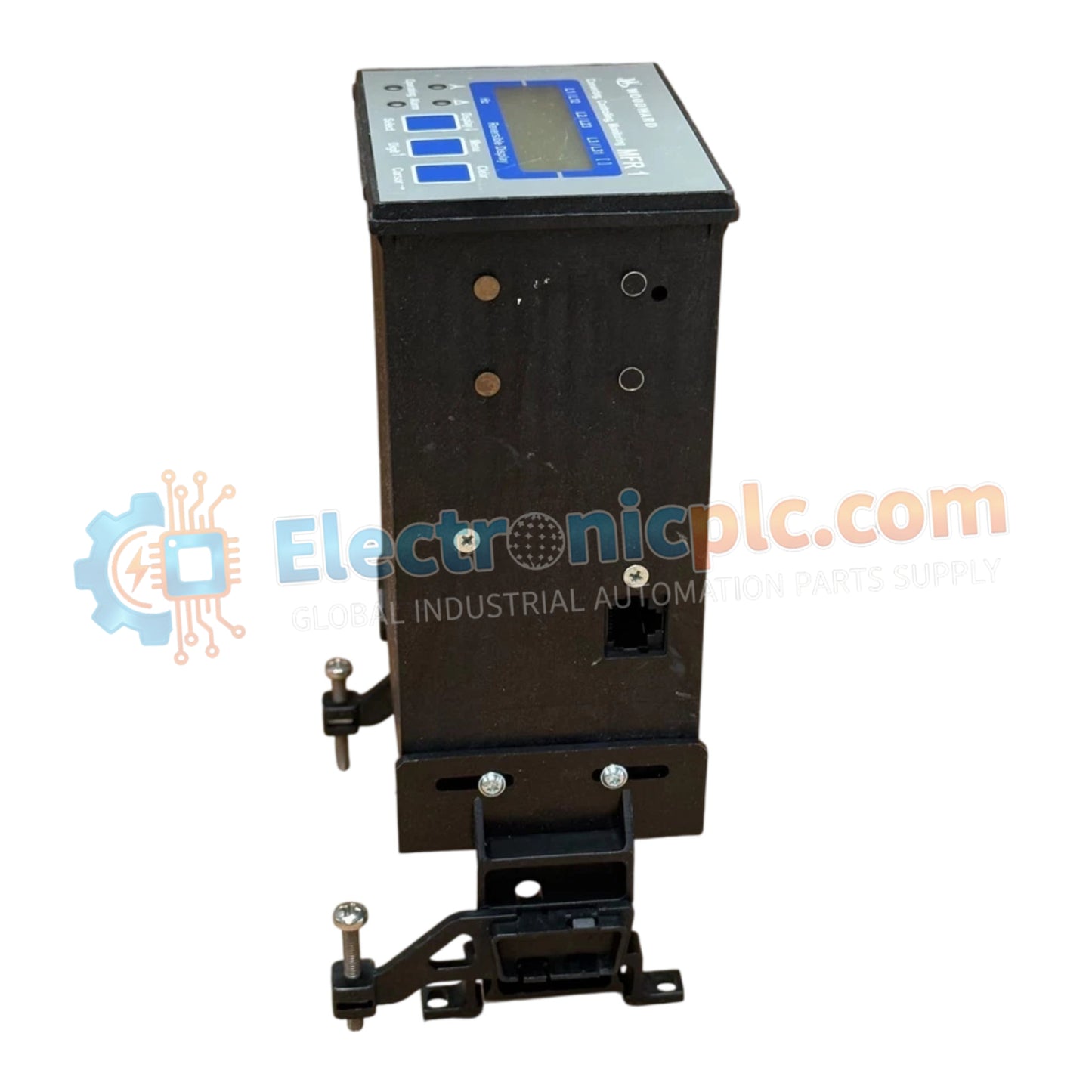
The Woodward LR20025, also cataloged as the MFR13 Multifunction Relay, operates as a dedicated hardware component for wind turbine electrical sensing and control execution within turbine PLC communication networks.
| Parameter | Specification |
|---|---|
| Model | LR20025 (MFR13) |
| Brand | Woodward |
| Origin | USA |
| Weight | 2kg |
| Dimensions | 96 mm x 72 mm x 130 mm |
| Operating Temp | Standard industrial operating range |
| Power Consumption | CAN bus powered / auxiliary loop powered |
| Voltage Sensing Range | 250 to 690 VAC, 50/60 Hz |
| Current Sensing Range | 0.5 to 5 A |
| Communication Interface | CAN bus interface to higher-level PLC |
| Functional Replacement | MFR300 (Part Number 8444-1093) |
The Woodward LR20025 process high-voltage line signals ranging from 250 to 690 VAC alongside current sensing inputs from 0.5 to 5 A to provide deterministic actuator loop feedback response. Interfacing directly with primary wind turbine control PLCs via an integrated CAN bus, the unit delivers real-time power parameters and status monitoring. Closed-loop processing enables rapid tripping and signal exchange to adjust blade pitch, generator engagement, or contactor isolation during line voltage or current anomalies.
Q: What are the primary electrical voltage and current sensing capabilities of the Woodward LR20025?
A: The relay supports direct AC voltage sensing from 250 to 690 VAC (50/60 Hz) and current sensing levels between 0.5 and 5 A.
Q: How does the Woodward LR20025 communicate with the main controller?
A: The unit utilizes a built-in CAN bus protocol interface to transfer electrical parameters and alarm telemetry directly to an upstream PLC.
Q: What is the designated functional replacement part for the LR20025 MFR13 relay?
A: The unit can be functionally replaced by the Woodward MFR300 module under part number 8444-1093.


