
My Cart
0 items
Genuine Automation Parts | Worldwide Express Delivery | 12-Month Warranty — [GET A QUOTE]

The Yokogawa NC2*C, also cataloged as the NC2*C Network Communication Module, operates as a dedicated hardware component designed to provide robust connectivity within industrial automation architectures. This module facilitates the...
Availability: Low stock: 99 left
Reliable Worldwide Delivery
30-Day Money-Back Guarantee
Need more details? Read our fullShipping PolicyandRefund Policy.


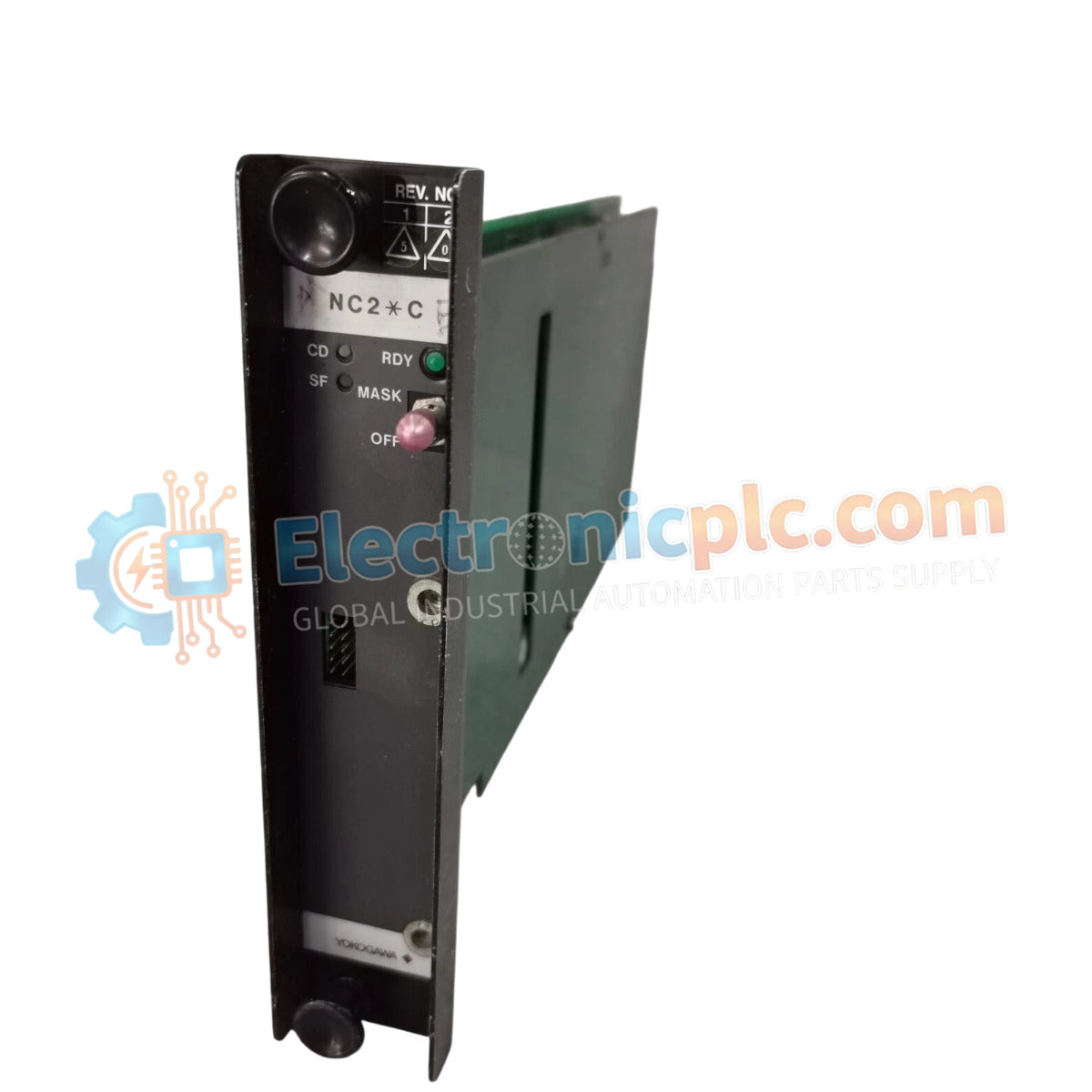
The Yokogawa NC2*C, also cataloged as the NC2*C Network Communication Module, operates as a dedicated hardware component designed to provide robust connectivity within industrial automation architectures. This module facilitates the reliable exchange of process data between field instrumentation and the centralized control system, ensuring deterministic communication across complex network topologies.
| Parameter | Specification |
|---|---|
| Model | NC2*C |
| Brand | Yokogawa |
| Type | Network Communication Module |
| Input Voltage | 24 VDC |
| Output Voltage | 24 VDC |
| Weight | 0.5 kg |
| Operating Temp | -40°C to +70°C |
The NC2*C is engineered to act as a resilient communication bridge, supporting efficient data routing even in electrically noisy industrial environments. Its architecture is optimized for stable operation under extreme environmental conditions, with an operating range of -40°C to +70°C. By normalizing communication protocols between disparate field devices and the control system, the module minimizes data latency and ensures that real-time process updates are delivered with high integrity.
Q: Does the NC2C support hot-swapping during active system operation? A: No, the NC2C module does not support hot-swapping. The controller station must be powered down or placed in a defined maintenance mode before the module is extracted or installed to prevent electrical surges or communication bus errors.
Q: How does the NC2*C handle data packets to ensure reliability?
A: The module utilizes internal parity checking and error-handling algorithms to verify the integrity of data packets as they are routed between the field network and the control system bus, ensuring that corrupted information is discarded and re-requested.


