
My Cart
0 items
Genuine Automation Parts | Worldwide Express Delivery | 12-Month Warranty — [GET A QUOTE]

The Yokogawa NFAP135-S50, also cataloged as the NFAP135 Pulse Input Module, operates as a dedicated hardware component for high-speed pulse acquisition and frequency measurement within CENTUM VP control platforms. Configured...
Availability: Low stock: 99 left
Reliable Worldwide Delivery
30-Day Money-Back Guarantee
Need more details? Read our fullShipping PolicyandRefund Policy.


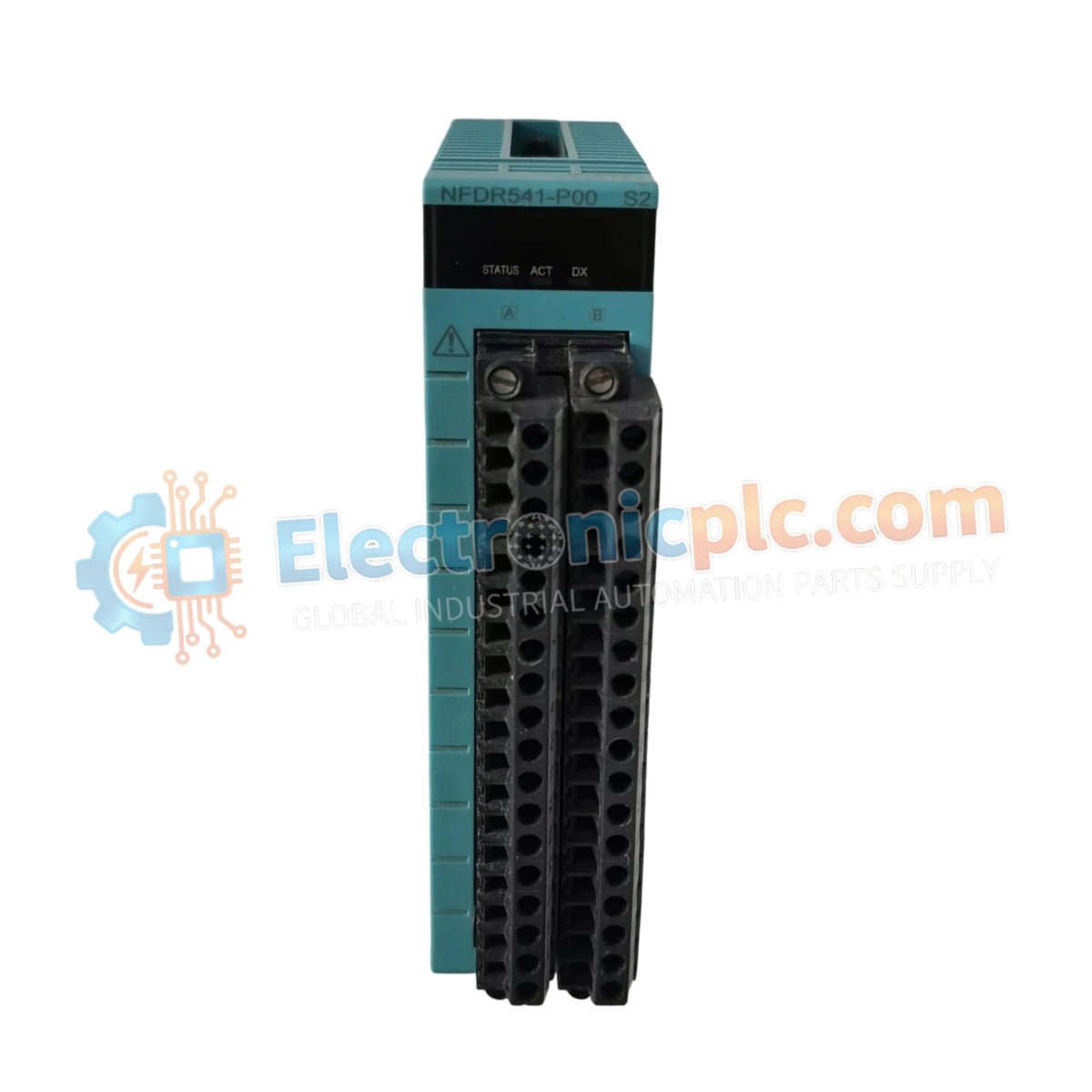
The Yokogawa NFAP135-S50, also cataloged as the NFAP135 Pulse Input Module, operates as a dedicated hardware component for high-speed pulse acquisition and frequency measurement within CENTUM VP control platforms. Configured for high-accuracy signal detection in industrial automation, the Yokogawa NFAP135-S50 (NFAP135 Pulse Input Module) provides direct physical/electrical execution of time-domain signal tracking across eight independent input channels.
| Parameter | Specification |
|---|---|
| Model | NFAP135-S50 |
| Brand | Yokogawa |
| Origin | Japan |
| Weight | 1.0 kg |
| Dimensions | 482 mm x 210 mm x 220 mm |
| Operating Temp | -20 deg C to +60 deg C |
| Power Consumption | System Standard Load |
| Input Channels | 8 |
| Pulse Frequency | Up to 50 MHz |
| Isolation | Channel-to-channel and power supply isolation |
The NFAP135-S50 architecture is engineered to handle high-frequency pulse streams, supporting input rates up to 50 MHz. Each of the eight channels features galvanic isolation, which is critical for suppressing cross-talk between high-speed sensor inputs and preventing external electrical noise from entering the module’s processing core. By employing dedicated isolation barriers, the module maintains measurement precision for velocity, position, and time-of-flight applications, even in environments with high electromagnetic interference. The module is calibrated to provide consistent performance across the -20 deg C to +60 deg C range, ensuring drift-free data conversion for critical control loops.
Q: Does the NFAP135-S50 support differential signal inputs for all 8 channels?
A: The module is compatible with a wide range of pulse signal voltage and current levels; however, ensure the signal source impedance and common-mode voltage are within the specified input range to maintain isolation integrity.
Q: How does the module handle high-frequency 50 MHz inputs without signal aliasing?
A: The input circuitry uses high-speed Schmitt triggers and optimized pulse-width sampling to detect transitions at 50 MHz, ensuring that pulse counts and frequency calculations remain accurate within the module's specified timing window.


