
My Cart
0 items
Genuine Automation Parts | Worldwide Express Delivery | 12-Month Warranty — [GET A QUOTE]

The YOKOGAWA NFPW444 (NFPW444 Power Supply Module) serves as the primary NFPW444 Power Supply Module utilized to execute stable DC power distribution across STARDOM FCN/FCJ autonomous controller platforms.
Availability: Low stock: 99 left
Reliable Worldwide Delivery
30-Day Money-Back Guarantee
Need more details? Read our fullShipping PolicyandRefund Policy.


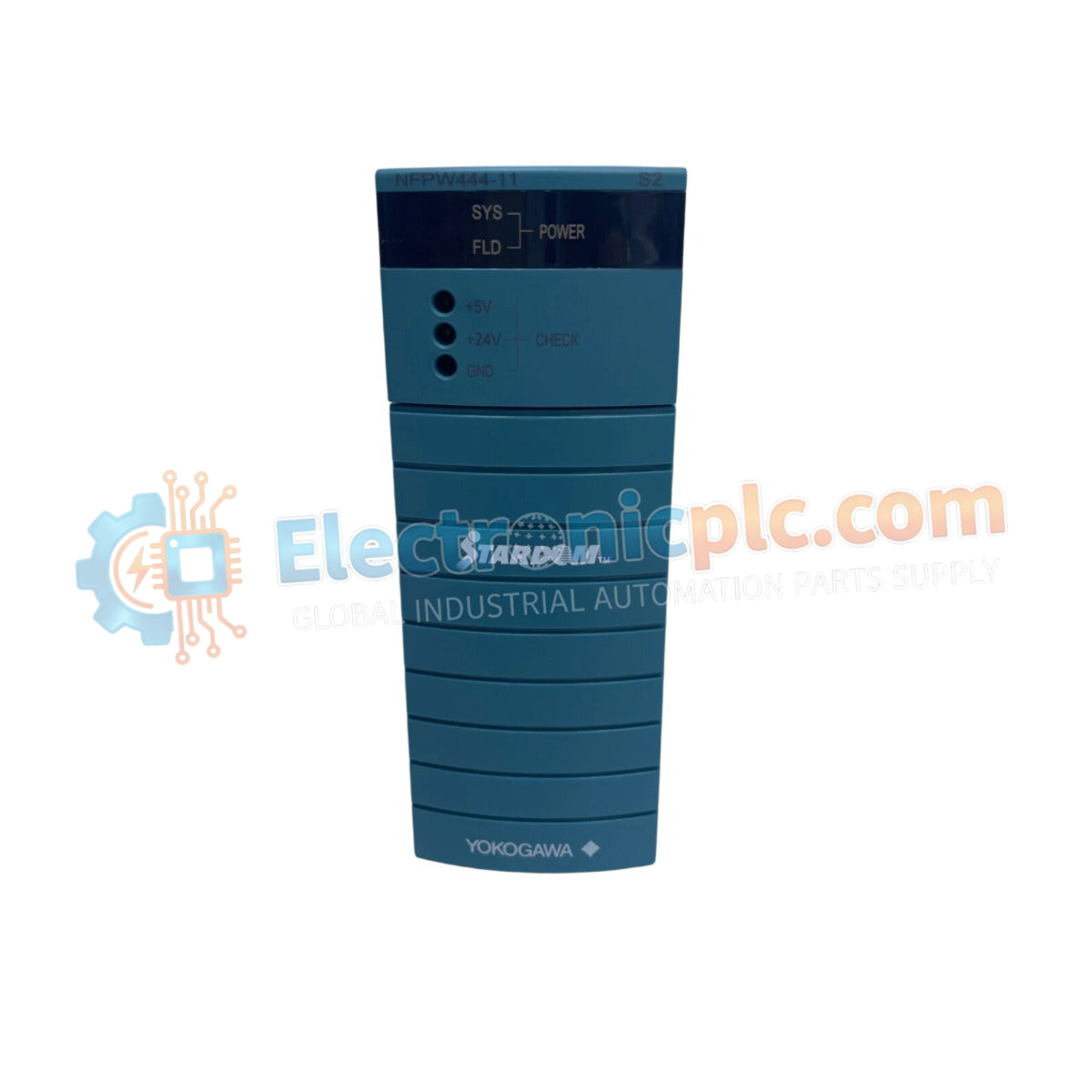
The YOKOGAWA NFPW444 (NFPW444 Power Supply Module) serves as the primary NFPW444 Power Supply Module utilized to execute stable DC power distribution across STARDOM FCN/FCJ autonomous controller platforms.
| Parameter | Specification |
|---|---|
| Model | NFPW444 |
| Brand | YOKOGAWA |
| Origin | N/A |
| Weight | 0.6 kg |
| Dimensions | N/A |
| Operating Temp | N/A |
| Power Consumption | 3.3 A (Input) |
| Output Voltage | 5.1 V DC |
| Output Current | 7.8 A |
| Input Voltage | 24 V DC +/- 10 % |
| Hold-up Time | 2 ms |
The NFPW444 module utilizes high-isolation circuitry to maintain stable 5.1 V DC bus voltage, supporting the stringent requirements of FCN/FCJ control networks. The design incorporates channel-to-channel isolation to mitigate electromagnetic interference, preserving the accuracy of linked 4-20 mA HART loops and process signal processors. Thermal management is achieved through a fanless, natural convection cooling profile, minimizing mechanical failure points while ensuring consistent output regulation across varying load demands in continuous operation environments.
Q: Does the NFPW444 support live removal and installation?
A: Yes. The module is engineered for hot-swappable operation, allowing replacement while the system is powered, provided the secondary power rail is active to maintain continuous bus voltage.
Q: How is redundant configuration managed by this module?
A: Redundancy is achieved through parallel installation in the system backplane; the module architecture includes internal blocking diodes to prevent back-feeding and ensures seamless transition during fault detection.


