
My Cart
0 items
Genuine Automation Parts | Worldwide Express Delivery | 12-Month Warranty — [GET A QUOTE]

The Yokogawa NM6*D, also cataloged as the NM6*D Communication Module, operates as a compact and specialized hardware component designed for high-efficiency data exchange in industrial automation networks. This module serves...
Availability: Low stock: 99 left
Reliable Worldwide Delivery
30-Day Money-Back Guarantee
Need more details? Read our fullShipping PolicyandRefund Policy.


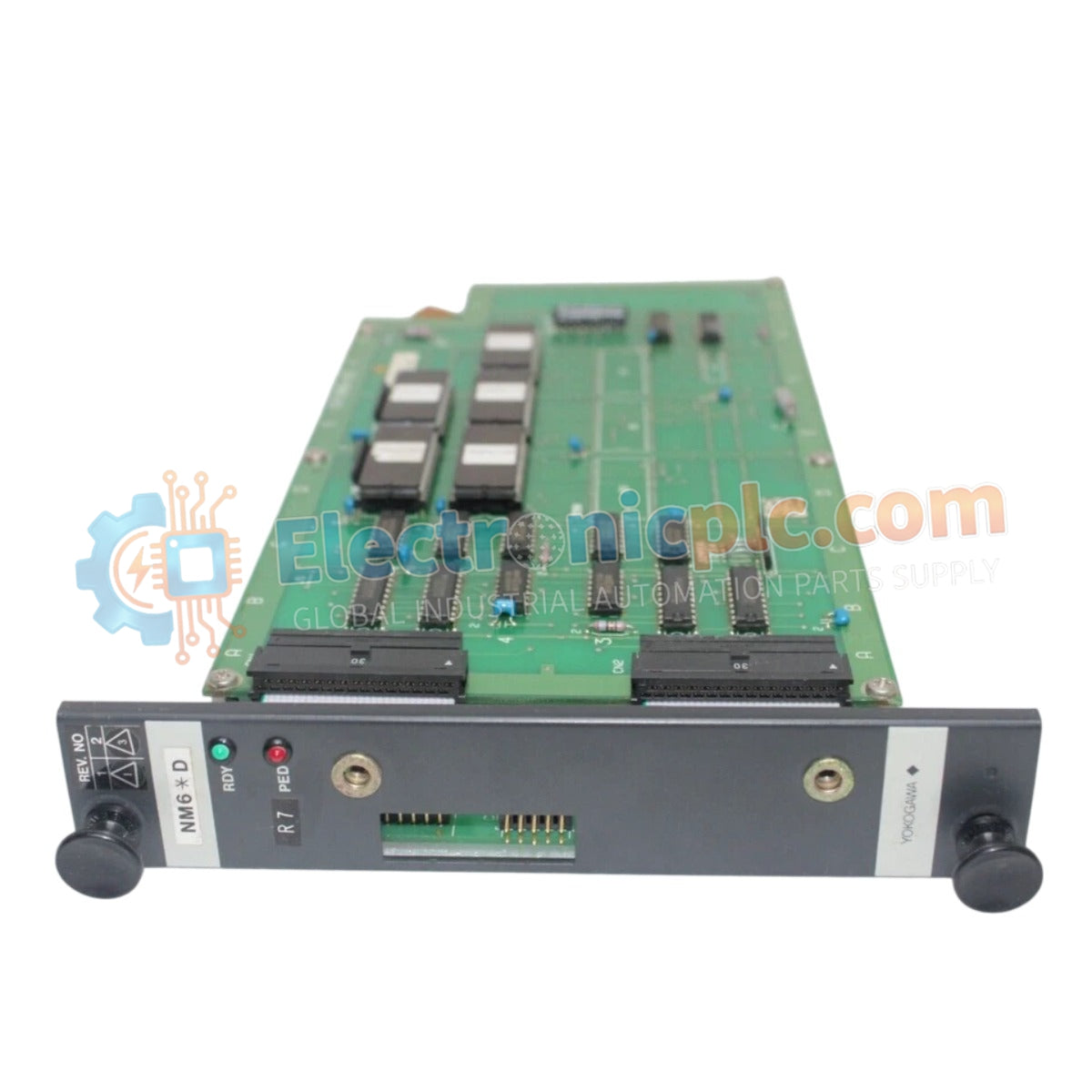
The Yokogawa NM6*D, also cataloged as the NM6*D Communication Module, operates as a compact and specialized hardware component designed for high-efficiency data exchange in industrial automation networks. This module serves as a critical interface for bridging Yokogawa proprietary device traffic with broader industrial network protocols, ensuring real-time synchronization between disparate system nodes.
| Parameter | Specification |
|---|---|
| Model | NM6*D |
| Brand | Yokogawa |
| Type | Communication Module |
| Dimensions | 100 mm x 100 mm x 50 mm |
| Weight | 0.2 kg |
| Operating Temp | -25°C to +70°C |
| Protocol Support | Industrial Network Protocols |
The NM6D module is engineered for low-latency data transmission, managing the flow of information between field devices and control systems with high reliability. Its robust architecture allows it to function effectively in extreme environments, ranging from -25°C to +70°C. By acting as a protocol translator and traffic manager, the NM6D minimizes data collisions and bottlenecks on the network, which is essential for maintaining deterministic performance in complex control loops.
Q: Does the NM6D support hot-swapping during active system operation? A: No, the NM6D is not designed for hot-swapping. The host controller should be placed into a maintenance or "stop" mode, or fully de-energized, before installing or removing the module to prevent electrical damage to the communication backplane.
Q: What does the "*D" in the model number signify?
A: The "*D" designation is a wildcard used by Yokogawa to denote specific variations in firmware, protocol support, or hardware revisions tailored for unique industrial application requirements.


