
My Cart
0 items
Genuine Automation Parts | Worldwide Express Delivery | 12-Month Warranty — [GET A QUOTE]

Configured for extended transmission distance in CENTUM control networks, the Yokogawa ANT401-50 (ANT401-50 Optical ESB Bus Repeater Module) provides direct physical/electrical execution of ESB signal conversion between electrical and optical...
Availability: In stock
Reliable Worldwide Delivery
30-Day Money-Back Guarantee
Need more details? Read our fullShipping PolicyandRefund Policy.


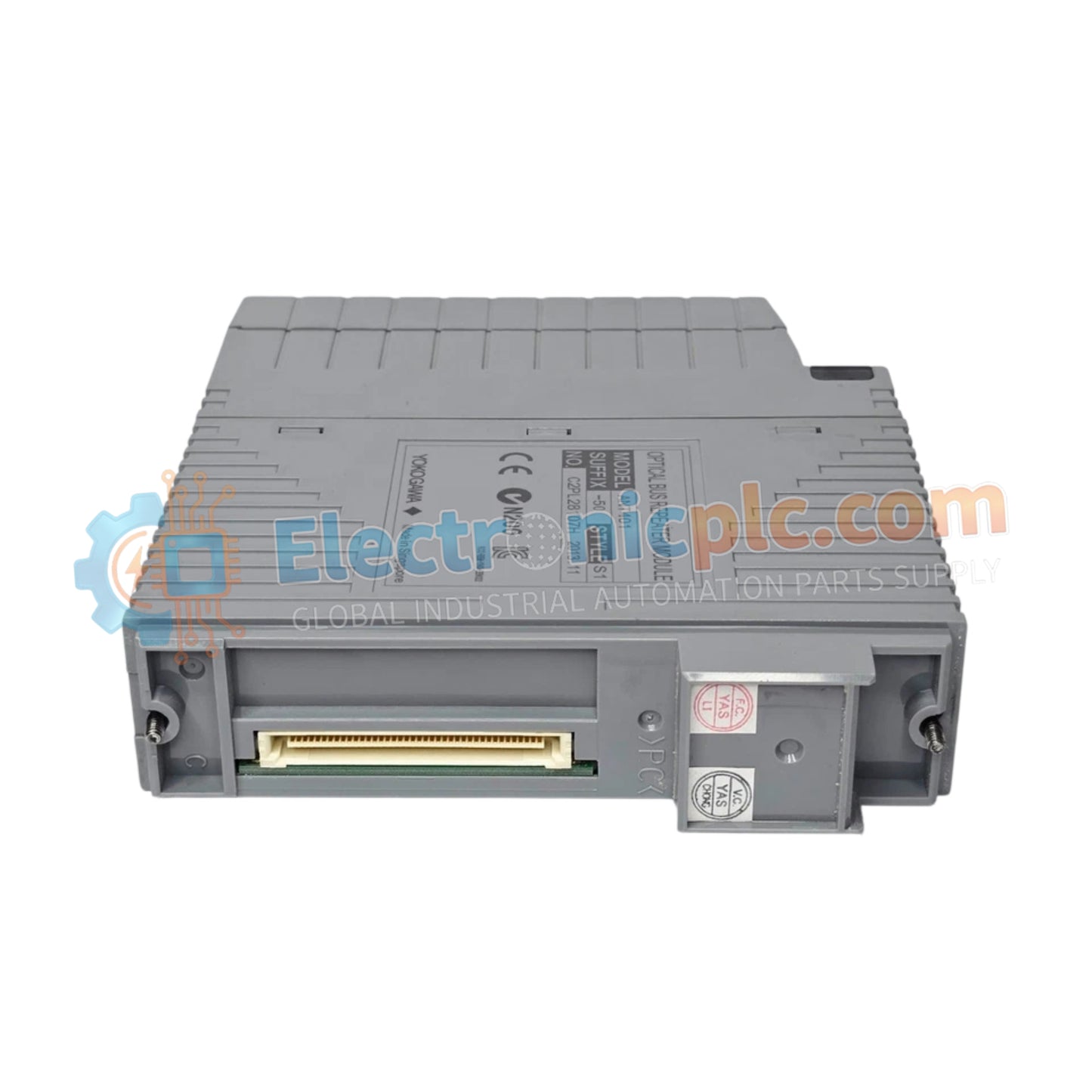
Configured for extended transmission distance in CENTUM control networks, the Yokogawa ANT401-50 (ANT401-50 Optical ESB Bus Repeater Module) provides direct physical/electrical execution of ESB signal conversion between electrical and optical domains.
| Parameter | Specification |
|---|---|
| Model | ANT401-50 |
| Brand | Yokogawa |
| Origin | Japan |
| Weight | 0.5 kg |
| Dimensions | 200 mm x 50 mm x 30 mm |
| Operating Temp | -20 deg C to 60 deg C |
| Power Consumption | Not Specified |
| Transmission Distance | Up to 5 km |
| Communication Interface | Optical ESB bus |
| Input Voltage | 24 VDC |
The ANT401-50 facilitates signal conversion to overcome the distance limitations inherent in copper-based ESB bus segments. The module architecture ensures channel-to-channel isolation, preventing electrical ground loops between disparate control nodes connected via optical fiber. By converting electrical ESB signals to optical pulses, the module effectively eliminates electromagnetic interference (EMI) impacts on data transmission across the 5 km range. This conversion process is transparent to the controller, maintaining deterministic communication timing required for real-time DCS operations.
Q: Does the ANT401-50 module require specific fiber optic cable types for optimal performance?
A: Yes. The module is engineered for compatibility with standard multimode or single-mode fiber optic cables, depending on the specific link budget and distance requirements of the installation. Ensure cable ends are terminated and polished to minimize signal attenuation.
Q: Is this module capable of supporting hot-swapping during active operation?
A: No. The ANT401-50 does not support hot-swapping. The power supply must be disconnected and the ESB bus communication halted prior to the physical installation or removal of the module from the mounting backplane.


