
My Cart
0 items
Genuine Automation Parts | Worldwide Express Delivery | 12-Month Warranty — [GET A QUOTE]

The Bently Nevada 3500/45 (part number 176449-04) is a high-precision position monitor module designed for the 3500 Machinery Protection System. This module is essential for tracking the relative or absolute position of rotating shafts,...
Availability: Low stock: 10 left
Reliable Worldwide Delivery
30-Day Money-Back Guarantee
Need more details? Read our fullShipping PolicyandRefund Policy.


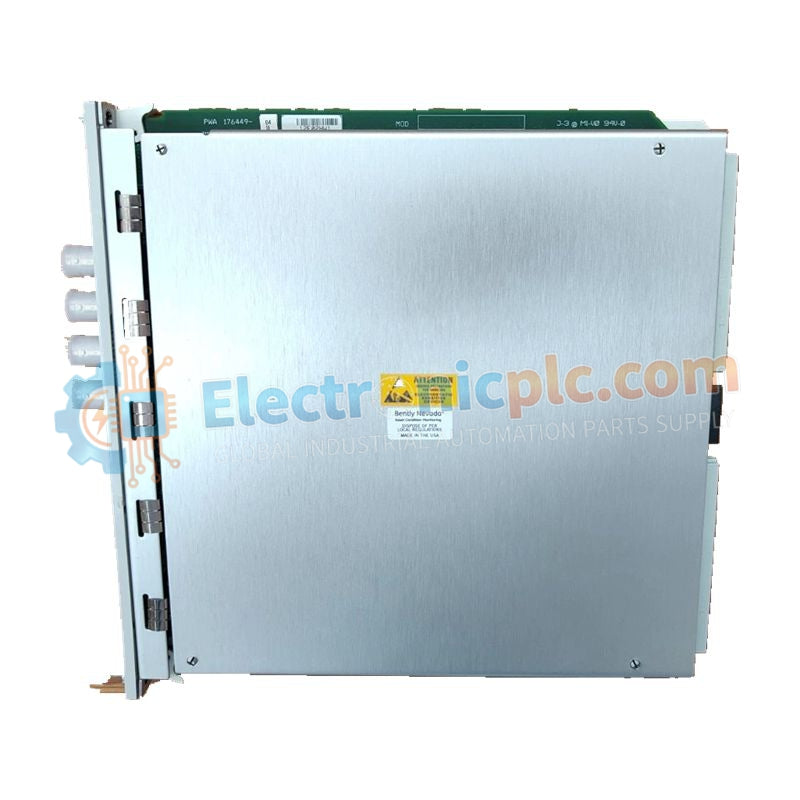
The Bently Nevada 3500/45 (part number 176449-04) is a high-precision position monitor module designed for the 3500 Machinery Protection System. This module is essential for tracking the relative or absolute position of rotating shafts, providing critical data on axial thrust position, differential expansion, or rod position. By processing signals from proximity probes, the 3500/45 ensures that rotating machinery operates within safe displacement limits, helping to prevent mechanical contact and wear. Its dual-channel architecture allows for reliable, high-availability monitoring of machine health, making it an indispensable asset for turbines, compressors, and high-performance motors.
| Specification | Details |
|---|---|
| Model | 3500/45 |
| Part Number | 176449-04 |
| Module Type | Position Monitor Module |
| Application | Axial thrust position, differential expansion, and rod position monitoring |
| Input Channels | 2-channel support for proximity probes |
| Physical Dimensions | 2.6 cm x 25.8 cm x 24 cm |
| Weight | 0.9 kg |
The 3500/45 position monitor provides critical insights into the physical state of rotating shafts. It features programmable alarm setpoints that allow operators to define danger thresholds for machine displacement. With its integration into the 3500 rack backplane, it communicates position data and alarm status seamlessly to other modules, facilitating automated trip sequences when machines exceed safe operating parameters. The module is built for continuous, 24/7 industrial service, ensuring long-term measurement stability even in complex, high-vibration environments.
A: The module is designed to interface with Bently Nevada eddy current proximity probes, which are the industry standard for measuring shaft displacement and position without physical contact.
A: Yes, the 3500/45 is highly configurable via the 3500 Rack Configuration Software, allowing it to be tailored to specific applications like axial position, differential expansion, or rod position based on the required probe arrangement.


