
My Cart
0 items
Genuine Automation Parts | Worldwide Express Delivery | 12-Month Warranty — [GET A QUOTE]

The YOKOGAWA PW301/100, also cataloged as the PW301 Power Module, operates as a dedicated hardware component for power regulation within DCS process control platforms.
Availability: Low stock: 99 left
Reliable Worldwide Delivery
30-Day Money-Back Guarantee
Need more details? Read our fullShipping PolicyandRefund Policy.


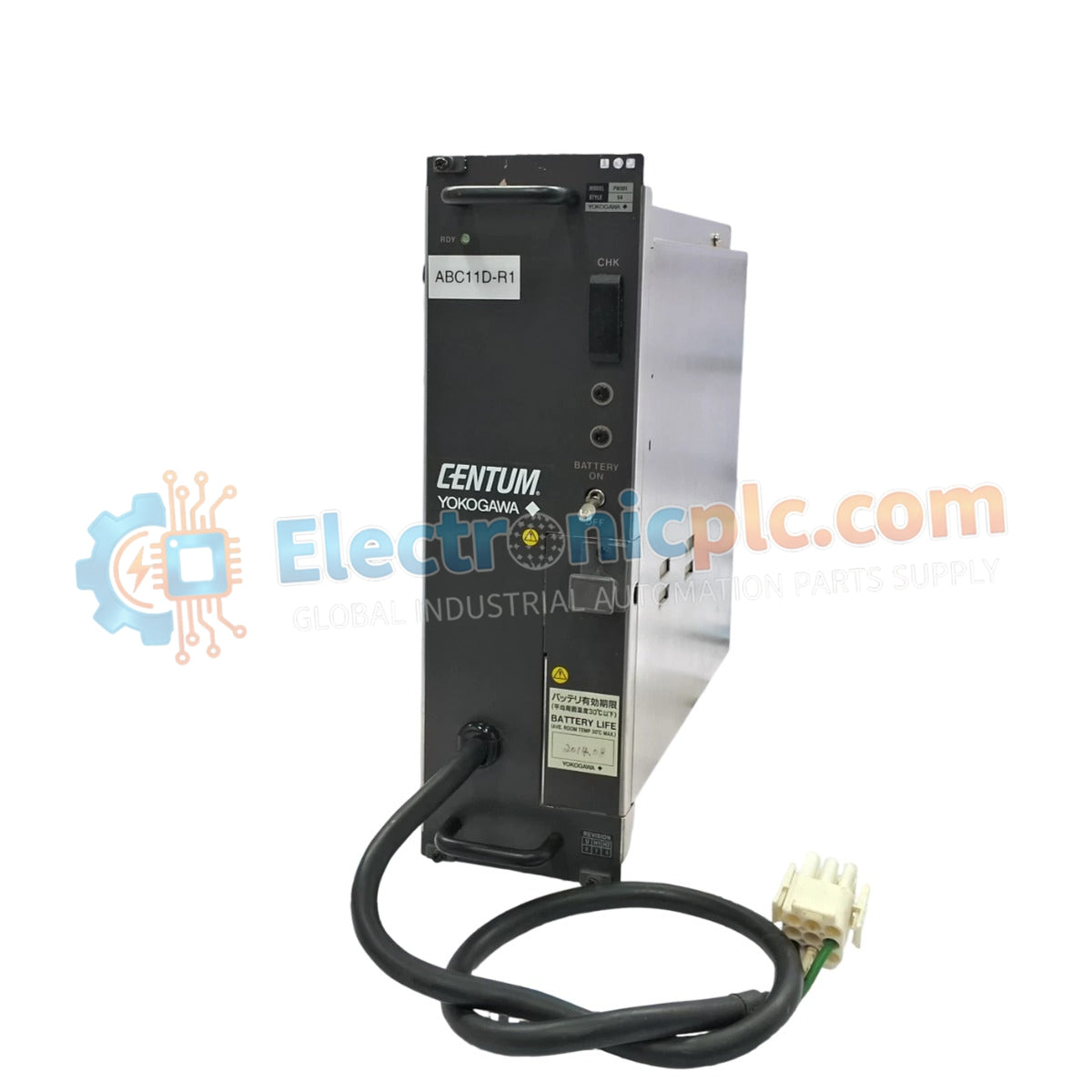
The YOKOGAWA PW301/100, also cataloged as the PW301 Power Module, operates as a dedicated hardware component for power regulation within DCS process control platforms.
| Parameter | Specification |
| Model | PW301/100 |
| Brand | YOKOGAWA |
| Origin | Subject to factory batch |
| Weight | 3.3 kg |
| Dimensions | 27.9 cm x 10.2 cm x 27.9 cm |
| Operating Temp | Standard industrial ambient range |
| Power Consumption | Load dependent |
| Input Current | 6 A |
| Input Voltage | 100-120 VAC |
| Output Current | 15 A |
| Output Voltage | 5.1 VDC |
The module integrates specialized circuitry for channel-to-channel isolation and voltage regulation required for CENTUM VP DCS components. To maintain consistent output performance, the power supply utilizes internal feedback mechanisms to compensate for input line fluctuations within the 100-120 VAC range. The 5.1 VDC output architecture is designed to minimize ripple characteristics, facilitating stable operation for logic-level circuitry and communication modules. Effective thermal management is required, necessitating adequate cabinet airflow to prevent component derating during continuous operation in high-density rack configurations.
Q: What are the primary considerations when integrating this power supply into a CENTUM VP rack?
A: Ensure that the module is fully seated into the backplane connector to guarantee proper electrical contact for power distribution. Mechanical retention latches must be locked to maintain structural stability and chassis ground continuity.
Q: Is this module capable of supporting higher input voltages?
A: The PW301/100 is specifically rated for 100-120 VAC input. Operating this module at 220-240 VAC without an appropriate step-down transformer will cause damage to the internal input stage and primary regulator components.


