
My Cart
0 items
Genuine Automation Parts | Worldwide Express Delivery | 12-Month Warranty — [GET A QUOTE]

The Yokogawa RS-EL56, also cataloged as the RS-EL56 Safety Instrumented Module, operates as a dedicated hardware component for SIL3-certified safety control and high-performance signal processing within ProSafe-RS and CENTUM system...
Availability: Low stock: 99 left
Reliable Worldwide Delivery
30-Day Money-Back Guarantee
Need more details? Read our fullShipping PolicyandRefund Policy.


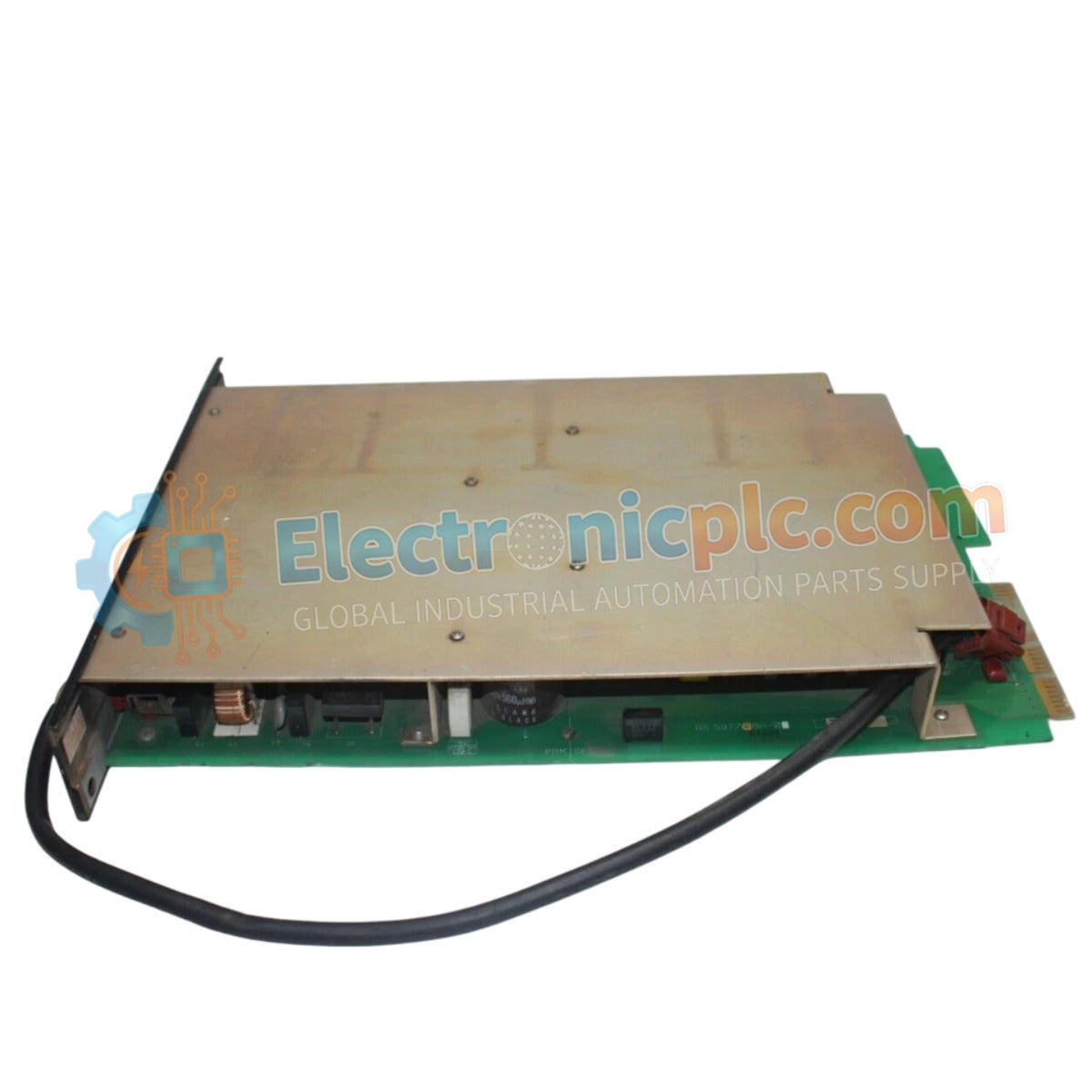
The Yokogawa RS-EL56, also cataloged as the RS-EL56 Safety Instrumented Module, operates as a dedicated hardware component for SIL3-certified safety control and high-performance signal processing within ProSafe-RS and CENTUM system platforms. This module provides direct physical/electrical execution for critical safety interlocks, relay switching, and multi-protocol I/O interfacing in demanding industrial control environments.
| Parameter | Specification |
|---|---|
| Model | RS-EL56 |
| Brand | Yokogawa |
| Origin | Japan |
| Weight | Not specified |
| Dimensions | Standard industrial module |
| Operating Temp | Industrial standard |
| Power Consumption | Not specified |
| Safety Certification | SIL3 (IEC 61508, ANSI/ISA 84) |
| Sampling Rate | 1 Hz to 100 kHz |
| Accuracy | +/- 0.01 % FS |
The RS-EL56 is engineered to meet strict SIL3 certification requirements, ensuring fail-safe state execution during process upsets. To maintain the integrity of safety loops, the module features robust galvanic isolation between input channels and the backplane bus, preventing ground loops and common-mode noise from triggering spurious trips. The TMR (Triple Modular Redundancy) 2oo3 architecture is leveraged within the ProSafe-RS environment to ensure that hardware failures do not compromise the safety function. Furthermore, the relay output variant is designed for low-to-medium power switching, with integrated contact monitoring to detect welded or open-circuit states, fulfilling the diagnostic coverage mandated by IEC 61508.
Q: Can the RS-EL56 be used in safety-critical applications requiring SIL3 compliance?
A: Yes, the RS-EL56 is certified for SIL3 applications under IEC 61508 and ANSI/ISA 84, provided it is configured and installed according to the specific safety manual for the ProSafe-RS platform.
Q: What is the primary difference between the relay output and communication I/O configurations?
A: The relay version is dedicated to high-reliability physical switching of field devices (24 V DC), whereas the I/O version is optimized for high-speed signal acquisition (analog/digital/pulse) and data transmission within the DCS network.


