
My Cart
0 items
Genuine Automation Parts | Worldwide Express Delivery | 12-Month Warranty — [GET A QUOTE]

The Yokogawa YS150-012/A31 S3 serves as the primary YS150-012/A31 S3 Single-Loop Controller utilized to execute precise PID control and continuous process variable regulation across distributed control system platforms.
Availability: Low stock: 50 left
Reliable Worldwide Delivery
30-Day Money-Back Guarantee
Need more details? Read our fullShipping PolicyandRefund Policy.


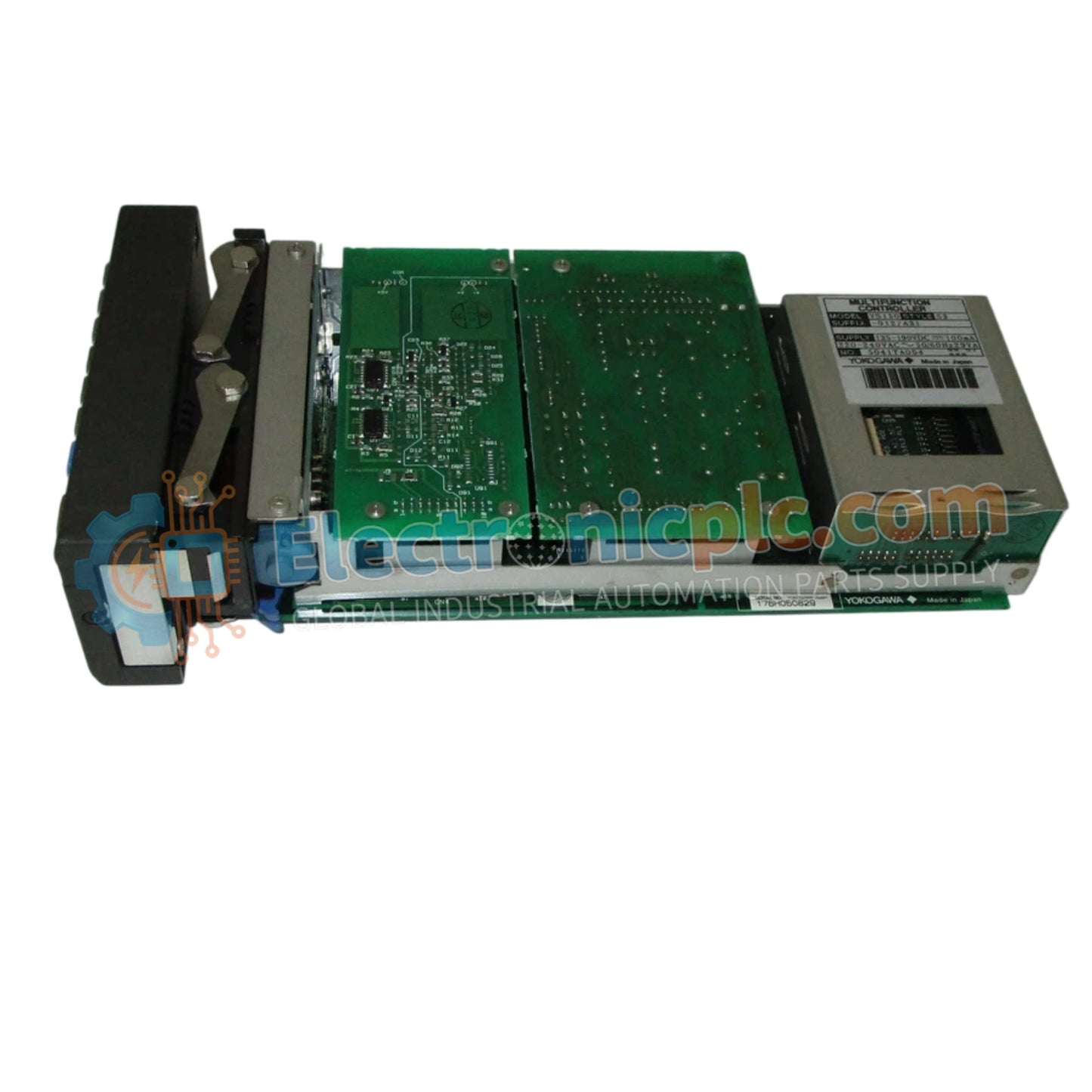
The Yokogawa YS150-012/A31 S3 serves as the primary YS150-012/A31 S3 Single-Loop Controller utilized to execute precise PID control and continuous process variable regulation across distributed control system platforms.
| Parameter | Specification |
|---|---|
| Model | YS150-012/A31 S3 |
| Brand | Yokogawa |
| Origin | japan |
| Weight | 1.5 kg |
| Dimensions | 144 mm x 144 mm x 150 mm |
| Operating Temp | 0 deg C to +50 deg C |
| Power Consumption | 100 to 240 VAC, 50/60 Hz, 20 VA |
| Control Type | Single-loop PID control |
| Analog Inputs | 1 channel supporting 4-20 mA, 1-5 V, thermocouple, RTD |
| Communication | RS-485 with Modbus RTU protocol |
The hardware configuration maintains strict electrical isolation across input and output circuits to suppress common-mode electrical noise and prevent ground fault propagation between field loops. Integration with standard 4-20 mA HART loop protocol parameters, analog channels, and RS-485 Modbus RTU digital communication interfaces ensures transparent transmission of process variables and control commands directly to supervisory monitoring stations without signal degradation.
Q: What are the restrictions regarding power supply voltage tolerances for the YS150-012/A31 S3 controller?
A: The unit operates on a designated AC power supply range from 100 to 240 VAC; operating outside these specified voltage limits risks internal power supply failure or controller reset.
Q: How is remote control functionality handled via digital inputs?
A: Four dedicated digital input points manage external switching signals to trigger preset modes, interlocks, or remote setpoint adjustments directly within the control loop architecture.
Mount the controller securely into the designated panel cutout using the provided mounting brackets, ensuring proper gasket compression against the front panel to maintain environmental sealing. Route power wiring, analog signals, and RS-485 communication cables away from high-voltage power conduits and use shielded twisted-pair cables to preserve signal integrity. Terminate cable shielding and ground drain wires securely to the designated cabinet earth grounding bar.


