
My Cart
0 items
Genuine Automation Parts | Worldwide Express Delivery | 12-Month Warranty — [GET A QUOTE]

The AMM25C (incorporating part number AMM25C) is a specialized high-performance analog input multiplexer engineered for the Yokogawa CENTUM VP and CENTUM CS 3000 Distributed Control Systems (DCS). This...
Availability: Low stock: 99 left
Reliable Worldwide Delivery
30-Day Money-Back Guarantee
Need more details? Read our fullShipping PolicyandRefund Policy.


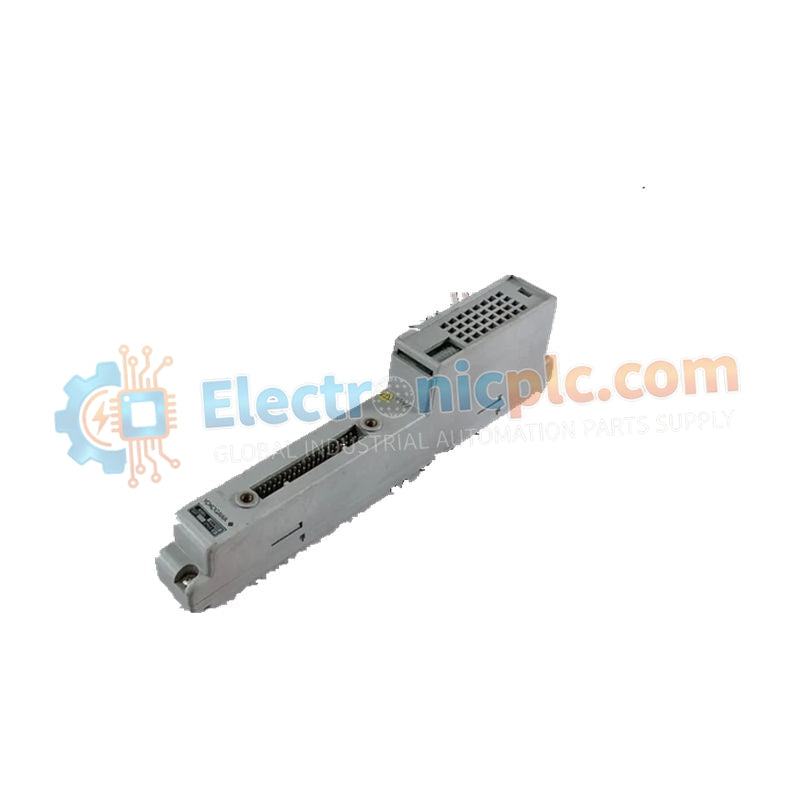
The AMM25C (incorporating part number AMM25C) is a specialized high-performance analog input multiplexer engineered for the Yokogawa CENTUM VP and CENTUM CS 3000 Distributed Control Systems (DCS). This module is specifically designed to interface with thermocouples and low-level millivolt (mV) DC signals. Featuring an integrated Reference Junction Compensation (RJC) input port, it provides laboratory-grade temperature measurement accuracy within rugged industrial environments.
| Specification | Details |
|---|---|
| Channel Capacity | 15 isolated input points |
| Input Signal Types | DC Voltage (-10 to 10 V), Millivolt DC (-100 to 100 mV), and Thermocouples |
| Measurement Precision | High-fidelity accuracy of ±40 µV for mV inputs |
| Thermal Stability | Superior drift control with ±80 µV per 10°C ambient change |
| Burnout Detection | Programmable sensor-break logic (UP, DOWN, or OFF) |
| Cold Junction Compensation | Built-in RJC connector for thermocouple linearity |
| System Connectivity | Utilizes the KS1 system cable for high-speed bus communication |
| Isolation | Fully isolated inputs to eliminate ground loops and electromagnetic interference |
| Mounting Interface | Terminal block style S1 with secure M4 screw terminations |
| Dimensions | 2.5 cm (H) x 22.9 cm (W) x 7.6 cm (D) |
| Net Weight | 0.5kg |
The AMM25C serves as a critical data acquisition node for processes where precise thermal tracking is paramount—such as furnace control, chemical reactor monitoring, and glass manufacturing. By multiplexing 15 channels through a high-speed switching matrix, it reduces the physical hardware footprint while maintaining the signal integrity required for mission-critical automation loops. Its robust mechanical design ensures that connections remain secure even in high-vibration environments.
Q: Does the AMM25C require an external RJC sensor for thermocouple measurements?
A: The module includes a dedicated RJC input port; however, for accurate compensation, it must be paired with the appropriate Yokogawa terminal board (such as the TEV or similar series) that houses the actual cold-junction sensing element.


