
My Cart
0 items
Genuine Automation Parts | Worldwide Express Delivery | 12-Month Warranty — [GET A QUOTE]

Configured for high-density digital signal switching in FA-M3 control networks, the Yokogawa F3YD32-1H/K1 (F3YD32-1H/K1 Transistor Output Module) provides direct electrical execution for discrete field device actuation via 32 transistor sink...
Availability: In stock
Reliable Worldwide Delivery
30-Day Money-Back Guarantee
Need more details? Read our fullShipping PolicyandRefund Policy.


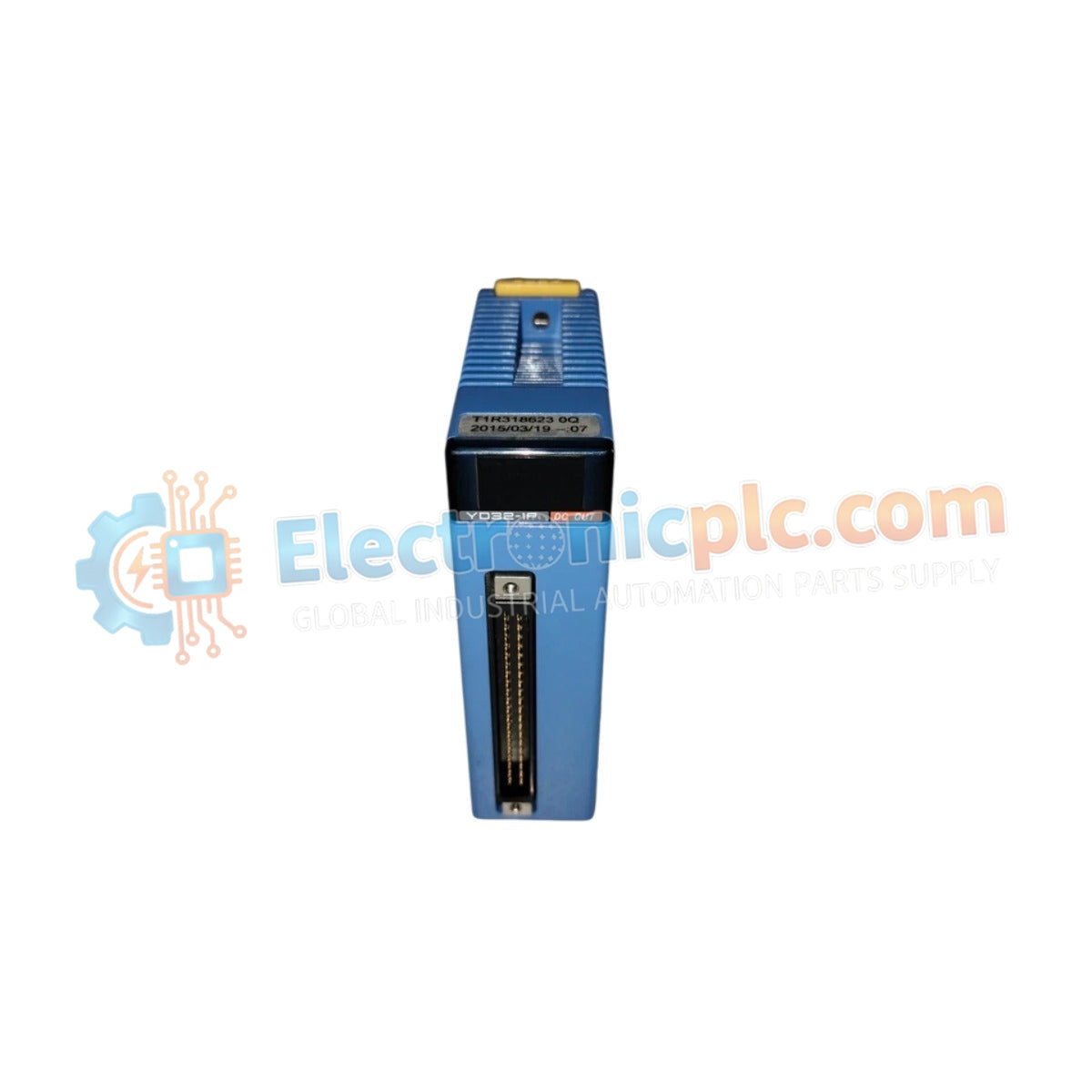
Configured for high-density digital signal switching in FA-M3 control networks, the Yokogawa F3YD32-1H/K1 (F3YD32-1H/K1 Transistor Output Module) provides direct electrical execution for discrete field device actuation via 32 transistor sink outputs.
The F3YD32-1H/K1 and F3YD32-1P identify the specific transistor output module configuration within the FA-M3 series. These suffixes denote standardized variations in terminal connection and interface specifications for the 32-point output array. The hardware maintains consistent electrical characteristics across the defined output bank structure.
| Parameter | Specification |
|---|---|
| Model | F3YD32-1H/K1 |
| Brand | Yokogawa |
| Origin | Japan |
| Weight | 0.11 kg |
| Dimensions | 2.89 cm (W) x 8.32 cm (D) x 10 cm (H) |
| Operating Temp | Not specified (Standard industrial range applies) |
| Power Consumption | 160 mA (5 V DC) |
| Output Points | 32 points |
| Load Voltage | 12 to 24 V DC |
| Output Current | 0.1 A per point |
The F3YD32-1H/K1 facilitates high-density switching required for complex process control logic within the FA-M3 architecture. The module utilizes photocoupler isolation to ensure effective signal conditioning and channel-to-channel protection between the field devices and the internal backplane circuitry. By adhering to 1500 V AC withstanding voltage standards, the module maintains electrical integrity during load-side transients. The 8-point-per-common configuration enables segmented control, allowing for individual isolation of output groups to mitigate cross-channel interference.
Q: Is this module capable of driving inductive loads directly?
A: The transistor outputs are designed for DC loads. When driving inductive loads such as solenoid valves or relays, a flyback diode must be installed across the load to suppress back-EMF and prevent transistor damage.
Q: How is the external power supply managed?
A: An external power supply of 12 to 24 V DC is required to energize the output circuit. The module draws a nominal 95 mA from this external source for output state transitions, separate from the 5 V DC backplane power.


