
My Cart
0 items
Genuine Automation Parts | Worldwide Express Delivery | 12-Month Warranty — [GET A QUOTE]

The Woodward 1692-387, also cataloged as the 1692-387 Digital Control Module, operates as a dedicated hardware component for high-speed I/O processing and governing logic execution within MicroNet and MicroNet Plus...
Availability: Low stock: 6 left
Reliable Worldwide Delivery
30-Day Money-Back Guarantee
Need more details? Read our fullShipping PolicyandRefund Policy.


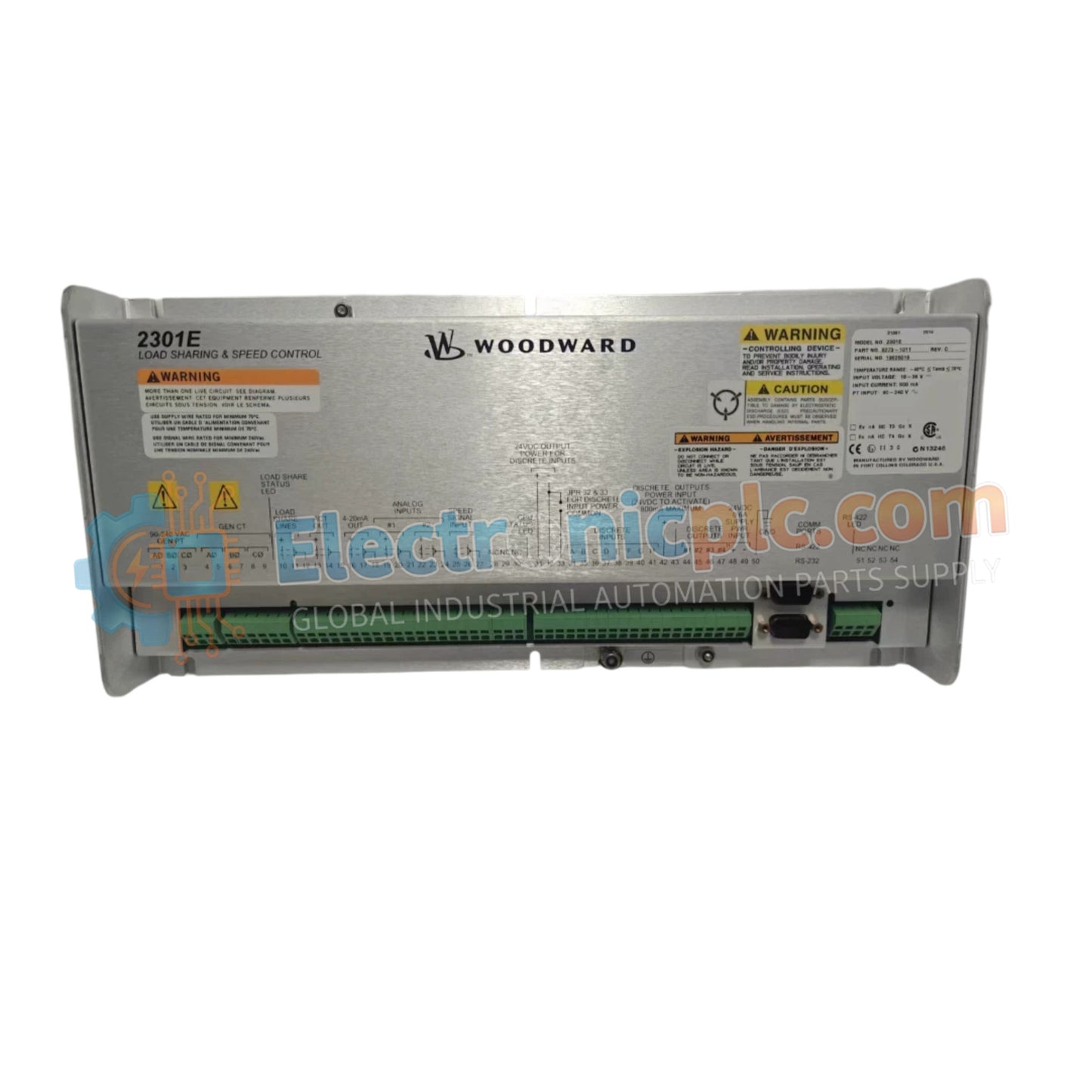
The Woodward 1692-387, also cataloged as the 1692-387 Digital Control Module, operates as a dedicated hardware component for high-speed I/O processing and governing logic execution within MicroNet and MicroNet Plus platforms.
| Parameter | Specification |
| Model | 1692-387 |
| Brand | Woodward |
| Origin | USA / Authorized Manufacturing Facilities |
| Weight | 1.8 kg |
| Dimensions | Standard MicroNet Module Form Factor |
| Operating Temp | -40 deg C to +70 deg C |
| Power Consumption | 12 W max nominal operational load |
| System Compatibility | MicroNet / MicroNet Plus Chassis |
| Input Voltage | Standard 24 VDC Nominal (System Backplane Powered) |
| Communication | Integrated High-Speed Serial and Network Interfaces |
The internal processing architecture manages complex governing logic to execute precise digital control algorithms for industrial turbines and reciprocating engines. High-speed backplane bus communication velocity and deterministic firmware execution maintain synchronization across multi-channel loop execution cycles. Dedicated arithmetic logic blocks process internal 24 VDC backplane power distribution while safeguarding against transient voltage spikes and high-frequency electromagnetic interference within heavy industrial environments.
Q: What chassis platforms are compatible with the 1692-387 module?
A: The module is designed specifically for deployment within Woodward MicroNet and MicroNet Plus chassis platforms.
Q: How does the module receive its operational power supply?
A: Power is supplied directly via the system backplane at a standard nominal voltage of 24 VDC.
Power down and completely isolate the MicroNet chassis backplane prior to inserting or extracting the control module.
Ensure proper ESD wrist strap grounding when handling the printed circuit board assembly to prevent electrostatic discharge damage.
Verify that module guide rails align correctly with the chassis slot to prevent bent pins or connector damage during insertion.
Tighten front-panel retention screws to the specified torque rating to maintain secure mechanical mounting and chassis ground continuity.


