
My Cart
0 items
Genuine Automation Parts | Worldwide Express Delivery | 12-Month Warranty — [GET A QUOTE]

The YOKOGAWA ASD143-P00/SB4S0, also cataloged as the ASD143 Digital Input Module, operates as a dedicated hardware component for high-speed signal acquisition within CENTUM process control platforms.
Availability: In stock
Reliable Worldwide Delivery
30-Day Money-Back Guarantee
Need more details? Read our fullShipping PolicyandRefund Policy.


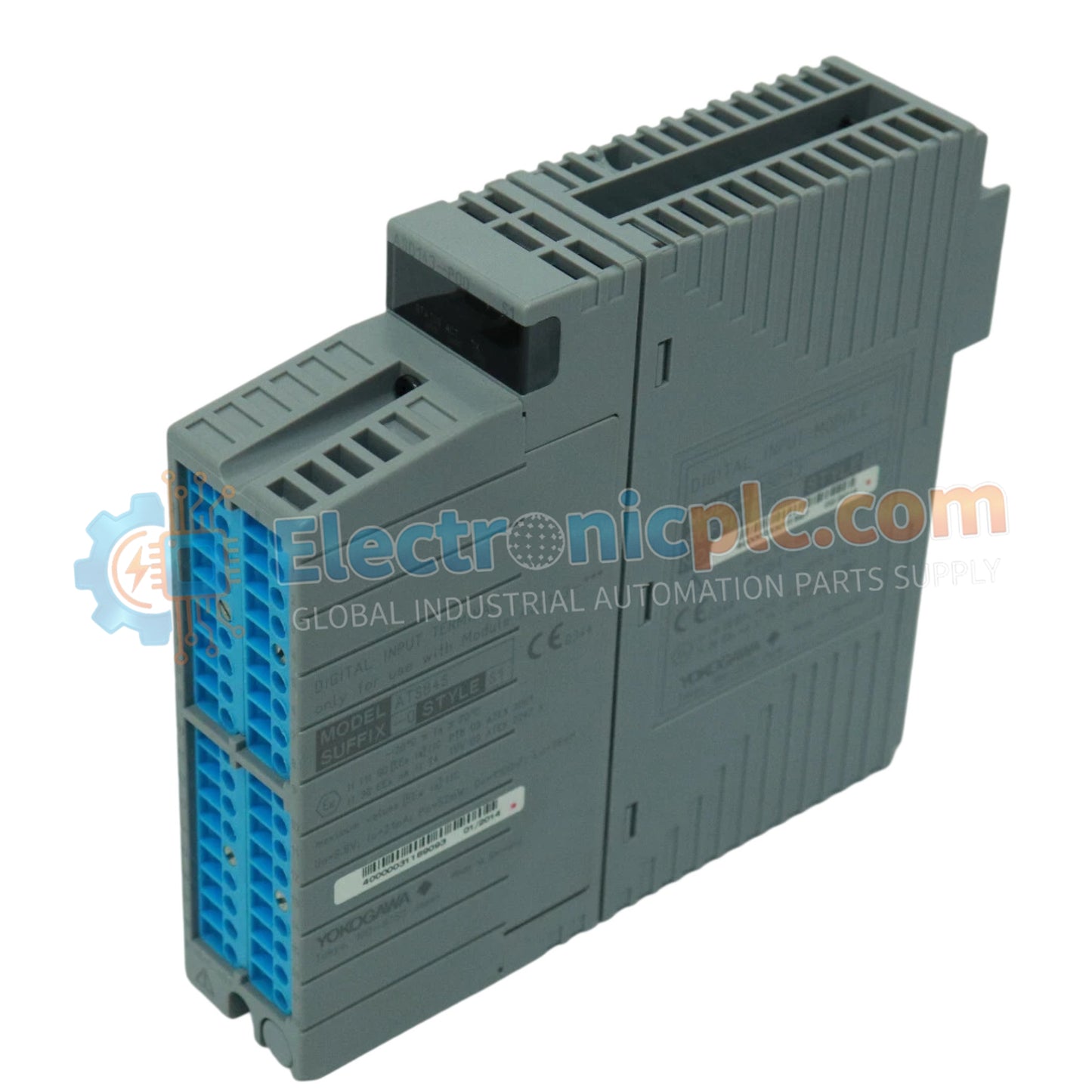
The YOKOGAWA ASD143-P00/SB4S0, also cataloged as the ASD143 Digital Input Module, operates as a dedicated hardware component for high-speed signal acquisition within CENTUM process control platforms.
| Parameter | Specification |
|---|---|
| Model | ASD143-P00/SB4S0 |
| Brand | YOKOGAWA |
| Origin | Japan |
| Weight | 0.5 kg |
| Dimensions | Standard YOKOGAWA I/O card dimensions |
| Operating Temp | 0 deg C to 50 deg C |
| Power Consumption | <5 W |
| Channel Count | 4 |
| Signal Type | Digital Input |
| Isolation | Optical |
| Resolution | 12-bit |
The ASD143-P00/SB4S0 utilizes galvanic channel-to-channel isolation to prevent ground loops and common-mode noise interference between field instrumentation and the system backplane. This architectural design ensures that individual signal integrity is maintained, preventing transient propagation during high-density I/O operations. The interface is engineered to comply with standard industrial logic levels, facilitating seamless integration with 4-20 mA HART loop protocol environments when utilized alongside auxiliary signal conditioning equipment.
Q: Does the ASD143-P00/SB4S0 support hot-swapping during system operation?
A: Hot-swapping is subject to the specific base unit and backplane configuration of the CENTUM rack. Ensure the module is properly seated and locking mechanisms are engaged before initializing communication protocols.
Q: What are the primary considerations for terminal wiring to maintain signal accuracy?
A: Use shielded twisted-pair cabling for all input signals. Ensure that cable shields are grounded at a single, dedicated grounding bar to minimize electromagnetic interference (EMI) impact on the module's 12-bit resolution input stages.


