
My Cart
0 items
Genuine Automation Parts | Worldwide Express Delivery | 12-Month Warranty — [GET A QUOTE]

The Yokogawa CL-530-02, also cataloged as the CL-530-02 Clock Module, operates as a dedicated hardware component for system real-time clock and time synchronization within Yokogawa DCS platforms.
Availability: In stock
Reliable Worldwide Delivery
30-Day Money-Back Guarantee
Need more details? Read our fullShipping PolicyandRefund Policy.


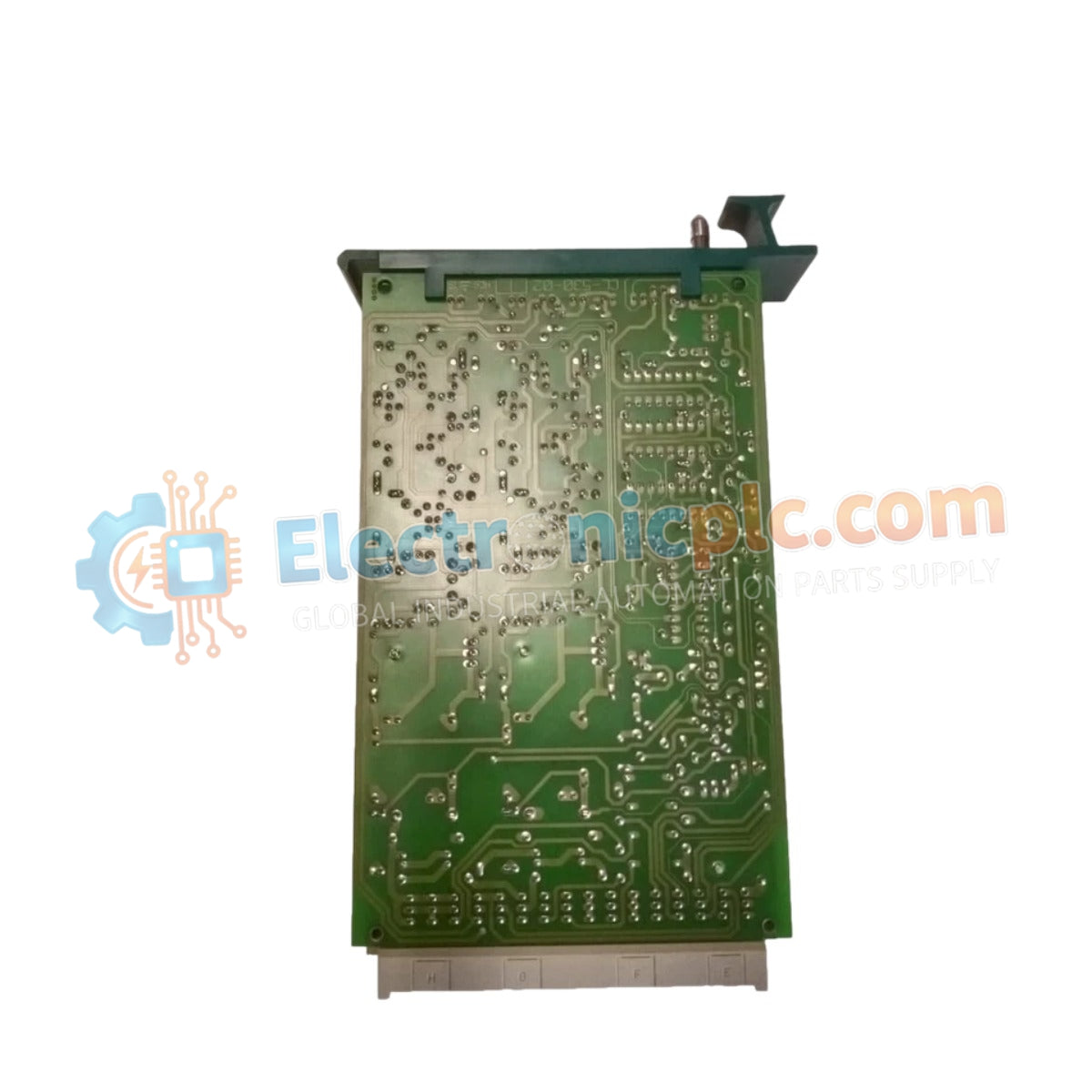
The Yokogawa CL-530-02, also cataloged as the CL-530-02 Clock Module, operates as a dedicated hardware component for system real-time clock and time synchronization within Yokogawa DCS platforms.
| Parameter | Specification |
|---|---|
| Model | CL-530-02 |
| Brand | Yokogawa |
| Origin | Japan |
| Weight | 0.3 kg |
| Dimensions | 130 x 30 x 130 mm |
| Operating Temp | Standard industrial ambient |
| Power Consumption | Low power consumption |
| Time Accuracy | High-stability crystal-controlled |
| Backup Method | Internal lithium battery |
| Slot Requirement | 1 module slot |
The CL-530-02 module utilizes an internal high-stability crystal oscillator to maintain precise timekeeping across the control system. In distributed control network environments, this module facilitates time-stamping for event sequence monitoring and process data logging. The internal lithium battery provides local energy storage to sustain the real-time clock (RTC) circuitry during primary power loss conditions, ensuring that date and time parameters are maintained without requiring system recalibration upon restart.
Q: Can the internal lithium battery be replaced while the module is powered on?
A: The module is designed for standard system slot insertion. Battery replacement should follow established procedures to avoid transient loss of time synchronization. Check the backplane power supply status prior to module removal.
Q: How is the time synchronization verified within the system bus?
A: The module interfaces directly via the system backplane bus. Time update requests are handled by the system controller firmware, which queries the high-stability clock source periodically.


