
My Cart
0 items
Genuine Automation Parts | Worldwide Express Delivery | 12-Month Warranty — [GET A QUOTE]

The CP461 is a high-reliability central processing module engineered for Yokogawa Field Control Units, specifically the AFV300 and AFV400 series. Serving as the primary logic execution engine, this module is designed to manage complex control algorithms and high-speed...
Availability: Low stock: 99 left
Reliable Worldwide Delivery
30-Day Money-Back Guarantee
Need more details? Read our fullShipping PolicyandRefund Policy.


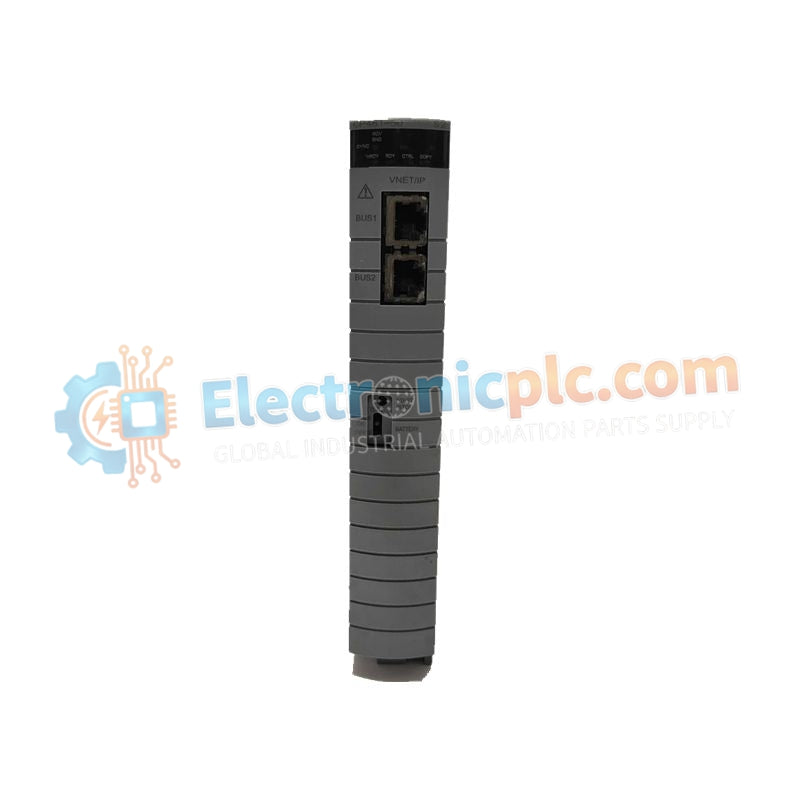
The CP461 is a high-reliability central processing module engineered for Yokogawa Field Control Units, specifically the AFV300 and AFV400 series. Serving as the primary logic execution engine, this module is designed to manage complex control algorithms and high-speed data communication within the CENTUM VP Distributed Control System (DCS).
The CP461 is the functional successor to the legacy CP461-10, offering a modernized hardware platform while maintaining full backward compatibility with existing Field Control Station backplanes.
| Specification | Details |
|---|---|
| Model Series | CP461 |
| Hardware Compatibility | AFV300 / AFV400 Controller Racks |
| Legacy Support | Replacement for CP461-10 |
| Configuration Support | Dual-redundant capable |
| Protection Rating | Standard type (Suffix Code 5), non-explosion proof |
| Architecture | Basic type (Suffix Code 0) |
| Expansion Capacity | Up to 8 non-standard I/O modules per node |
| Physical Dimensions | 15.2 cm × 5.1 cm × 20.3 cm |
| Unit Weight | 0.7 kg |
The CP461 is designed for mission-critical applications where continuous operation is essential. In a dual-redundant configuration, two modules operate in parallel, with the secondary unit maintaining a mirrored copy of memory and control logic.
In the event of a failure:
The system performs a seamless switchover
No interruption to control signals occurs
Process stability is maintained
This level of robustness makes the CP461 ideal for industries such as oil & gas, chemical processing, and power generation operating within the CENTUM VP ecosystem.
Q: Is the CP461 compatible with Vnet/IP communication?
A: Yes, when installed in an appropriate AFV-series control unit, the CP461 interfaces with Yokogawa Vnet/IP networks, ensuring high-speed and synchronized data exchange.
Q: Can I mix a CP461 with an older CP461-10 in a redundant pair?
A: While the CP461 is designed as a replacement for the CP461-10, it is recommended to use identical modules in redundant configurations to ensure optimal synchronization and system stability.


