
My Cart
0 items
Genuine Automation Parts | Worldwide Express Delivery | 12-Month Warranty — [GET A QUOTE]

Configured for high-speed data synchronization in distributed control architectures, the Yokogawa EB402-50 ESB Bus Coupler Module) provides direct physical and electrical execution of ESB bus signal conversion between control and...
Availability: Low stock: 99 left
Reliable Worldwide Delivery
30-Day Money-Back Guarantee
Need more details? Read our fullShipping PolicyandRefund Policy.


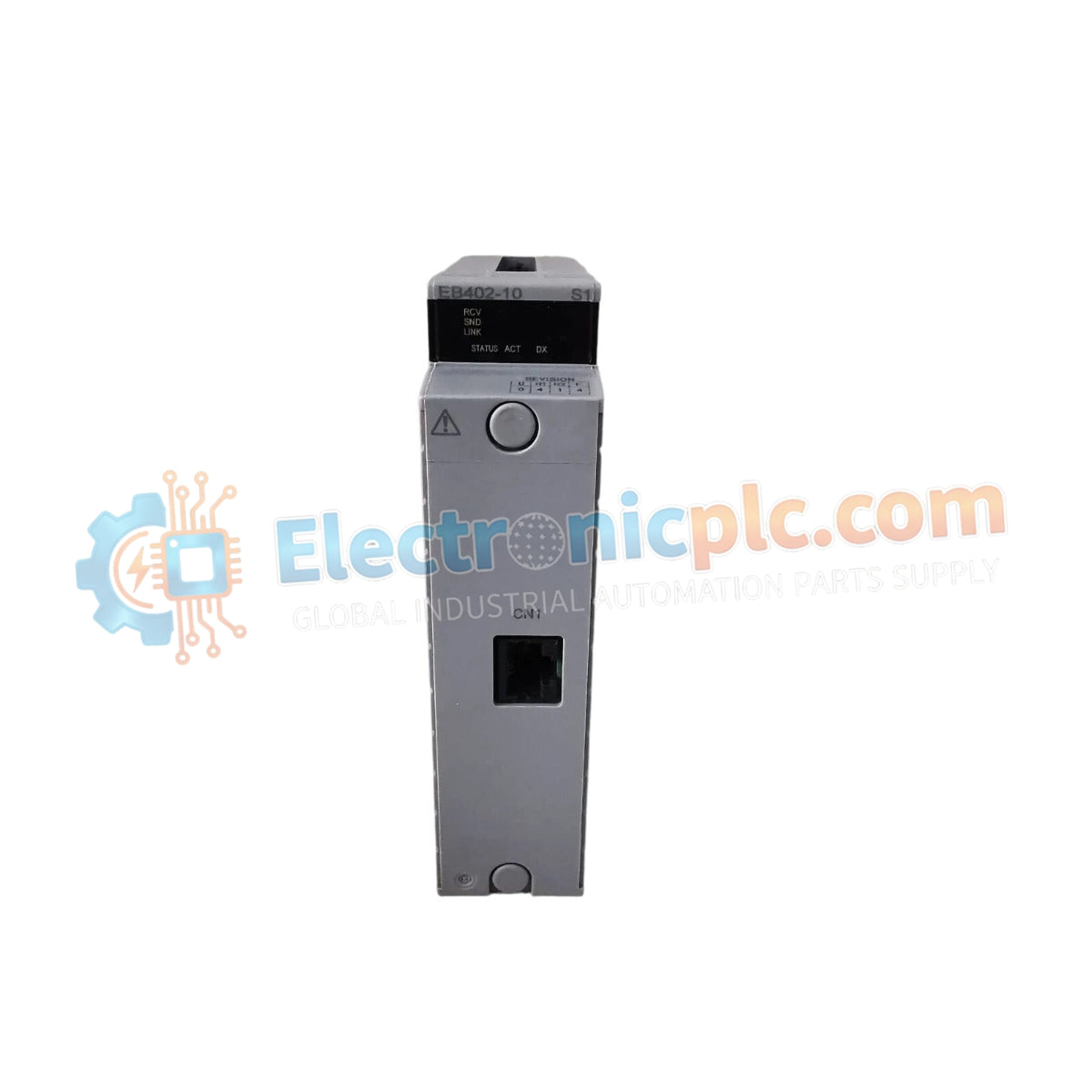
Configured for high-speed data synchronization in distributed control architectures, the Yokogawa EB402-50 ESB Bus Coupler Module) provides direct physical and electrical execution of ESB bus signal conversion between control and I/O stations.
| Parameter | Specification |
|---|---|
| Model | EB402-50 |
| Brand | Yokogawa |
| Origin | Japan |
| Weight | Not Specified |
| Dimensions | Not Specified |
| Operating Temp | Industrial Standard |
| Power Consumption | Not Specified |
| Interface | ESB Bus (Coupler) |
The EB402-50 module manages the transmission of process data between the control station and remote I/O modules via the Extended Serial Bus (ESB). The architecture utilizes channel-to-channel isolation to decouple the bus signal from internal logic, effectively mitigating common-mode noise and ground potential fluctuations. The unit supports cold junction compensation (CJC) through backplane integration when handling multi-point sensor signals, ensuring precision in distributed monitoring applications. Data transmission is executed through deterministic cycles to maintain real-time performance across the control network.
Q: Is the EB402-50 module capable of hot-swapping within the ESB bus architecture?
A: Hot-swapping is restricted for this module. The control station must be powered down or the specific slot isolated from the ESB bus traffic to prevent data corruption or bus communication errors during removal or installation.
Q: How is the module synchronization managed during bus failover?
A: Synchronization is controlled by the primary master interface; the coupler module automatically detects the ESB signal status and initiates a recovery handshake sequence to re-establish the communication link once the bus timing is stabilized.


