
My Cart
0 items
Genuine Automation Parts | Worldwide Express Delivery | 12-Month Warranty — [GET A QUOTE]

The Yokogawa F3CU04-0S/Z01, also cataloged as the F3CU04 Temperature Control and PID Module, operates as a dedicated hardware component for multi-loop thermal management within FA-M3 platforms. Configured for high-precision process...
Availability: Low stock: 99 left
Reliable Worldwide Delivery
30-Day Money-Back Guarantee
Need more details? Read our fullShipping PolicyandRefund Policy.


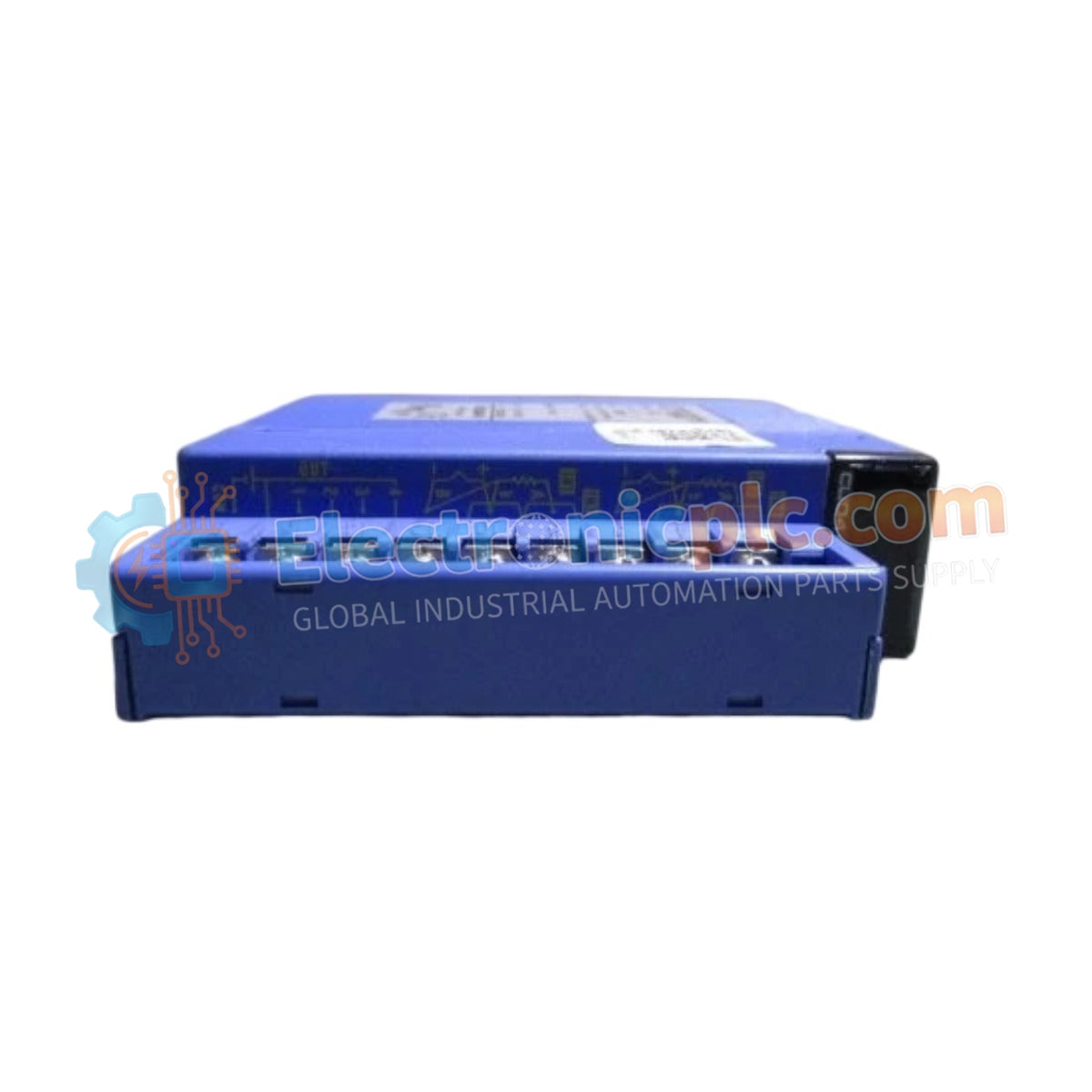
The Yokogawa F3CU04-0S/Z01, also cataloged as the F3CU04 Temperature Control and PID Module, operates as a dedicated hardware component for multi-loop thermal management within FA-M3 platforms. Configured for high-precision process control, this module executes deterministic PID algorithms with a cycle time of 200 ms across four independent loops.
The model number F3CU04-0S/Z01 indicates a specific hardware revision for the FA-M3 series. The "F3CU04" designation identifies the base PID module functionality, while the "0S/Z01" suffix specifies standard configuration parameters tailored for general-purpose temperature control, utilizing 24 VDC auxiliary power and standard rack-mount physical interfaces.
| Parameter | Specification |
|---|---|
| Model | F3CU04-0S/Z01 |
| Brand | Yokogawa |
| Origin | Japan |
| Weight | 1.10 lbs |
| Dimensions | Single-slot module |
| Operating Temp | 0 to 55 deg C |
| Power Consumption | 24 VDC, 50 mA |
| Loop Count | 4 Loops |
| Scan Time | 200 ms |
| Accuracy | 0.1 % of Full Scale |
The F3CU04 series utilizes backplane bus communication velocity licensed for deterministic I/O data exchange. In an FA-M3 environment, the module integrates with the main controller via the backplane to offload complex PID calculations, ensuring low-latency thermal regulation. The module firmware flash compatibility allows for internal logic updates without replacing the physical hardware, maintaining long-term operability in high-density I/O installations where space-to-performance ratios are critical.
Q: Can the PID parameters be adjusted while the module is actively controlling the process?
A: Yes, the F3CU04 supports dynamic auto-tuning, allowing the module to adjust proportional, integral, and derivative gains in real-time based on measured process variables without stopping the loop.
Q: What is the impact of a communication failure on the PID outputs?
A: Upon loss of communication with the main CPU, the module is configured to maintain its last state or transition to a pre-defined fail-safe position as dictated by the module parameter settings.


