Skip to product information
1 of 3

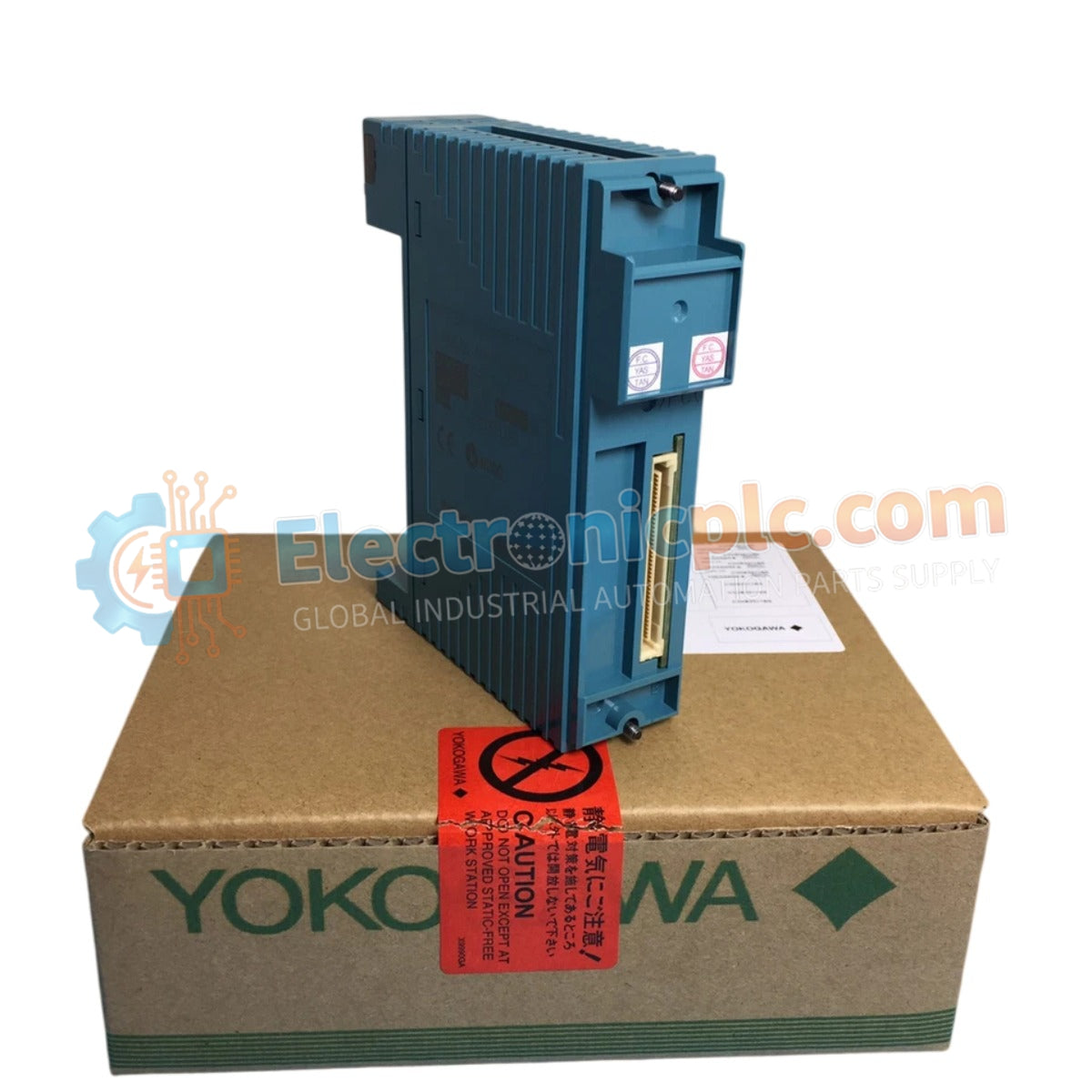
Yokogawa NFAI135-S50/CCC01 Analog Input Module

Yokogawa NFAI135-S50/CCC01 Analog Input Module

Configured for high-density 4-20 mA signal acquisition in CENTUM VP control networks, the Yokogawa NFAI135-S50/CCC01 (NFAI135-S50/CCC01 Analog Input Module) provides direct physical signal conditioning and digitalization of field-transmitted analog data.

...
19 people are viewing this right now

AvailabilityLow stock: 99 left

SKU: NFAI135-S50/CCC01
Vendor: Yokogawa
Related Series:

Shipping & Returns

Reliable Worldwide Delivery

  • Carriers: Shipped via DHL, FedEx, UPS, or USPS.
  • Dispatch: Orders processed in 1-2 business days and dispatched within 3-5 business days.
  • Tracking: Full tracking details provided via email upon shipment.

30-Day Money-Back Guarantee

  • Guarantee: 30-day return window for in-stock, factory-sealed products.
  • Condition: Items must be unopened, unused, and in original packaging.
  • Authenticity: We guarantee 100% original and authentic hardware.

Need more details? Read our fullShipping PolicyandRefund Policy.

Authenticity & Warranty

  • Genuine Guarantee: We supply only 100% original, brand-new, and factory-sealed industrial automation parts.
  • Full Coverage: Every component is backed by a 12-month comprehensive warranty from the date of purchase.
  • Traceability: All products come with original factory documentation and accessories for full industrial compliance.

Technical Support & Sourcing

  • Expert Assistance: Our technical team provides free consultation to help you verify compatibility for DCS and PLC systems.
  • Rare Part Sourcing: Specializing in obsolete and hard-to-find components from Allen-Bradley, Siemens, ABB, HIMA, and more.
  • Bulk Inquiries: Contact us at pambo@5gplc.com for volume pricing or customized project quotes.
View full product details

Configured for high-density 4-20 mA signal acquisition in CENTUM VP control networks, the Yokogawa NFAI135-S50/CCC01 (NFAI135-S50/CCC01 Analog Input Module) provides direct physical signal conditioning and digitalization of field-transmitted analog data.

Suffix Breakdown & Model Matrix

  • NFAI135: Base analog input module identifier.
  • S50: Standard hardware performance iteration.
  • CCC01: Configuration variant for conformal coating protection and specific terminal interface compatibility.

Hardware Specifications

Parameter Specification
Model NFAI135-S50/CCC01
Brand Yokogawa
Origin Japan
Weight 0.3 kg
Dimensions Standard I/O module form factor
Operating Temp -20 deg C to 70 deg C
Power Consumption Backplane powered (5 VDC/24 VDC)
Input Channels 16 channels
Signal Input 4-20 mA

Channel-to-Channel Isolation and Loop Protocol

The NFAI135-S50/CCC01 utilizes galvanic isolation per channel to decouple field-side loops from the module internal backplane, effectively suppressing ground loops in dispersed instrumentation arrays. The module supports the 4-20 mA HART loop protocol, allowing for simultaneous process variable measurement and secondary digital device data acquisition. This dual-path processing ensures that HART communication does not interrupt the primary control loop integrity.

Frequently Asked Questions

Q: Can the NFAI135-S50/CCC01 be used for non-HART analog inputs?

A: Yes, the module is backward compatible with standard 4-20 mA instrumentation. The HART communication logic is transparent to the primary analog input processing, provided that field devices are wired correctly to the module input terminals.

Q: How does the CCC01 conformal coating affect thermal dissipation?

A: The CCC01 conformal coating is applied to the PCB assembly to protect against corrosive environments and moisture. It has a negligible impact on the module's thermal dissipation characteristics when operated within the specified -20 deg C to 70 deg C temperature range.

Field Installation Guidelines

  1. Ensure the control cabinet environment is properly ventilated; avoid mounting the module directly above high-heat generating power supplies.
  2. Verify that the field wiring is shielded and that shields are terminated to the chassis ground rail using the provided terminal bar to minimize electromagnetic noise.
  3. Seat the module firmly into the I/O rack backplane; ensure the locking lever is fully engaged to maintain structural stability and electrical connection.
  4. Check for correct loop current polarity before applying field power; improper polarity may lead to inaccurate readings or, in some cases, damage to the internal current sensing resistor.
  5. In high-vibration applications, utilize the optional mechanical tie-downs for field wiring bundles to prevent intermittent signal fatigue at the terminal block interface.