
My Cart
0 items
Genuine Automation Parts | Worldwide Express Delivery | 12-Month Warranty — [GET A QUOTE]

The YOKOGAWA NFAR181-S00 S2, also cataloged as the NFAR181 RTD Input Module, operates as a dedicated hardware component for temperature sensing within N-IO (Network I/O) platforms. This module provides direct...
Availability: In stock
Reliable Worldwide Delivery
30-Day Money-Back Guarantee
Need more details? Read our fullShipping PolicyandRefund Policy.


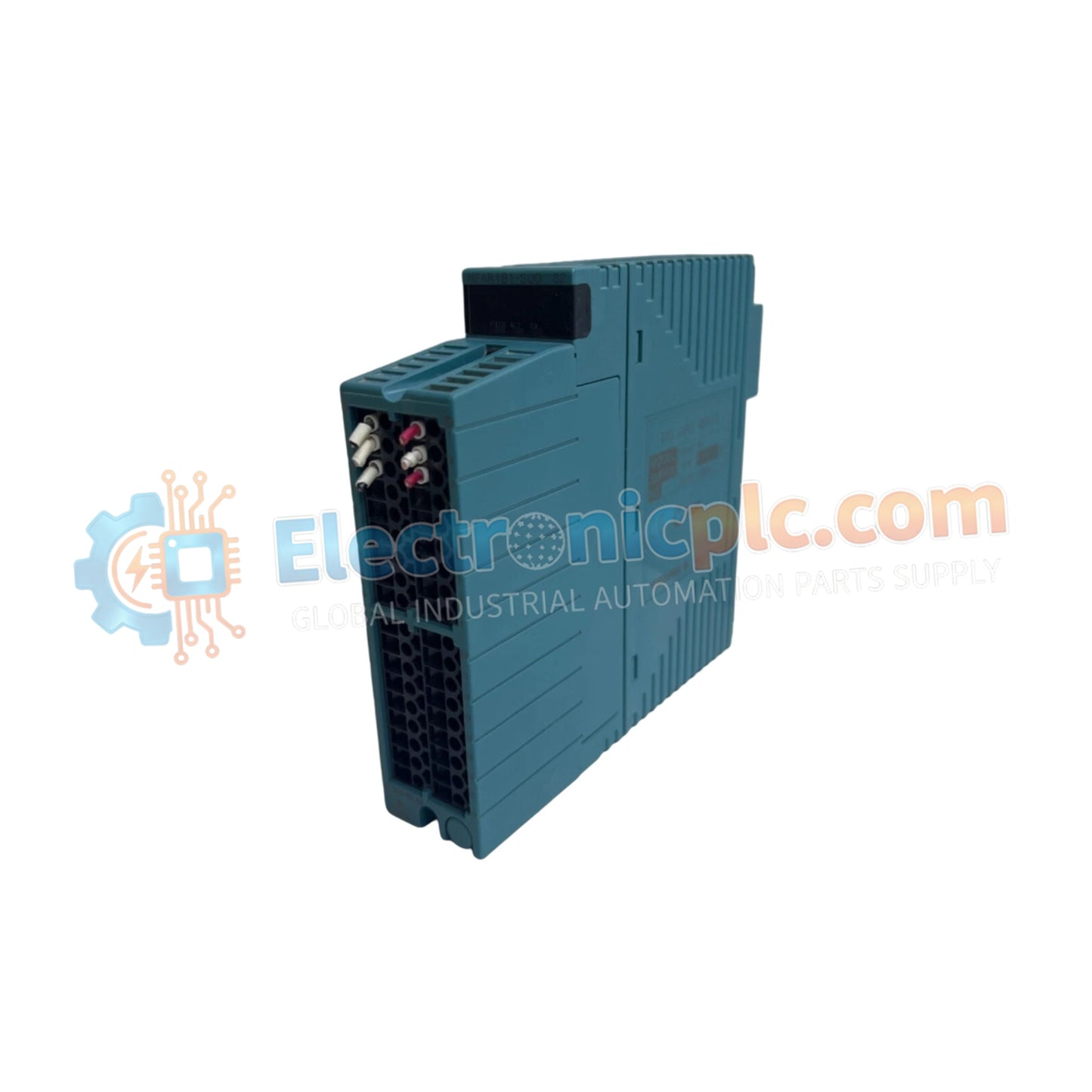
The YOKOGAWA NFAR181-S00 S2, also cataloged as the NFAR181 RTD Input Module, operates as a dedicated hardware component for temperature sensing within N-IO (Network I/O) platforms. This module provides direct physical/electrical execution for acquiring resistive signals from field-mounted Resistance Temperature Detectors (RTDs), converting thermal data into digital values for DCS process control and monitoring.
| Parameter | Specification |
|---|---|
| Model | NFAR181-S00 S2 |
| Brand | YOKOGAWA |
| Origin | JAPAN |
| Weight | 0.3 kg |
| Dimensions | 2.2 cm x 12.4 cm x 12.6 cm |
| Operating Temp | -20 to 70 deg C |
| Power Consumption | 1.8 W (Typical) |
| Input Type | RTD (Resistance Temperature Detector) |
| Isolation | Channel-to-channel |
The NFAR181-S00 S2 utilizes channel-to-channel isolation to prevent potential interference between multiple temperature measurement loops. This electrical design suppresses common-mode noise and ground loops which are common in distributed thermal monitoring architectures. The module supports precise signal conversion, maintaining measurement integrity by filtering incoming resistance fluctuations before data transmission across the N-IO backplane bus.
Q: Does this module require external cold junction compensation (CJC) for RTD measurements?
A: No, cold junction compensation is required for thermocouples; the NFAR181 is designed specifically for RTD inputs, which utilize lead wire resistance compensation instead.
Q: Is the NFAR181-S00 S2 compatible with various RTD types such as Pt100?
A: Yes, this module supports standard industrial RTD sensor types; verify the specific sensor configuration settings within the engineering software to match the field device specifications.


