
My Cart
0 items
Genuine Automation Parts | Worldwide Express Delivery | 12-Month Warranty — [GET A QUOTE]

The Yokogawa SCP451-51 is a high-availability central processor module engineered specifically for the ProSafe-RS Safety Instrumented System (SIS). As a core component of safety-critical automation, this processor ensures deterministic logic execution and high-speed...
Availability: Low stock: 99 left
Reliable Worldwide Delivery
30-Day Money-Back Guarantee
Need more details? Read our fullShipping PolicyandRefund Policy.


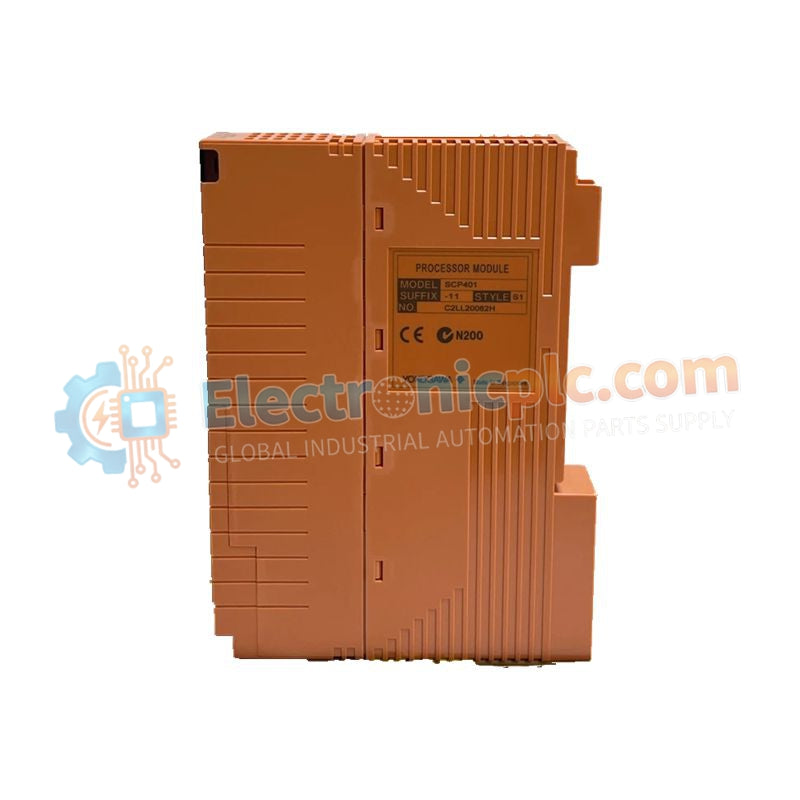
The Yokogawa SCP451-51 is a high-availability central processor module engineered specifically for the ProSafe-RS Safety Instrumented System (SIS). As a core component of safety-critical automation, this processor ensures deterministic logic execution and high-speed communication required for emergency shutdown and fire and gas detection applications. Its robust architecture is built to support the stringent demands of SIL3-rated environments, providing the reliability necessary for protecting personnel and equipment in hazardous industrial processes. The SCP451-51 facilitates seamless integration into safety controller racks, maintaining integrity through rigorous diagnostic self-checks and optimized scan cycles.
| Specification | Details |
|---|---|
| Model | SCP451-51 |
| Module Type | Central Processor Module |
| Application | ProSafe-RS Safety Instrumented Systems |
| Processor Architecture | High-speed safety-rated CPU |
| Communication Interfaces | Dedicated safety bus connectivity |
| Power Requirements | 24 V DC system power |
| Operating Temperature | Rated for industrial environmental extremes |
| Reliability Features | Integrated self-diagnostics and fail-safe monitoring |
The SCP451-51 is optimized for high-density safety logic management. By minimizing loop latency and providing advanced error-detection capabilities, the module ensures that safety functions are executed reliably without compromising plant throughput. Its modular construction simplifies system maintenance, allowing for rapid replacement in the event of hardware anomalies while ensuring that the safety instrumented function (SIF) is restored with minimal downtime.
A: Compatibility is firmware and hardware revision dependent. Please verify the compatibility matrix of your current ProSafe-RS controller rack before replacing or upgrading modules.
A: Yes, the SCP451-51 is designed to operate in redundant pairs within a safety controller chassis to ensure continuous operation in the event of a primary module fault.


