
My Cart
0 items
Genuine Automation Parts | Worldwide Express Delivery | 12-Month Warranty — [GET A QUOTE]

Configured for high-reliability shutdown and process monitoring in safety instrumented systems (SIS), the Yokogawa SSC50D-S2513 (SSC50D Duplexed Safety Control Unit) provides direct physical and electrical execution of safety-critical logic in...
Availability: In stock
Reliable Worldwide Delivery
30-Day Money-Back Guarantee
Need more details? Read our fullShipping PolicyandRefund Policy.


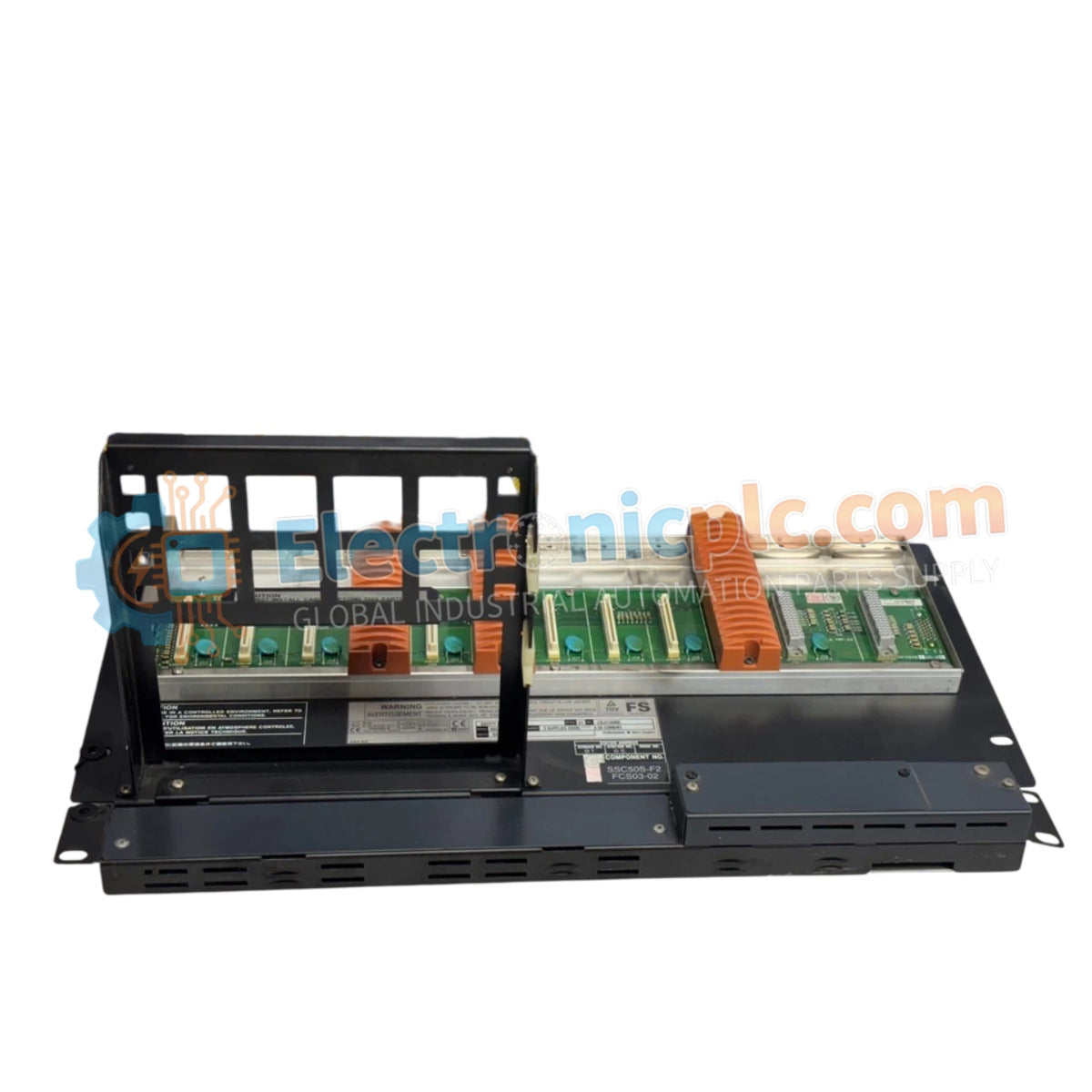
Configured for high-reliability shutdown and process monitoring in safety instrumented systems (SIS), the Yokogawa SSC50D-S2513 (SSC50D Duplexed Safety Control Unit) provides direct physical and electrical execution of safety-critical logic in hazardous industrial environments.
| Suffix Code | Specification Description |
|---|---|
| SSC50D | Base duplexed safety control unit model |
| S2513 | Specific hardware configuration for SIL3-rated safety applications |
| Parameter | Specification |
|---|---|
| Model | SSC50D-S2513 |
| Brand | Yokogawa |
| Origin | Japan |
| Weight | 8.5 kg |
| Dimensions | 482.6 x 266 x 88.1 mm |
| Operating Temp | -10 deg C to +60 deg C |
| Power Consumption | 45 W typical |
| Input Voltage | 24 V DC (18–30 V DC range) |
| Safety Rating | IEC 61508 SIL3 |
The SSC50D-S2513 is designed to achieve SIL3 certification through robust fault-tolerant architecture. The duplexed design utilizes an internal safety communication protocol to ensure deterministic data processing and fault detection. The control logic execution is safeguarded by galvanic isolation, which prevents external electrical disturbances from compromising the integrity of the safety loops. In the event of a internal hardware anomaly, the system is engineered for fail-safe state execution, automatically transitioning connected output devices to a predetermined safe position to mitigate process risks.
Q: Can the SSC50D be serviced or modules replaced while the system is online?
A: The system supports hot-swap capabilities for specific modules within the duplexed configuration; however, maintenance procedures must strictly adhere to the site-specific safety manual and ensure that the redundant partner is fully operational and synchronized prior to module extraction.
Q: How is the safety communication protocol verified?
A: The unit employs periodic diagnostic heartbeats and cyclic redundancy checks (CRC) on all data packets transmitted over the Vnet/IP interface. Any discrepancy in the checksum or timing window triggers an immediate system alert and potential transition to the fail-safe state.


