
My Cart
0 items
Genuine Automation Parts | Worldwide Express Delivery | 12-Month Warranty — [GET A QUOTE]

Configured for high-density signal distribution, the YOKOGAWA TE16 (TE16 Terminal Block) provides direct physical execution of field-to-module signal interfacing. The terminal block acts as the primary conduit for electrical connectivity...
Availability: In stock
Reliable Worldwide Delivery
30-Day Money-Back Guarantee
Need more details? Read our fullShipping PolicyandRefund Policy.


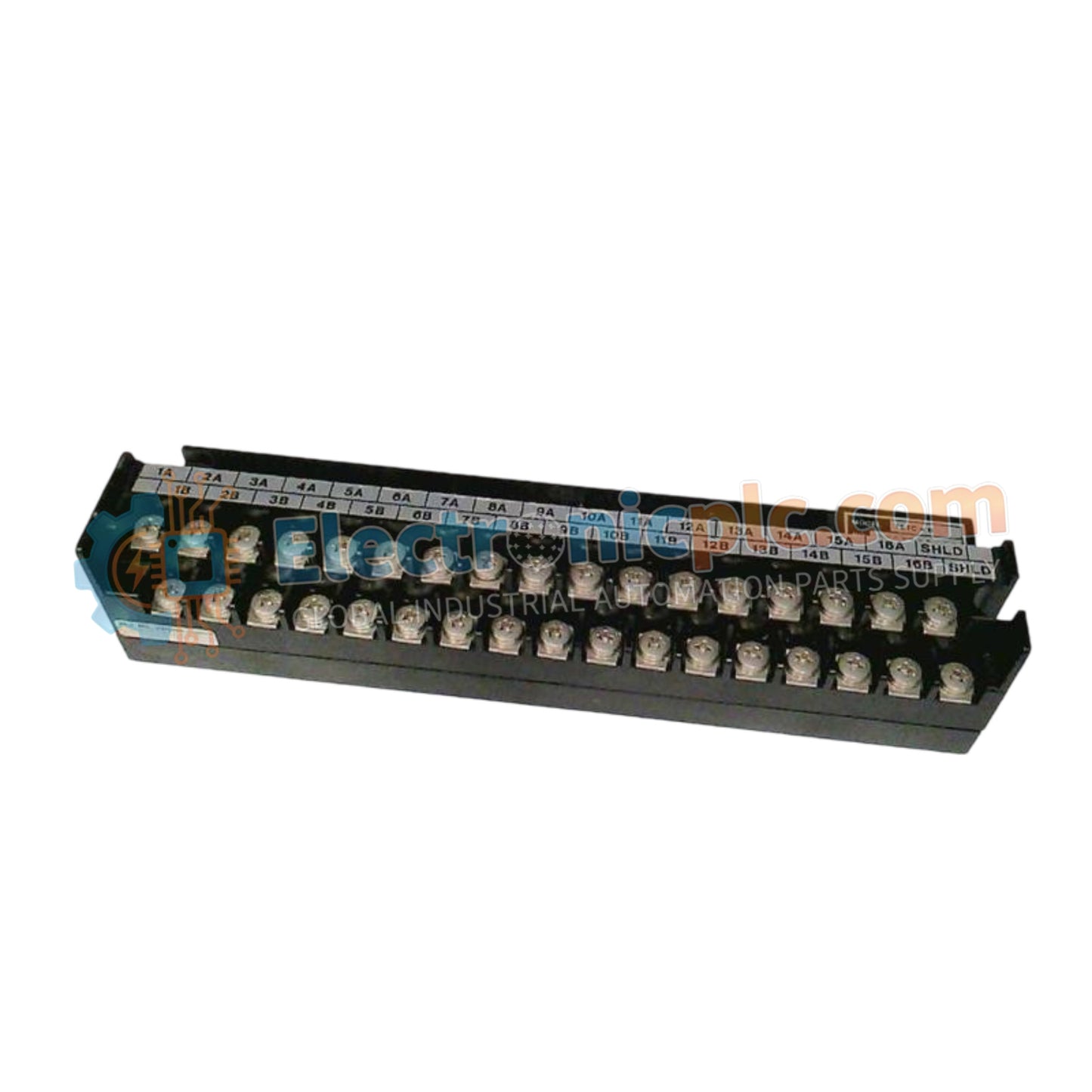
Configured for high-density signal distribution, the YOKOGAWA TE16 (TE16 Terminal Block) provides direct physical execution of field-to-module signal interfacing. The terminal block acts as the primary conduit for electrical connectivity between field sensors, actuators, and the Yokogawa control module backplane, facilitating stable signal transport for integrated industrial instrumentation.
| Parameter | Specification |
|---|---|
| Model | TE16 |
| Brand | YOKOGAWA |
| Origin | japan |
| Weight | 1.2kg |
| Dimensions | Standard terminal block footprint |
| Operating Temp | 0 to 50 deg C |
| Contact Points | 16 points |
| Terminal Type | M4 screws |
| Compatibility | ADM1C, AMM12C, AMM22C, ADV59 |
| Insulation Resistance | >= 100 MΩ (500 VDC) |
| Withstanding Voltage | 500 VAC |
The TE16 terminal block is engineered to maintain high-integrity electrical contact through M4 screw-down terminals, ensuring low-resistance signal paths suitable for both digital and analog I/O. The module architecture is rated for an insulation resistance of at least 100 MΩ at 500 VDC, providing effective electrical isolation between adjacent channels and the chassis ground. This design prevents current leakage and cross-channel interference, which is necessary for maintaining the signal fidelity required when interfacing with ADM1C, AMM12C, AMM22C, and ADV59 control modules.
Q: Is this terminal block suitable for high-vibration applications?
A: Yes, the M4 screw terminal design provides a mechanical locking force that resists loosening under standard industrial vibration profiles. Ensure terminal screws are torqued to the specified setting to maintain long-term connectivity.
Q: Can the TE16 be used in hazardous area installations?
A: The TE16 is a passive interface component. While it may be installed in hazardous zones as part of an I/O assembly, ensure that the entire loop configuration complies with relevant local safety standards for intrinsically safe or non-incendive wiring practices.


