
My Cart
0 items
Genuine Automation Parts | Worldwide Express Delivery | 12-Month Warranty — [GET A QUOTE]

The YOKOGAWA YNT511D-P42/KT, also cataloged as the YNT511D-P42/KT Optical Bus Repeater Module, operates as a dedicated hardware component for chassis-level optical bus management and signal distribution within Centum VP and...
Availability: In stock
Reliable Worldwide Delivery
30-Day Money-Back Guarantee
Need more details? Read our fullShipping PolicyandRefund Policy.


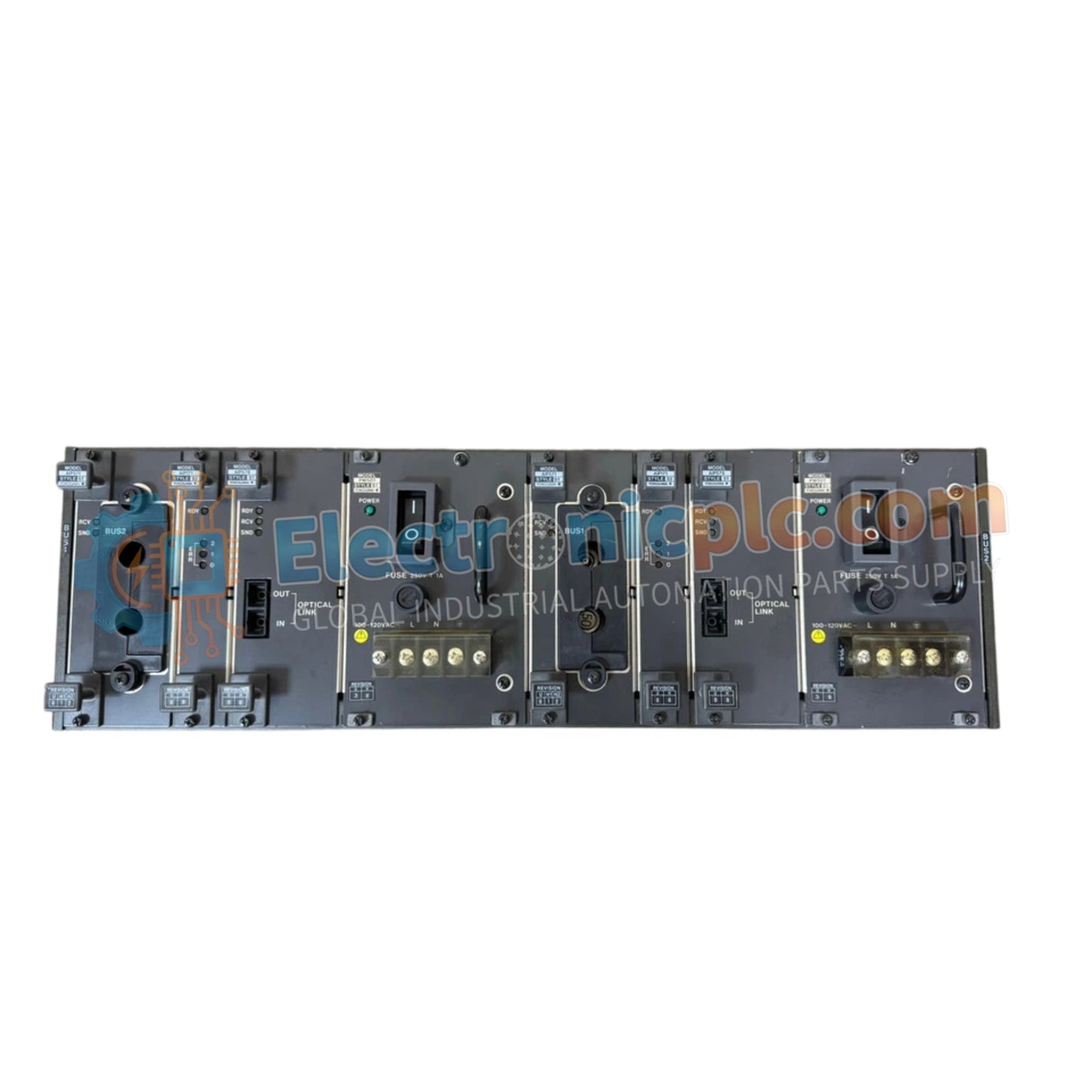
The YOKOGAWA YNT511D-P42/KT, also cataloged as the YNT511D-P42/KT Optical Bus Repeater Module, operates as a dedicated hardware component for chassis-level optical bus management and signal distribution within Centum VP and Centum CS distributed control system (DCS) architectures.
| Parameter | Specification |
|---|---|
| Model | YNT511D-P42/KT |
| Brand | YOKOGAWA |
| Origin | Japan |
| Weight | 3.6 kg |
| Dimensions | 48.3 cm x 17.8 cm x 30.5 cm |
| Operating Temp | Standard industrial range |
| Power Consumption | 60 mA max at 24 VDC |
| Isolation | 1 kV DC |
| Rack Format | 19-inch |
| Capacity | 13 slots for Optical ESB Bus Repeater Modules |
The YNT511D-P42/KT serves as the primary rack-based enclosure for managing multiple optical ESB bus repeater modules. It provides the necessary backplane connectivity and power distribution to support up to 13 repeater modules, facilitating the expansion of DCS network topology across wide-area process installations. The unit is engineered with 1 kV DC isolation to protect sensitive optical transceiver circuitry from common-mode voltage transients and ground potential differences often encountered in large-scale rack-mounted instrumentation cabinets.
Q: Does the YNT511D-P42/KT require any external software configuration?
A: The chassis itself acts as a passive backplane and power distribution unit. However, the individual optical ESB bus repeater modules installed within the 13 slots must be configured according to the specific network node address map of the DCS.
Q: Can the 13 slots be mixed with different types of repeater modules?
A: The slots are designed for Optical ESB Bus Repeater Modules. Mixing incompatible module series may result in bus communication errors; refer to the specific system manual to ensure the repeater modules are compatible with the backplane bus architecture of the YNT511D.


